How to Prepare for the Mexican Citizenship Exam
Standing in the shadow of the Secretaría de Relaciones Exteriores (SRE) building in Mexico City, clutching a folder of color-coded documents, is a rite of passage that defines the final stretch of the expat journey. I remember the cold sweat I broke into when I realized I couldn't quite remember the specific year the Constitution was signed. This guide solves that anxiety by breaking down exactly how to master the Mexican citizenship exam, from historical dates to linguistic nuances.
Disclosure: This post may contain affiliate links. We may earn a commission at no extra cost to you if you make a purchase through these links. Read full disclosure.
Understanding the Structure of the Examen de Naturalización
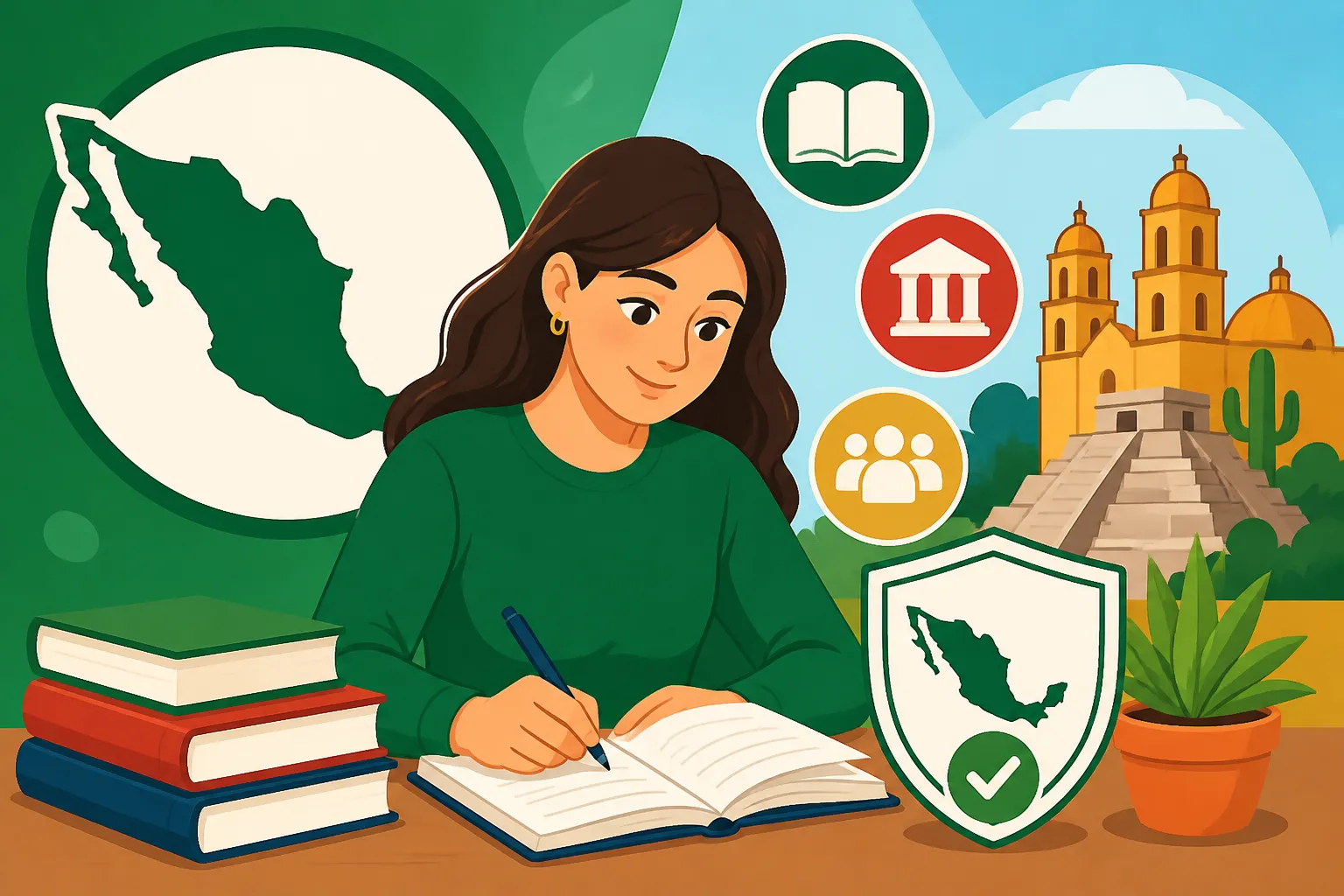
The Mexican citizenship exam is not a single test but a two-part evaluation designed to ensure you are ready to integrate fully into the national fabric. The first part focuses on history and culture, while the second assesses your Spanish language proficiency. For many, the jump from being a resident to a citizen feels like a massive leap, but understanding the roadmap makes it manageable. You are generally required to answer a set of multiple-choice questions drawn from a bank that covers everything from pre-Hispanic civilizations to modern political structures.
The passing threshold is typically 8 out of 10 questions for the history and culture section. While that might sound forgiving, the questions can be surprisingly specific. You won't just be asked who the first president was; you might be asked about the specific contributions of the Reform Laws or the architectural significance of Teotihuacán. To get a broader view of the entire path, you should read through How to Become a Mexican Citizen: The Complete Naturalization Guide to ensure you meet the residency and legal requirements before booking your test date.
One thing that catches many expats off guard is the environment of the testing center. Most exams are now computerized and taken at an SRE office. The interface is straightforward, but the pressure of the ticking clock and the official atmosphere can be daunting. I’ve seen incredibly well-prepared candidates freeze up because they weren't used to the specific phrasing used in the official questionnaire. Preparing for this means not just memorizing facts, but becoming comfortable with the "official" style of Spanish used by the Mexican government.
Who is Required to Take the Exam
Not every applicant faces the same testing hurdles. Generally, if you are applying for naturalization through residency, you will be required to pass both the history/culture and Spanish sections. However, there are significant exemptions. For instance, if you are over the age of 60, the SRE typically waives the history and culture exam, though you may still be required to participate in an interview to demonstrate your Spanish proficiency and integration.
Minors and individuals who are refugees or under certain forms of protection also face different requirements. It is essential to verify your specific category well in advance. If you are moving through the standard timeline, you’ll likely be making the transition from a long-term stay. You can learn more about the preceding steps in From Permanent Resident to Mexican Citizen: How to Make the Transition. Knowing which "track" you are on will dictate whether you spend your weekends memorizing the dates of the Mexican Revolution or simply practicing your conversational Spanish.
The Interview Component
Beyond the computer-based questions, there is almost always a formal interview with an SRE official. This isn't just a casual chat; it’s a verbal assessment of your ability to communicate and your general knowledge. The officer might ask you why you want to become a Mexican citizen, what you do for a living, or your thoughts on Mexican traditions. They are looking for "arraigo," or a deep-rooted connection to the country.
During my own process, the official asked me about my favorite Mexican holiday. It seemed simple, but I made sure to use specific vocabulary related to "Día de Muertos" and "ofrendas" to show I wasn't just a tourist with a long-term visa. This is where your daily life in Mexico truly pays off. If you've been active in your local community, this part of the exam will feel much more natural. For those still working on their language skills, checking out Do You Need to Speak Spanish to Get Mexican Citizenship or Residency? can provide context on the expected level of fluency.
Deep Dive into History and Culture Topics
The history section of the exam is a chronological journey that starts long before the Spanish arrived. You are expected to have a firm grasp of the "Grand Narrative" of Mexico. This begins with the "Época Prehispánica." You should be able to distinguish between the Olmecs (the mother culture), the Mayans (famous for their mathematical and astronomical prowess), and the Aztecs (the founders of Tenochtitlán). Knowing the significance of the year 1321 and the legendary founding of the eagle on a cactus is non-negotiable.
Moving into the "Colonia" and "Independencia," the dates become even more critical. You must know Miguel Hidalgo’s "Grito de Dolores" happened in the early morning of September 16, 1810. But don't stop there; the SRE loves to ask about the "Consumación de la Independencia" in 1821 and the role of the "Ejército Trigarante." It’s these nuances—the beginning versus the end of a conflict—that often trip up applicants. I found that making a physical timeline on my wall helped more than any digital app ever could.
The 19th Century and the Reform Era
This is perhaps the most complex part of the exam for foreigners. The 1800s in Mexico were a whirlwind of French interventions, lost territories, and internal ideological battles between Liberals and Conservatives. You need to know Benito Juárez, the Zapotec president who is often called the "Benemérito de las Américas." His role in the "Leyes de Reforma" (Reform Laws), which separated church and state, is a favorite topic for the exam.
You should also be aware of the "Intervención Francesa" and the Battle of Puebla (May 5, 1862). Many foreigners mistakenly believe Cinco de Mayo is Mexico's Independence Day; the exam will quickly disabuse you of that notion. You might be asked who was the Emperor during the Second Mexican Empire (Maximilian of Habsburg) and how that era ended. This period established much of the legal and social framework that persists in Mexico today, making it a high-priority study area.
The Mexican Revolution and Modern Mexico
The "Revolución Mexicana" (1910) is the cornerstone of modern Mexican identity. You must understand why Francisco I. Madero challenged the long dictatorship of Porfirio Díaz (the "Porfiriato"). Key figures like Emiliano Zapata, with his cry of "Tierra y Libertad," and Pancho Villa are essential. The most important outcome of this era, which you will almost certainly be tested on, is the Constitution of 1917, which remains the supreme law of the land.
In the modern context, the exam may touch upon cultural icons. Be prepared to identify famous painters like Frida Kahlo and Diego Rivera, or Nobel Prize-winning writers like Octavio Paz. Geography also plays a role; you should know the names of major mountain ranges like the Sierra Madre and the significance of the diverse ecosystems across the 32 states. Mastering these details demonstrates that you aren't just living in a "bubble," but are truly engaged with the country's heritage.
The Spanish Language Proficiency Assessment
For many expats, the Spanish portion of the exam is the most intimidating. The SRE needs to ensure that as a citizen, you can exercise your rights, vote, and understand legal proceedings. The test usually involves a reading comprehension section where you read a short text—often about a historical figure or a cultural tradition—and answer multiple-choice questions. These texts are written in a formal, academic Spanish that differs from what you might hear at the local "tianguis."
I found that reading Mexican newspapers like El Universal or La Jornada was excellent practice. They use the specific formal vocabulary that appears on the exam. You’ll need to understand "conectores" (linking words) like "sin embargo," "por lo tanto," and "no obstante." If you can follow a legislative update or a historical essay in a newspaper, you are likely ready for the reading portion of the exam.
Writing and Descriptive Skills
The writing section often requires you to describe a scene or a picture. You might be given a photo of a traditional Mexican market or a family gathering and asked to write 5 to 10 sentences about it. The graders are looking for grammatical accuracy, but also for a varied vocabulary. Instead of just saying "hay muchas personas," you might write "la muchedumbre se congrega en el zócalo para celebrar."
Practice describing your daily life in writing. Write about your favorite neighborhood in Mexico City or your experience visiting a "Pueblo Mágico." The goal is to show that you can construct complex sentences and use the past, present, and future tenses correctly. If you are feeling unsure about your writing level, consider a few targeted sessions with a tutor who specializes in the SRE exam format.
Listening and Oral Interaction
During your appointment, your listening skills are constantly being evaluated by the staff. From the moment you check in to the final interview, every interaction counts. You must be able to follow complex instructions regarding your paperwork. If an official says, "vaya a la ventanilla tres para el cotejo de documentos," and you look lost, it doesn't leave a good impression.
The oral interview is the final hurdle. You should be prepared to speak about your personal history in Mexico. Why did you move here? What do you contribute to your community? What are your favorite aspects of Mexican culture? These questions are designed to see if you can hold a sustained conversation on abstract topics. It's helpful to have a "script" in your head for common questions, but avoid sounding robotic. They want to see a person, not a textbook.
Essential Documentation and Administrative Logistics
The exam is only one part of a massive administrative puzzle. Before you even sit for the test, your "expediente" (file) must be perfect. This involves gathering birth certificates, background checks, and proof of residency. One of the biggest hurdles is the requirement for "traducciones certificadas" (certified translations) of any document not in Spanish. For documents like birth certificates or foreign marriage licenses, I found that using a professional service like RushTranslate is invaluable to ensure the wording matches the strict requirements of the SRE.
You will also need to provide a "Carta de Antecedentes No Penales" (criminal record check). Navigating the various offices to get this can be a nightmare. For a detailed breakdown of this specific step, see How to Get a Mexican Police Clearance Letter for Visa or Citizenship. If your documents are not in order, the SRE may not even allow you to take the exam on the day of your appointment, forcing you to start the months-long "Citas" process all over again.
Navigating the SRE Appointment System
The "Sistema de Citas" is famously difficult to navigate. Appointments for naturalization are limited and often disappear within minutes of being released. It is crucial to have all your digital files ready to upload the moment a slot becomes available. Many expats find it easier to book an appointment in a smaller city or a nearby state if the offices in Mexico City or Guadalajara are backed up.
When you do secure an appointment, arrive early. Bring original documents and multiple photocopies of everything. The "cotejo" (verification) process is meticulous. If you have any doubts about the legal standing of your documents, consult a guide on Apostilles and Translations for Mexican Immigration to ensure everything is "legalizado" correctly. Being organized is half the battle; it shows the officials that you respect the process and are serious about your commitment to the country.
Costs and Fees for Naturalization
Naturalization is not a cheap process. The fees are updated annually and are based on the Federal Rights Law. You will pay for the application itself, and there are costs associated with the background checks and document certifications. I recommend keeping a dedicated "citizenship fund" because unexpected costs always crop up—like a last-minute trip to a different city for an appointment or an extra set of specialized photos.
| Category of Expense | Estimated Cost (MXN) | Frequency |
|---|---|---|
| SRE Naturalization Fee | $5,000 – $8,000 | One-time |
| Certified Translations | $500 – $1,500 per page | Per foreign document |
| Background Checks | $200 – $600 | Per jurisdiction |
| Specialized Photos | $150 – $300 | Per set |
| Legal/Consultant Fees | $5,000 – $20,000 | Optional |
To ensure you are getting the most accurate translations for these fees, especially for complex legal documents from your home country, services like RushTranslate can provide the necessary certification that SRE demands. Always double-check the current "Ley Federal de Derechos" for the exact fee amount before you go to the bank to make your payment ("pago de derechos").
Study Resources and Practical Preparation Tips
The best way to prepare is to use the official "Guía de Estudios" provided by the SRE. However, don't stop there. There are numerous apps and websites created by former applicants that simulate the exam. I used an app called "Ciudadanía Mexicana" which had a bank of over 200 possible questions. While the actual exam only has 10, practicing with 200 ensures you aren't surprised by a curveball about the "Plan de Iguala."
Another great tip is to visit the museums that cover the topics you are studying. Spending a day at the National Museum of Anthropology (Museo Nacional de Antropología) in Chapultepec Park will bring the pre-Hispanic section of your notes to life. Seeing the Aztec Sun Stone or the Mayan carvings makes the names and dates much easier to remember. Similarly, the National Museum of History (Museo Nacional de Historia) at Chapultepec Castle is the best place to visualize the 19th-century conflicts and the Porfiriato.
Joining Study Groups and Forums
You are not alone in this process. There are vibrant communities on Facebook and WhatsApp where expats share their recent exam experiences. These groups are "oro puro" (pure gold) because they can tell you which questions are currently trending or if a specific SRE office is being particularly strict about a certain document.
I remember a fellow expat in a forum warning me that the SRE office in Mérida was asking a lot of questions about the Caste War of Yucatán. Because of that tip, I brushed up on my regional history and felt much more confident. Engaging with others also helps with the emotional toll of the wait. If you are still in the early stages of getting your documents ready, you might find it useful to look at How to Get Certified Translation for Mexican Immigration to see what others recommend.
Final Mock Exams and Self-Testing
In the week leading up to your exam, switch your entire life into Spanish. Listen to Mexican news podcasts, watch documentaries on the Revolution, and ask your Mexican friends to grill you on historical dates. Have them ask you questions out of order to ensure you really know the material and haven't just memorized a sequence.
The most important thing to remember is that the SRE wants you to pass if you are truly integrated. They aren't trying to "catch you out"; they are verifying that you have done the work to call yourself a Mexican. Stay calm, breathe, and remember that every date you memorize is a piece of the story of your new home. If you are still curious about the broader administrative landscape, you can check out Navigating Mexico's Immigration System: Visas, INM Procedures, and Regulations for a refresher on how the whole system fits together.
Important Disclaimer
This guide is for informational purposes only and does not constitute legal advice. Immigration laws, exam formats, and financial requirements in Mexico are subject to change by the Secretaría de Relaciones Exteriores (SRE) and the Instituto Nacional de Migración (INM). Always verify current requirements on official government websites or consult with a certified immigration attorney before submitting your application.