How to Choose a Hospital for Giving Birth in Mexico
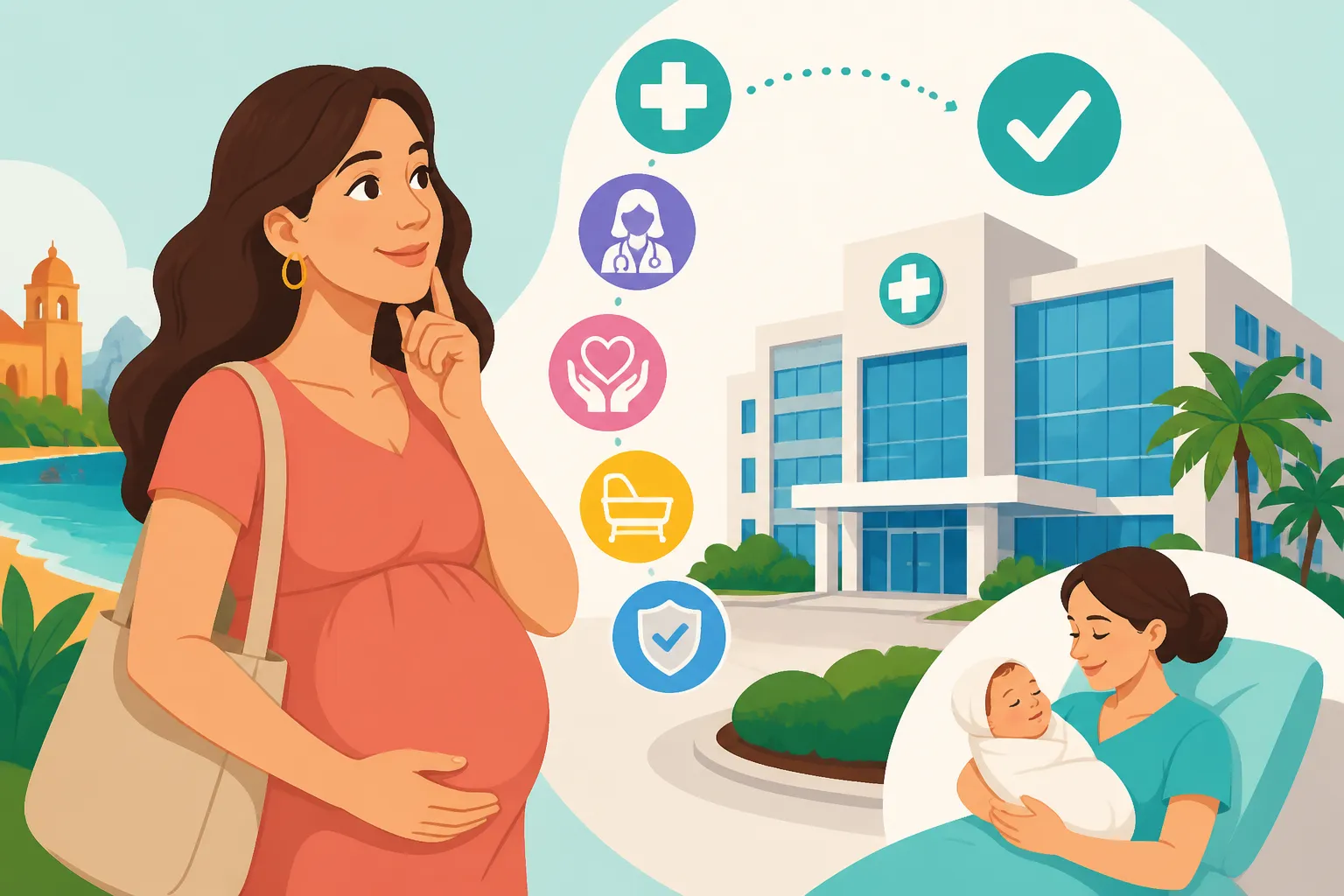
Finding out you are expecting while living abroad is a whirlwind of joy followed immediately by the crushing realization that you have no idea how the local medical system actually works. I remember the paralyzing anxiety of staring at a Google map of Mexico City clinics, wondering if my limited Spanish could handle a neonatal emergency. This guide solves the complex puzzle of selecting the right hospital for your delivery by breaking down the private vs. public divide, costs, and cultural nuances.
Disclosure: This post may contain affiliate links. We may earn a commission at no extra cost to you if you make a purchase through these links. Read full disclosure.
Navigating the Public and Private Maternity Systems
One of the first things you will notice in Mexico is the stark divide between the public and private healthcare sectors. For many expats, this is the most significant hurdle to clear because the experience, wait times, and level of comfort vary wildly between the two. Validating the frustration of navigating these systems is essential; it is not always a linear process, and the paperwork can feel endless when you are already dealing with morning sickness.
The Realities of Public Healthcare via IMSS
If you are a resident and paying into the Mexican social security system, you have access to public hospitals. While the doctors are often world-class and see everything imaginable, the public system is notoriously overcrowded. I have had friends who utilized the public system and praised the surgical skill of the staff, but they also faced long waits for routine checkups and a lack of privacy during labor. In most public facilities, you will be in a ward with other laboring mothers, and the "humanized birth" practices that many Westerners prefer are less common here.
When considering the public route, you must look into Public Healthcare in Mexico: IMSS and IMSS Bienestar Explained for Expats to understand the registration requirements. If you choose this path, be prepared for a very clinical, high-efficiency environment where your birthing plan may take a backseat to hospital protocol. It is also important to note that English is rarely spoken in public hospitals, making it vital to have a translator or a fluent partner by your side at all times.
The Private Hospital Experience
Most expats opt for the private sector, which functions much like a high-end hotel combined with a medical facility. Private hospitals in Mexico, such as the Hospital Ángeles network or Médica Sur, offer private suites, gourmet meal options for partners, and a much higher level of personalized care. Here, you have the freedom to choose your specific ginecobstetra (OB-GYN) and ensure they have privileges at your preferred facility.
The private sector is where you will find the most flexibility for birthing plans, including water births or the presence of a doula. However, this luxury comes with a price tag and a high rate of medical intervention. Mexico has one of the highest C-section rates in the world within its private hospitals. If you are adamant about a natural birth, you must be very selective about both your doctor and your hospital. For a broader view of this landscape, read our Healthcare in Mexico: Complete Guide for Expats (Public vs Private).
Essential Factors for Choosing Your Delivery Hospital
Choosing a hospital isn't just about the proximity to your home or the aesthetic of the lobby. In Mexico, you are often choosing the "package" and the specific medical team that follows you there. You need to look beyond the surface to ensure the facility can handle the unexpected.
Neonatal Intensive Care Units and Emergency Readiness
The most critical factor, in my experience, is whether the hospital has a high-level NICU (Cuna de Cuidados Intensivos Neonatales). Not all private clinics are created equal. Some smaller, boutique maternity clinics are lovely for a standard delivery but lack the equipment to handle a premature birth or a sudden complication. If something goes wrong at a smaller clinic, they will have to transport your newborn across the city to a larger facility, which is a risk no parent wants to take.
Always ask if the hospital is a "Level III" facility. Large networks like Hospital ABC in Mexico City or Hospital San José in Monterrey are equipped for the most complex Medical Emergencies in Mexico: What Expats Should Know and Prepare. Before signing any contracts, verify that they have neonatologists on-site 24/7, not just on call.
Doctor Affiliation and Language Access
In Mexico, doctors are not "employed" by hospitals in the same way they are in some other countries. Instead, they have "privileges" to practice at specific locations. Your first step should be Finding English-Speaking Doctors and Specialists in Mexico who align with your birthing philosophy. Once you find a doctor you trust, they will tell you which hospitals they work with.
If your Spanish is still a work in progress, the hospital’s administrative staff must also be a consideration. While your doctor might speak perfect English, the nurses, anesthesiologists, and billing department might not. I’ve seen expats get caught in frustrating loops trying to settle a bill or request pain management because of a language barrier. Checking the Healthcare in Mexico City: Top Hospitals and Clinics for Expats list can help you identify facilities that cater specifically to international patients.
Birthing Philosophy and Humanized Birth
There is a growing movement in Mexico for "Parto Humanizado" (Humanized Birth). This focuses on reducing unnecessary interventions, allowing freedom of movement during labor, and ensuring immediate skin-to-skin contact. While this is becoming more popular, it is still not the "default" in many large private hospitals.
When touring a facility, ask about their "skin-to-skin" policy and if the baby stays in the room with you (alojamiento conjunto) or is taken to a nursery. Some older-school hospitals still prefer to whisk the baby away for observations for several hours, which can be distressing for new parents. You should also check Women’s Health and Maternity Care in Mexico: What Expats Should Know for more details on local standards of care and how to advocate for your preferences.
Practical Logistics, Costs, and Insurance
The financial aspect of giving birth in Mexico can be confusing because of "paquetes" (packages). These are pre-paid bundles that cover the hospital room, operating room or delivery room fees, and basic supplies. However, these packages almost never include the doctor’s fees, which are paid separately to your OB-GYN, pediatrician, and anesthesiologist.
Understanding Maternity Packages (Paquetes de Maternidad)
When you visit a hospital, the billing department will give you a brochure for their maternity packages. There is usually one price for a "parto natural" (natural birth) and a higher price for a "cesárea" (C-section). It is vital to read the fine print. Does the package include the circumcision? Does it include extra nights if the mother has a fever? Often, the "base price" is just the beginning.
| Feature | Small Private Clinic | Large Hospital Network (e.g., ABC, Ángeles) |
|---|---|---|
| Cost Range (Package Only) | $15,000 – $30,000 MXN | $45,000 – $90,000+ MXN |
| NICU Availability | Often limited or none | Full Level III NICU |
| English Speaking Staff | Rare | Common in administrative areas |
| Personalization | High (more flexible) | Moderate (stricter protocols) |
| Partners Stay | Usually allowed | Included in premium suites |
For a deeper dive into the numbers, check Healthcare Costs in Mexico: Doctor Visits, Hospital Stays, and Surgery Expenses. Budgeting for at least 20% above the package price is a safe bet for any "just in case" scenarios.
Navigating Insurance and International Coverage
If you have international health insurance, the process can be much smoother, but you must verify "direct billing" versus "reimbursement." Many Mexican hospitals will only do direct billing with specific providers. If your insurance isn't on their list, you will have to pay the entire bill upfront—which can be hundreds of thousands of pesos for a C-section—and then fight for reimbursement later.
This is where having a robust plan from a provider like Cigna Global can be a lifesaver. Cigna Global is well-known in major Mexican hospital networks and often has established direct-pay relationships. For digital nomads or those on shorter stays, SafetyWing offers options that might cover complications, though it’s important to check their specific maternity riders. I always recommend that expats look into Choosing Private Health Insurance: Local Mexican Plans vs International Coverage well before they get pregnant, as most plans have a 10-month waiting period for maternity.
Using a brand like SafetyWing is great for travel-related medical needs, but for a planned birth, a comprehensive plan from Cigna Global usually provides the extensive prenatal and postnatal coverage required. Be sure to mention your insurance provider the moment you walk into the hospital’s "Admisión" office.
Proximity and Traffic Realities
Never underestimate Mexican traffic. If you live in a city like Guadalajara or CDMX, a hospital that is 5 miles away could take 90 minutes to reach at 2:00 PM on a Friday. When choosing a hospital, do a "test drive" during peak hours. You want a facility that is accessible even during a "manifestación" (protest) or a heavy rainstorm.
Consider the location of your Pediatric Care in Mexico: Healthcare for Expat Children as well. Often, your baby’s first appointments will be just days after discharge, and you won't want to be trekking across the city with a newborn and a healing incision. Proximity to your home and your doctor’s private office should be high on your list of priorities.
Questions to Ask During Your Hospital Tour
I highly encourage you to schedule a "recorrido" (tour) of the maternity ward. Most private hospitals offer these for free. Do not be shy about asking the hard questions. You are the customer, and this is one of the most important days of your life.
- What is included in the "Paquete de Maternidad"? Specifically, ask about the "insumos" (supplies) like diapers, formula, and pads.
- What is your C-section rate? This will tell you a lot about the hospital's culture.
- Do you allow doulas in the delivery room? Some hospitals are still resistant to non-medical birth partners.
- What happens in the event of a NICU stay? Ask for a daily rate for the NICU, as this is where bills can skyrocket.
- Are there English-speaking nurses on every shift? If not, can they provide a translator?
- What is the policy for the partner? In many private hospitals, the partner can stay overnight on a sofa-bed in your room.
- Do you support the "Hora Dorada" (Golden Hour)? Ensure they won't interrupt the first hour of bonding for routine measurements.
Planning for Having a Baby in Mexico: Maternity Care Options for Foreigners requires a bit more legwork than it would in your home country, but the level of care in the top-tier private hospitals is truly exceptional. By securing your insurance through a reliable brand like Cigna Global early on, and doing your due diligence on How to Register a Birth and Newborn Care in Mexico, you can focus on the excitement of your new arrival rather than the stress of the bureaucracy.
Disclaimer
This article is for informational purposes only and does not constitute medical or legal advice. Healthcare regulations, insurance policies, and hospital standards in Mexico can change frequently. Always consult with qualified medical professionals and insurance specialists regarding your specific situation and maternity care needs.