Building vs Buying a Home: Which Saves You More Money in Mexico?
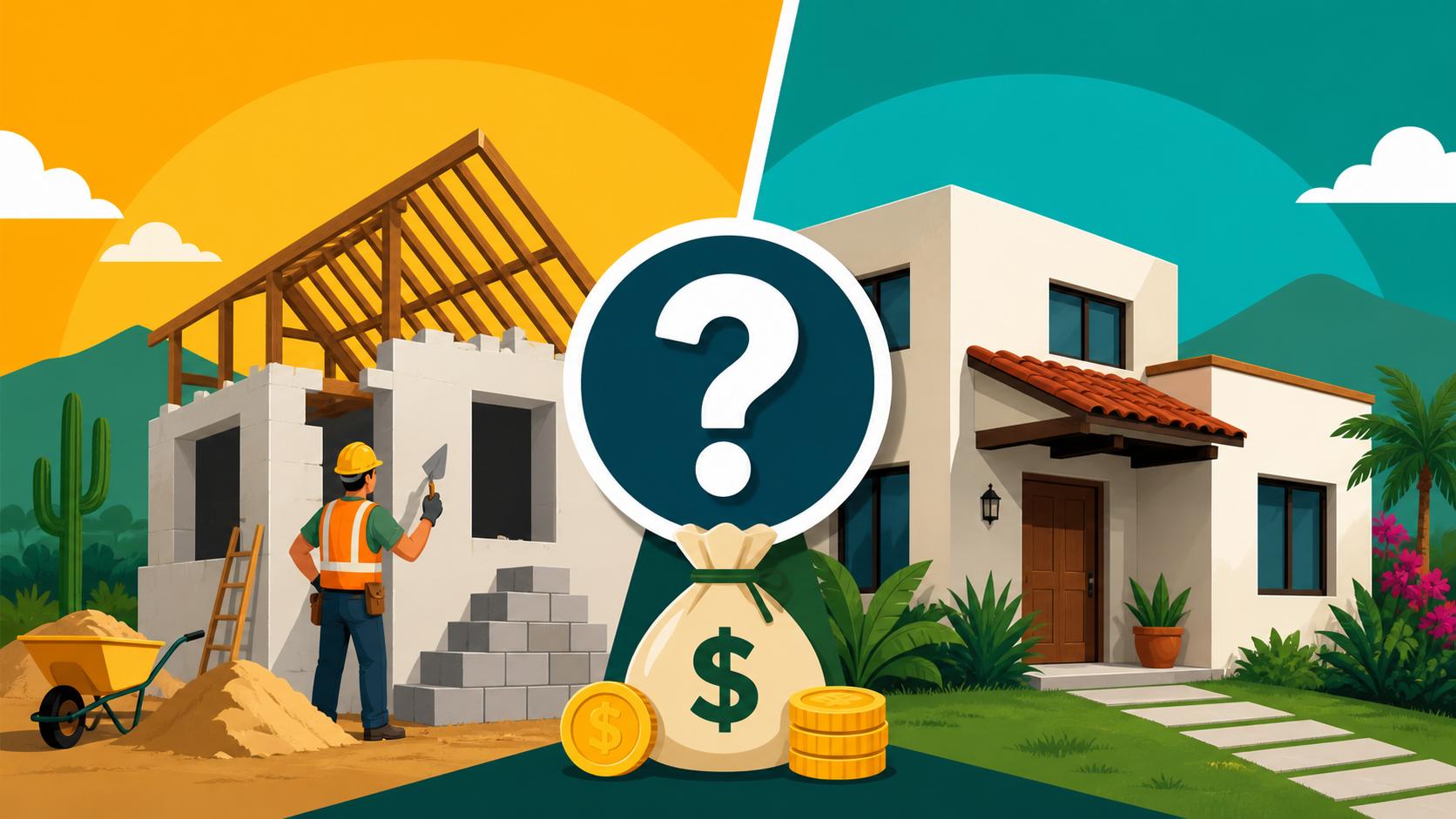
Expats often find themselves torn between the charm of a colonial fixer-upper and the allure of building a custom modern villa, only to get stung by unexpected legal fees or construction delays. When I first moved to Mexico, I spent months debating whether to swing a hammer or just sign a deed, and the financial "surprises" nearly broke my spirit. This guide breaks down the true costs of building versus buying to help you decide which path saves you the most pesos.
Disclosure: This post may contain affiliate links. We may earn a commission at no extra cost to you if you make a purchase through these links. Read full disclosure.
The Financial Reality of Buying an Existing Home in Mexico
Buying an existing property is the most common path for foreigners, largely because it offers the path of least resistance. You see the walls, you test the water pressure, and you know exactly what you are getting—or so you think. In reality, the sticker price is just the beginning of a complex financial journey. In Mexico, real estate transactions are handled by a Notario Publico, a government-appointed lawyer whose fees and the associated taxes can significantly inflate your initial investment.
Closing Costs and Hidden Fees
When you buy an existing home, you should expect to pay between 4% and 7% of the purchase price in closing costs. This is a shock to many North Americans used to much lower percentages. These costs include the acquisition tax (ISAI), which varies by state but generally hovers around 2% to 5%. Then there are the Notario fees, registry fees, and, if you are buying in the restricted zone (near the coast or borders), the cost of setting up a bank trust.
Understanding What Is a Fideicomiso? A Foreigner’s Trust for Owning Coastal Property is essential here, as the initial setup and annual bank fees are a permanent part of your "buying" budget. If you are transferring a large sum of money for a down payment, using a service like Wise can save you a fortune on exchange rate markups compared to traditional Mexican banks. I have seen expats lose thousands of dollars simply by letting their home bank handle the wire transfer at a terrible "retail" rate.
The Cost of Convenience vs. Immediate Repairs
The "convenience" of buying an existing home often comes with a hidden price tag: the previous owner's deferred maintenance. Mexican homes, especially older ones in colonial cities like Mérida or San Miguel de Allende, are built with solid masonry but often have antiquated electrical and plumbing systems. It is not uncommon to buy a "move-in ready" home only to find that the salt air has corroded the wiring or the gravity-fed water system needs a complete overhaul.
You must factor in these immediate "re-entry" costs. While you save on the time and stress of construction, you may spend 10% to 20% of the purchase price within the first year just bringing the home up to your standards. Before you sign, make sure you understand Property and Capital Gains Tax in Mexico: A Guide for Foreigners because the price you pay now sets the "basis" for your taxes when you eventually sell. If the seller asks you to "under-record" the price on the deed to save them on taxes, run away. It will result in a massive tax bill for you later.
Building Your Dream Home: Is It Actually Cheaper?
There is a persistent myth that building a home in Mexico costs "pennies on the dollar" compared to the US or Canada. While labor is undeniably cheaper, the administrative hurdles and the rising cost of materials can quickly close the gap. Building is a marathon, not a sprint, and if you aren't physically present to manage the site, the costs will almost certainly spiral out of control.
Land Acquisition and the Fideicomiso
The first step in building is, of course, buying the land. Raw land is significantly cheaper than a finished home, but it carries higher risks. You need to ensure the land is "escriturada" (deeded) and not "ejido" (communal land), which foreigners cannot easily own. The legal fees for a land purchase are similar to a home purchase, including the need for a Fideicomiso if you are on the coast.
During the land purchase phase, many expats keep their construction funds in a brokerage account to earn interest while permits are processed. Using a platform like Interactive Brokers allows you to hold your capital in USD or other stable currencies while still having the liquidity to move funds into pesos as construction milestones are met. This protects you from the volatility of the peso, which can fluctuate wildly during the 12 to 18 months it takes to build a house.
Construction Labor and Material Volatility
Construction in Mexico is labor-intensive. You won't see many wood-frame houses; it is all concrete, rebar, and block. While the daily wage for an "albañil" (mason) is low, you are legally responsible for their social security payments (IMSS). Failure to pay IMSS can lead to your construction site being shut down and massive fines. This is a "hidden" building cost that many DIY-minded expats overlook.
Furthermore, material costs—specifically cement and steel—have skyrocketed globally. In Mexico, these prices are often tied to international markets. If you are building, you must include a 20% contingency fund in your budget. To stay organized, check out Building a Home in Mexico: What Expats Need to Consider for a deeper look at the permitting process. If you manage the project well and buy materials during "El Buen Fin" (Mexico's version of Black Friday), you can potentially save 20% to 30% over the cost of buying a comparable new-build home from a developer.
Comparing the Long-Term ROI: Build vs. Buy
The financial winner isn't just about the initial outlay; it’s about how much the property costs to hold and how much it’s worth when you leave. A custom-built home is often more energy-efficient, which is a major factor in a country where electricity can be shockingly expensive if you fall into the "DAC" (high-consumption) tariff.
Resale Value and Appreciation
A custom-built home that meets international standards—think grounded electrical outlets, insulated roofs, and pressurized water—will always command a premium in the expat resale market. Most "local" homes aren't built with these features. Therefore, while you might spend more effort building, your "forced equity" is usually higher.
On the flip side, an existing home in a prime, established neighborhood often appreciates faster because of the "location, location, location" rule. You can’t build a new home in the center of a 500-year-old colonial city; you can only renovate. If you are looking at this as a pure investment, consult Investing in Mexico: Opportunities in Real Estate, Stocks, and Beyond to see how real estate fits into a broader Mexican portfolio.
Maintenance and Efficiency Savings
Maintenance is where the "Building" path often pulls ahead in the long run. New construction allows you to install solar panels, high-efficiency mini-split AC units, and proper drainage from day one. In an older home, you are often fighting against the architecture. For example, thick stone walls are great for heat, but they are a nightmare for Wi-Fi signals and modern plumbing.
| Expense Category | Buying Existing (Fixer-Upper) | Building New (Custom) |
|---|---|---|
| Upfront Legal/Taxes | 4-7% of purchase price | 4-7% of land price + permit fees |
| Labor Costs | Variable (Repairs/Renovations) | High (IMSS & specialized trades) |
| Time to Occupancy | 30 – 60 days | 12 – 24 months |
| Hidden Costs | Deferred maintenance, old wiring | IMSS, permit delays, material hikes |
| Financing Difficulty | Moderate (some seller financing) | High (mostly cash-based for expats) |
| Energy Efficiency | Usually Low (needs retrofitting) | High (built to modern standards) |
Making the Choice: A Practical Decision Framework
Ultimately, the decision to build or buy depends on your "hassle tolerance" and your cash flow. If you have the liquid capital and the patience to deal with Mexican bureaucracy, building will almost always give you a better "price-per-square-meter" value. If you need a roof over your head immediately and want to avoid the "construction nightmares" that are common in expat forums, buying is the way to go.
Managing the Currency Exchange with Wise
Whether you are paying a Notario for a deed or a contractor for a load of bricks, you will be dealing with large sums of Mexican Pesos. Never use your "regular" bank's wire service for this. I have used Wise for years to manage my property expenses in Mexico. It allows you to hold a balance in pesos and pay local providers via SPEI (Mexico's instant transfer system), which is the standard way Banking in Mexico: Complete Guide for Foreigners works. This ensures you get the mid-market exchange rate and don't lose a "slice" of your house to bank fees.
Protecting Your Capital with Interactive Brokers
Building a home takes time, and you shouldn't keep all your construction cash in a Mexican bank account where it might be subject to inflation or limited deposit insurance. Keeping your main capital in a stable environment like Interactive Brokers allows you to trade currency pairs (like USD/MXN) at near-institutional rates. You can move money to your Mexican account in "tranches" as your builder reaches specific milestones. This strategy also keeps your wealth accessible if you decide to change plans. For more on managing your financial life here, refer to Taxes in Mexico for Expats: A Complete Guide to Income Tax and More and Best Banks in Mexico for Expats: Comparing Fees and Services.
If you are a retiree, make sure your estate planning is in order before you pour money into the ground. A Mexican property should be reflected in your legal documents; read Do You Need a Mexican Will? Estate Planning for Expats to understand why this is a non-negotiable step. Whether you choose to build a new legacy or restore a piece of Mexican history, being informed about Cost of Living in Mexico: 2026 Comprehensive Guide and the specific tax implications of Property Taxes in Mexico: What Expats Need to Know About Predial will ensure your dream home doesn't become a financial burden.
Disclaimer
This guide is for informational purposes only and does not constitute legal, financial, or real estate advice. Real estate laws and tax regulations in Mexico are subject to change and vary significantly by state and municipality. Always consult with a qualified Mexican attorney (Abogado) and a certified accountant (CPA) before entering into any real estate transaction or construction contract.