Moving Money Out of Mexico: How to Repatriate Funds from Property Sales
Selling your Mexican home is supposed to be a triumph, but wiring those massive proceeds back to your home country often triggers a terrifying maze of frozen bank accounts and exorbitant conversion fees. I remember hyperventilating in a local bank branch when my life savings were blocked for a week. This guide explains how to safely and legally repatriate your property funds without bleeding capital.
Disclosure: This post may contain affiliate links. We may earn a commission at no extra cost to you if you make a purchase through these links. Read full disclosure.
The Bureaucratic Nightmare of the Mexican Real Estate Exit
The Fideicomiso and the Notario Publico
When foreigners purchase coastal or border property in Mexico, they are constitutionally required to hold the deed through a bank trust known as a Fideicomiso. Selling the property requires dismantling or transferring this trust, a highly formalized legal process dictated entirely by a government-appointed lawyer known as a Notario Publico.
The Notario acts as the ultimate gatekeeper of the transaction. They draft the final sale contract, calculate the taxes owed, and legally authorize the transfer of funds. If you do not proactively coordinate with the Notario on exactly how and where the buyer’s funds will be disbursed, you can easily end up with a massive cashier’s check in Mexican pesos that is nearly impossible to deposit into a foreign bank account. Understanding the absolute power of the Notario is a core concept we emphasize in Banking in Mexico: Complete Guide for Foreigners.
Why Mexican Banks Freeze Large Outbound Wires
If the buyer deposits the sale proceeds directly into your local Mexican checking account, your instinct will be to immediately wire the entire balance to your home country. This is where the panic sets in. Mexican banks operate under incredibly strict anti-money laundering regulations.
If a sudden deposit of ten million pesos hits your account and you attempt to wire it to the United States the next morning, the bank’s internal security algorithms will instantly freeze the account. They will demand to see the final Escritura (the formalized deed) and the tax receipts from the Notario proving the legitimate origin of the funds. If you try to wire the money straight to an offshore investment account at Interactive Brokers without properly notifying the Mexican bank’s compliance department first, the transaction will likely be blocked and flagged for an audit by the federal tax authorities.

Tax Liabilities Before You Move Your Money
Understanding Capital Gains Tax
Before you can even think about moving your money out of the country, you must pay the toll to leave. Selling a property in Mexico triggers a massive capital gains tax, known locally as Impuesto Sobre la Renta.
The Notario Publico calculates this tax by subtracting your original, inflation-adjusted purchase price and allowable deductions from your final sale price. The Notario is legally required to withhold this tax amount directly from the buyer’s payment before the remaining funds are ever released to you. Do not calculate your repatriation budget based on the gross sale price; you will only be wiring the net proceeds. Navigating these deductions requires meticulous bookkeeping, a reality we decode fully in Taxes in Mexico for Expats: A Complete Guide to Income Tax and More.
Exemptions and the Home Country Tax Trap
Mexican tax law offers a massive capital gains exemption if you can prove the property was your primary residence. To qualify, you generally must possess a valid Mexico Permanent Residency Explained: A Complete Guide 2026 card, a localized tax ID, and historical electricity bills in your name covering the duration of your ownership.
However, escaping the Mexican tax net does not mean you have escaped your home country. If you are a US citizen, you are subject to citizenship-based taxation. The IRS expects you to report the global sale of your property. If you paid capital gains tax in Mexico, you can often claim a Foreign Tax Credit on your US return to avoid double taxation. Failing to report the influx of hundreds of thousands of dollars to your home country is a federal crime that can trigger catastrophic penalties.
Strategic Methods to Repatriate Your Capital
Traditional SWIFT Wires from Local Banks
The most common, yet least efficient, method of moving your real estate proceeds is executing an international SWIFT wire transfer directly from your Mexican bank account to your home country bank.
While SWIFT wires are highly secure, they are financially devastating when moving large sums. The Mexican bank will rarely give you the true mid-market exchange rate. They will apply a padded corporate exchange rate, secretly skimming two to four percent off the total transfer volume. When you are transferring the equivalent of $300,000 USD, a three percent exchange margin equates to a staggering $9,000 USD loss simply for the privilege of accessing your own money.
| Transfer Method | Security Level | Exchange Rate Margin | Speed | Best Use Case |
|---|---|---|---|---|
| Traditional SWIFT Wire | Very High | 2% to 4% (Terrible) | 3 to 5 Days | Sending funds directly from a Mexican bank with no intermediate steps. |
| Cross-Border Fintech | High | Near 0% (Mid-Market) | 1 to 3 Days | Converting MXN to USD efficiently to avoid massive banking margins. |
| Direct Escrow Payout | Very High | N/A (Remains in USD) | 1 to 2 Days | The absolute best option if the buyer pays in foreign currency. |
Using Fintech for Better Exchange Rates
To bypass the predatory exchange rates of legacy banks, veteran expats rely heavily on specialized financial technology platforms. This is where utilizing a service like Wise becomes a massive tactical advantage.
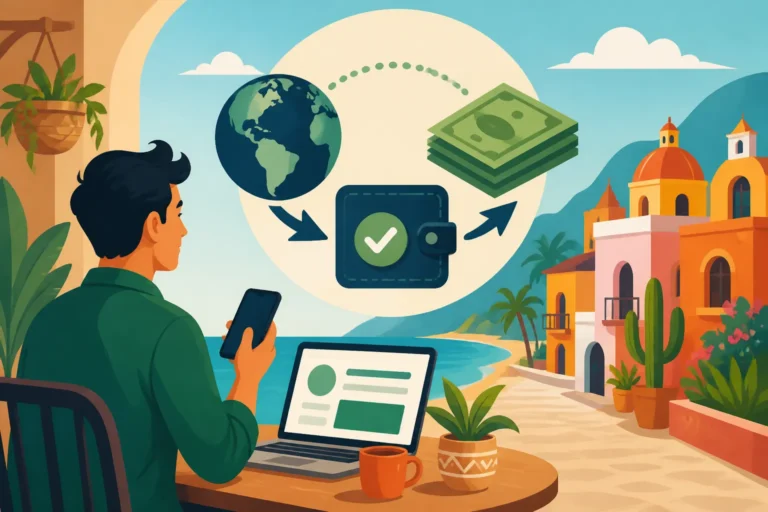
If you are forced to receive the sale proceeds in Mexican pesos into your local bank account, you can initiate a transfer from your Mexican bank to Wise using the domestic transfer network. Once the pesos land in your Wise account, you can convert them to dollars, euros, or pounds at the true, unpadded mid-market exchange rate. You then use Wise to push the converted funds directly into your home country checking account. For expats who use this method to stretch their Cost of Living in Mexico: 2026 Comprehensive Guide budget in reverse, the savings on a six-figure property sale are extraordinary. However, you must proactively submit your Notario sale documents to the compliance department at Wise before initiating the transfer to ensure the large sum does not trigger an anti-money laundering freeze.
Securing the Capital in Offshore Brokerages
Once you successfully navigate the currency conversion and extract your wealth from the Mexican banking system, you face the question of where to park a massive lump sum of cash. Leaving half a million dollars sitting idle in a standard checking account exposes it to inflation and limits your financial agility.
Many expats choose to immediately route their repatriated real estate funds into a globally accessible brokerage. Routing your final converted funds into Interactive Brokers allows you to immediately deploy the capital into diversified index funds or treasury bills. Because Interactive Brokers seamlessly handles multiple global currencies and serves international residents, it acts as a highly secure, borderless vault for your wealth.
Step by Step Repatriation Blueprint
Preparing Your Financial Infrastructure
Do not wait until the closing day to figure out how your money will move. Weeks before you sit down with the Notario, you must verify the operational limits of your accounts.
If you plan to use your Mexican bank to initiate the transfer, you must physically visit the branch manager. You need to confirm that your account does not have a daily digital outbound limit that will prevent you from moving the funds. You must also update your beneficiary information and ensure your tax profile is pristine. Ensuring your accounts are fully authenticated is a core lesson from our Mexico Temporary Resident Visa: Comprehensive Guide for Expats 2026 Update curriculum regarding establishing your initial footprint.
Executing the Final Transfer
The absolute holy grail of Mexican real estate repatriation is entirely bypassing the Mexican banking system. If your buyer is another expat, you can instruct the Notario to draft the closing documents so that the buyer wires the purchase funds directly from their US bank account into your US bank account (or your localized USD receiving details).
If a direct transfer is not possible and the funds must pass through a Mexican escrow company, you must provide the escrow agent with your exact routing instructions. You can provide the escrow agent with the routing details for your Interactive Brokers account to catch the incoming wire, completely avoiding the need to touch a localized retail bank. By orchestrating the flow of capital before the ink dries on the contract, you ensure your real estate exit is as profitable and seamless as your initial entry into the country.
References
Primary sources (official)
- Banco de Mexico: The central bank dictating the operational rules and maximum transfer limits for the domestic interbank electronic payment system. https://www.banxico.org.mx/services/interbanking-electronic-payme.html
- Financial Crimes Enforcement Network: The US Treasury bureau outlining the strict reporting requirements for foreign bank accounts holding real estate proceeds. https://www.irs.gov/newsroom/details-on-reporting-foreign-bank-and-financial-accounts
Other helpful sources
- MexLaw: A highly trusted international law firm providing deep insights into navigating the Fideicomiso closure and understanding the Notario Publico’s role in real estate transactions. https://mexlaw.com/
Disclaimer
The information provided in this article is for educational and informational purposes only and does not constitute official legal, tax, or financial advice. Mexican real estate law, capital gains tax deductions, and federal anti-money laundering regulations are highly complex and strictly enforced by the government. The ability to execute direct cross-border payments or utilize specific escrow services depends heavily on the buyer’s financing structure and the individual discretion of the Notario Publico overseeing the transaction. Always conduct extensive due diligence and consult with a licensed Mexican real estate attorney and a cross-border certified public accountant before finalizing a property sale or executing massive international wire transfers.