Do You Need a Mexican Will? Estate Planning for Expats
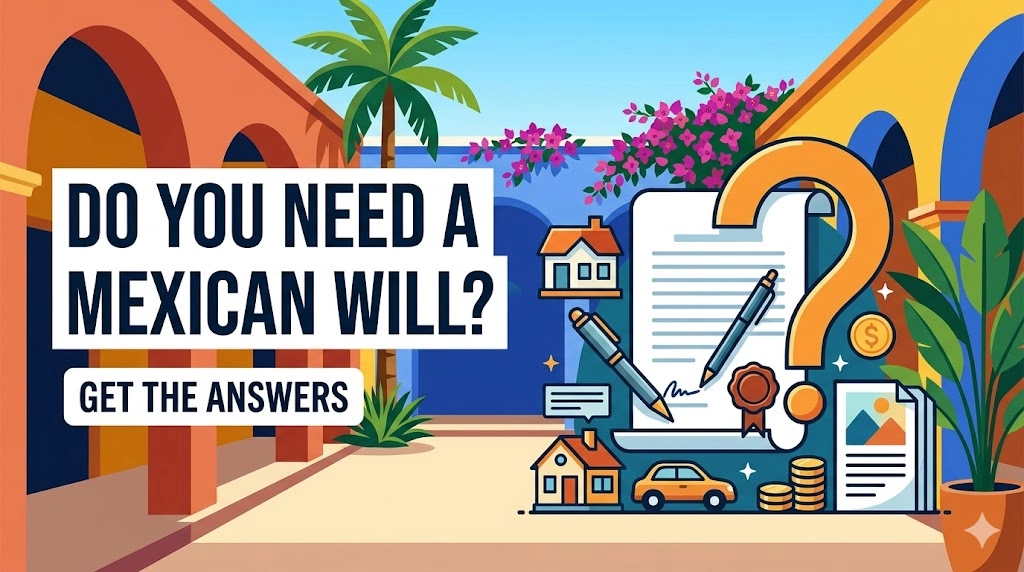
Dying in a foreign country leaves your grieving family trapped in a cross-border legal nightmare of frozen assets and untranslatable court documents. I remember buying my first property here, completely terrified that if I got hit by a bus, my children would spend decades fighting the local legal system. This guide demystifies Mexican estate planning, explaining exactly when you need a local will and how to structure your assets to protect your family’s future.
Disclosure: This post may contain affiliate links. We may earn a commission at no extra cost to you if you make a purchase through these links. Read full disclosure.
The Reality of Cross-Border Estate Planning
Why Your Foreign Will Might Not Be Enough
When I first moved south of the border, I assumed the comprehensive will I drafted back in my home country would universally protect my assets. From a strictly theoretical legal standpoint, a US or Canadian will is valid in Mexico. From a practical, operational standpoint, relying on a foreign will is a catastrophic administrative error that will haunt your beneficiaries for years.
If you pass away and your heirs attempt to use a foreign will to claim your Mexican bank accounts or local real estate, they cannot simply hand the English document to a Mexican judge. Your grieving family must first get the foreign will probated in your home country. Once probated, they must obtain freshly issued copies, have those documents formally authenticated via an international Apostille stamp, and then pay for certified legal translations into Spanish.
Finally, they must hire a bilingual Mexican attorney to present these localized documents to a Mexican civil court, begging the judge to recognize the foreign probate. This process frequently takes two to five years and costs thousands of dollars in legal fees. Meanwhile, your local assets remain completely frozen. To bypass this devastating cross-border friction, veteran expats draft a localized Testamento (Mexican will) specifically covering their assets located within the Republic.
Intestacy Laws in Mexico What Happens Without a Will
If you die without a valid will—a legal state known as dying intestate—you surrender all control over your legacy to the local government. Mexico operates under civil law, not common law, which means the rules governing inheritance are drastically different than what you might expect back home.
Under Mexican intestacy laws, the civil code of the specific state where you reside dictates exactly how your assets are divided. It does not matter what verbal promises you made to your spouse. In many Mexican states, a surviving spouse does not automatically inherit everything if you have surviving children. The assets are often divided mathematically among the spouse and the children, which can create massive, unresolvable legal disputes if you have a blended family, estranged children, or complex dynamics. Furthermore, dying intestate triggers a grueling judicial succession process that entirely locks your family out of the financial infrastructure we discuss in Banking in Mexico: Complete Guide for Foreigners.
When Do You Absolutely Need a Mexican Will
Real Estate and the Bank Trust
If you own property in Mexico, your need for a local will depends entirely on how the deed is structured. Because of the Mexican Constitution, foreigners buying residential property within 50 kilometers of the coast or 100 kilometers of the border must purchase the home through a bank trust known as a Fideicomiso.
The administrative beauty of the Fideicomiso is that it is fundamentally a trust instrument. When you establish the trust to buy your beach house, the bank requires you to designate primary and substitute beneficiaries directly within the trust document. If you pass away, the property bypasses the Mexican probate courts entirely and transfers directly to your named beneficiaries upon presentation of a death certificate. This is a massive relief for expats navigating the complex housing market detailed in Renting a Home in Mexico: Complete Expat Guide to Leases, Deposits, and More.
However, there is a massive catch. If you and your substitute beneficiaries pass away simultaneously in a tragic accident, the Fideicomiso defaults back to the Mexican probate courts. Furthermore, if you own property “fee-simple” (holding the Escritura directly in your name) in the interior of the country—like in San Miguel de Allende, Guadalajara, or Mexico City—you do not have a trust to protect you. In these scenarios, a Mexican will is an absolute, non-negotiable requirement.
Local Bank Accounts and Vehicles
Even if your real estate is safely tucked inside a Fideicomiso, you likely possess other localized assets. When you open a Mexican checking or savings account, the bank will force you to name beneficiaries on the application. This is helpful, but banking policies frequently change, and claiming those funds as a foreigner often requires a localized death certificate and a recognized will to authorize the release of the capital.
Beyond cash, consider your physical assets. What happens to your Mexican-plated car, your expensive artwork, or the high-end furniture outfitting your apartment? You cannot simply hand the keys to a foreign relative and expect them to legally drive your car across the international border. Without a Mexican will explicitly naming an heir for your localized personal property, these items fall into the bureaucratic abyss of probate.
Structuring Your Assets to Minimize Mexican Probate
Managing Daily Finances Across Borders
The absolute most effective estate planning strategy an expat can deploy is to simply limit their financial exposure to the Mexican legal system. Do not bring your life savings across the border. Instead, maintain a localized footprint strictly for daily operational expenses, and keep the vast majority of your liquid cash safely anchored in your home country.
To bridge this geographic gap efficiently without bleeding money on massive wire fees, savvy expats use Wise to move capital precisely when they need it. When it is time to pay rent, cover utility bills, or fund your lifestyle budget detailed in Cost of Living in Mexico: 2026 Comprehensive Guide, you can use Wise to send the exact peso amount directly into your Mexican checking account. By executing smaller, targeted transfers through Wise, you eliminate the need to hoard massive, probate-vulnerable cash balances in a foreign country. If you unexpectedly pass away, your local Mexican bank account will only hold a minimal balance, completely mitigating the financial damage of the local probate process. Integrating Wise into your routine keeps your assets agile and fundamentally secure.
Shielding Your Core Wealth
While minimizing your cash exposure is vital, protecting your long-term wealth—your stock market investments, mutual funds, and retirement portfolios—requires a hardened geographic perimeter. You should never move heavy investment capital into the Mexican brokerage system, as doing so subjects your nest egg to highly complex local taxation and regulatory hurdles that complicate the issues discussed in Taxes in Mexico for Expats: A Complete Guide to Income Tax and More.
To maintain absolute security over your legacy, you should utilize an expat-friendly, globally accessible brokerage. Leaving your core investments in Interactive Brokers ensures your capital remains anchored under strict global financial regulations, completely outside the jurisdiction of Mexican probate courts. Because Interactive Brokers legally accepts Mexican residential addresses, your accounts will not be frozen simply because you relocated abroad.
I rely heavily on Interactive Brokers to manage my long-term wealth because it provides a bulletproof financial shield for my beneficiaries. Utilizing Transfer On Death designations within an Interactive Brokers account ensures that if something happens to me, my heirs deal directly with the brokerage under familiar, streamlined regulations, completely bypassing the agonizing Mexican legal system. Using a platform like Interactive Brokers perfectly complements the flexible lifestyle detailed in our Mexico Temporary Resident Visa: Comprehensive Guide for Expat (2026 Update) and Mexico Permanent Residency Explained: A Complete Guide (2027), allowing you to travel safely without estate anxiety.
The Process of Drafting a Mexican Will
Working With a Notario Publico
If you decide you need a Mexican will to cover your local real estate, vehicles, and residual cash, you cannot simply write your wishes on a piece of paper, sign it in front of a witness, and call it legal. The process in Mexico is highly formalized.
You must draft a Testamento Público Abierto (Open Public Will) before a Notario Público. It is crucial to understand that a Mexican Notario is not the equivalent of a basic notary public at a shipping store in the US or Canada. A Mexican Notario is an elite, government-appointed lawyer who acts as an extension of the state.
The Notario will draft your will exclusively in Spanish. If you are not completely fluent in legal Spanish, the law mandates that an official, certified translator must be present during the signing. The Notario will literally read the entire will aloud to you and the translator to ensure you comprehend every single clause before you sign it. Once signed, the Notario registers the document in the Registro Nacional de Avisos de Testamento, creating a permanent, federally searchable record of your final wishes.
Timelines and the September Discount
Drafting a will is relatively straightforward once you schedule an appointment with a Notario, but the timing of your application can save you a significant amount of money.
Every year, the Mexican government sponsors a national campaign known as “Septiembre, Mes del Testamento” (September, Month of the Will). During this month, Notarios across the entire country drastically reduce their legal fees, frequently offering discounts of up to 50 percent, and heavily streamline the appointment process to encourage citizens and legal residents to formalize their estates.
Outside of September, drafting a localized will generally costs between $300 and $600 USD, depending on the complexity of your assets and the specific state where you reside. During the September campaign, that cost frequently drops to around $150 to $200 USD.
| Estate Planning Document | Primary Jurisdiction | Best Used For |
| Foreign Will (US/CAN/UK) | Home Country | Foreign bank accounts, home country real estate, offshore brokerages. |
| Mexican Will (Testamento) | Mexico | Mexican fee-simple real estate, local bank accounts, vehicles, local physical assets. |
| Bank Trust (Fideicomiso) | Mexico (Restricted Zones) | Coastal or border real estate. Bypasses probate if substitute beneficiaries are living. |
| Transfer On Death (TOD) | Global Brokerages | Direct transfer of investment portfolios to heirs, entirely bypassing probate courts. |
Preparing for the worst is a grim reality of moving abroad, but burying your head in the sand is not a viable strategy. By minimizing your local cash footprint, leveraging offshore brokerages, and formally documenting your localized assets with a Notario, you ensure your family is protected from the crushing weight of international probate.
References
Primary sources (official)
- Colegio Nacional del Notariado Mexicano: The official national college of Notarios providing guidelines on family law, the public open will, and the process of registering testaments. https://www.notariadomexicano.org.mx/
- Gobierno de Mexico – Mes del Testamento: The official federal portal detailing the annual September campaign, answering frequent legal questions about intestacy, and explaining the role of the executor (albacea). https://www.gob.mx/testamento
Other helpful sources
- U.S. Embassy & Consulates in Mexico: The specific consular mission portal detailing the electronic reporting of death abroad and local mortuary certificates required for repatriation of remains. https://mx.usembassy.gov/electronic-consular-report-of-death-abroad/
Disclaimer
The information provided in this article is for educational and informational purposes only and does not constitute official legal, estate planning, or tax advice. Mexican civil law regarding inheritance, intestacy, and the legal obligations of the Notario Público are highly complex and vary significantly by specific Mexican state jurisdictions. The rules governing the Fideicomiso (bank trust) and its designated beneficiaries are dictated by individual banking institutions and federal constitutional laws. Always conduct extensive due diligence and consult with a dual-licensed international estate planning attorney and a certified Mexican Notario before drafting wills, acquiring foreign property, or making binding decisions about your global assets. Ensure that any financial services, offshore brokerages, or localized strategies mentioned meet your specific individual risk tolerance and current legal residency status.