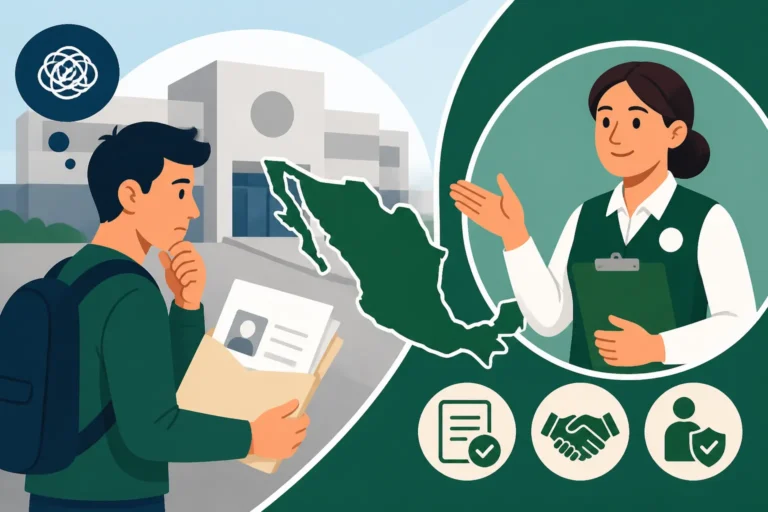
Do You Need an Onward Ticket to Enter Mexico on a Tourist Visa?
The era of casually strolling up to a Mexican immigration desk with a one-way ticket and a vague plan to “leave whenever” is officially dead. The National Institute of Migration (INM) has completely overhauled its digital infrastructure, and border agents are actively hunting for “perpetual tourists.” This comprehensive, 2500+ word guide is your definitive 2026 operational manual for navigating Mexico’s entry requirements. We will strip away the outdated rumors and break down exactly why airlines are enforcing this rule, what actually qualifies as an onward ticket, the severe dangers of using fake ticket rental services, and the essential documents and healthcare safety nets you must carry to ensure your entry is flawless.
Disclosure: This post may contain affiliate links. We may earn a commission at no extra cost to you if you make a purchase through these links. Read full disclosure.
1. The 2026 Border Reality: The Death of the “Automatic” 180 Days
To understand why the onward ticket is so strictly enforced today, you must understand the historical loophole that travelers exploited for decades, and how the Mexican government recently closed it.
The Golden Era of the Paper FMM
For years, the bedrock of entering Mexico was the physical, paper Forma Migratoria Múltiple (FMM). You filled it out on the airplane with a blue pen. When you landed, the INM officer barely glanced at you, stamped the paper, and automatically granted you 180 days (roughly six months) in the country. It didn’t matter if you only asked for a week; the administrative default was 180 days.
Because of this lax system, tens of thousands of expats moved to Mexico on one-way tickets, living as “perpetual tourists” and bypassing the legal residency and tax systems.
The Digital Dragnet
Recognizing the massive economic drain of this loophole, Mexico modernized its major international airports (such as Cancún, Mexico City, Puerto Vallarta, and Los Cabos). The paper FMM has been aggressively phased out in favor of a highly integrated, real-time digital tracking system.
When you approach the INM desk today, the officer scans your passport into a unified federal database. Their screen illuminates with your complete Mexican travel history.
The Hard Truth: Immigration law states that tourists may be granted up to 180 days. It is a maximum ceiling, not a baseline right. Today, INM officers are trained to interrogate your itinerary and tailor your stamp exactly to your travel plans.
If you step up to the desk and say, “I am staying for a two-week vacation,” the officer will physically write “15 days” on your passport stamp. If you say, “I am staying for four months, but I don’t have a return flight yet,” the officer will immediately suspect you are attempting to live in Mexico illegally. Your lack of an onward ticket is the ultimate red flag.
To understand the mechanics of this digital system and the dangers of airport kiosks, read our master guide: Mexico Tourist Card (FMM) Explained: Entry Requirements for 2026.
2. The Airline Hurdle: You Might Not Even Board
Many travelers assume the only hurdle they have to clear is the Mexican INM officer when they land. In reality, the most rigid enforcement of the onward ticket rule happens before you even leave your home country.
The IATA Timatic System
When you arrive at JFK in New York, Heathrow in London, or Pearson in Toronto to check in for your flight to Mexico, the airline gate agent is not just checking your baggage weight. They are legally obligated to verify your admissibility into your destination country.
Airlines use a global database called Timatic (Travel Information Manual Automatic), managed by the International Air Transport Association (IATA). Timatic explicitly lists the entry requirements for every country on earth. For Mexico, the Timatic database clearly states that tourists must hold proof of onward or return travel.
The Financial Liability of the Airline
Why does the airline care? If an airline allows you to board a flight to Cancún without a return ticket, and the Mexican INM officer subsequently rejects your entry and deports you, the airline is held financially liable. The Mexican government will fine the airline thousands of dollars for transporting an inadmissible passenger, and the airline is legally forced to fly you back to your origin city at their own expense.
Because airlines hate losing money, their gate agents are trained to be merciless. If you only hold a one-way ticket, the agent will ask to see proof of your return flight. If you cannot produce a valid reservation on your phone, they will absolutely deny you a boarding pass. You will be left standing at the check-in counter watching your flight take off without you.
3. What Exactly Qualifies as an “Onward Ticket”?
If you must have an onward ticket, what exactly satisfies the airline agent and the Mexican INM officer? The requirement is “Proof of Onward Travel,” meaning you must prove you are leaving Mexican territorial borders within your authorized timeframe.
Here are the acceptable formats:
1. The Classic Return Flight
This is the safest, most unquestionable proof. A confirmed airline itinerary showing you flying from Mexico back to your home country (e.g., Mexico City to Chicago, or Cancún to London).
2. A Flight to a Third Country
You do not have to return home. If you are backpacking across Latin America, an onward ticket to a third country is perfectly acceptable. For example, a confirmed flight from Puerto Vallarta to Bogotá, Colombia, or from Mexico City to Guatemala City proves you are leaving Mexico.
- Crucial Caveat: Ensure you meet the visa entry requirements for that third country, or the airline might still deny you boarding.
3. International Bus Tickets (High Risk)
In the past, backpackers frequently bought cheap, $30 ADO or Tica Bus tickets from Chiapas, Mexico, crossing the land border into Guatemala or Belize, and used them as proof of onward travel.
- The Reality: While technically a form of onward travel, international bus tickets are highly scrutinized at major airports. Airline gate agents in the US or Europe are often unfamiliar with Central American bus companies and may reject the ticket because they cannot easily verify the PNR (Passenger Name Record) in their global flight systems. Use bus tickets as proof only if you are already traveling overland; if you are flying into a major Mexican airport, book a flight.
4. Cruise or Boat Departures
If you are flying into Mexico to meet a cruise ship or a private sailing charter, a formal, paid itinerary showing your departure by sea is acceptable proof.
4. The Massive Danger of “Fake” or Rented Ticket Services
As the onward ticket requirement became strictly enforced, a cottage industry of “ticket rental” websites exploded across the internet. For $10 or $15, these websites generate a legitimate-looking flight itinerary with your name on it, holding a real reservation for 24 to 48 hours before automatically canceling it.
Backpackers and digital nomads have used these services for years to trick airlines and border agents.
I strongly advise against using ticket rental services.
The INM Verification Protocol
In the past, an INM officer simply glanced at a printed piece of paper. Today, INM officers in the secondary inspection room (the dreaded Cuartito) have direct access to live flight databases.
If an officer suspects you are lying about your travel plans, they will type your PNR (the 6-character alphanumeric confirmation code on your ticket) directly into their terminal.
- If you used a rental service and the 48-hour hold has expired, the system will show the ticket as “Canceled” or “Invalid.”
- If the officer catches you presenting a fake or canceled itinerary, you are no longer just an unprepared tourist; you are actively committing immigration fraud.
The Catastrophic Consequences
Lying to a federal INM officer is a severe infraction. If caught with a fake ticket:
- Immediate Detention: You will be held in the airport Estación Migratoria (holding facility).
- Formal Rejection (Rechazo): You will be formally denied entry to Mexico.
- Deportation: You will be placed on the next available flight back to your origin city.
- The Federal Ban: The INM will log your fraud in the database, and you will likely receive a multi-year administrative ban, forbidding you from re-entering Mexico for 1 to 5 years.
Do not risk your entire ability to travel to Mexico to save $15 on a sketchy website.
5. The Bulletproof Solution: The Fully Refundable Ticket Strategy
If you truly do not know when you want to leave Mexico—perhaps you want to stay for 3 weeks, or maybe 3 months—how do you satisfy the INM legally without committing to a rigid date?
The only legally sound, zero-risk strategy is to purchase a fully refundable airline ticket directly from a major, reputable carrier.
How to Execute the Strategy
- Buy Direct: Go to the official website of a major airline (such as Delta, American Airlines, United, or Aeroméxico). Do not use third-party booking sites like Expedia or Kiwi, as their refund policies are notoriously difficult to navigate.
- Select the “Fully Refundable” Fare Class: When choosing your flight out of Mexico, you must explicitly select the premium, fully refundable fare class (often labeled “Main Cabin Refundable” or “Flexible”). This ticket will be expensive—sometimes $500 to $1,000 USD.
- Enter Mexico: Present this legitimate, fully paid itinerary to the airline gate agent and the Mexican INM officer. Because it is a real ticket, it will easily pass any PNR database check.
- Cancel for a Refund: Once you are safely through Mexican immigration, standing at the baggage claim with your passport stamped, log onto the airline’s app and cancel the flight. Because you bought a fully refundable fare class, the airline will refund the entire amount directly to your credit card within a few business days.
The 24-Hour Cancellation Rule (Use with Extreme Caution)
Under US Department of Transportation (DOT) regulations, any flight touching US soil can be canceled within 24 hours of booking for a full refund, regardless of the fare class. Some travelers buy a cheap, non-refundable ticket the morning of their flight to Mexico, show it at the border, and cancel it 12 hours later.
- The Risk: If your flight is delayed, or you get pulled into secondary inspection and lose track of time, you might miss the 24-hour window, leaving you stuck with a non-refundable ticket you don’t want. The premium “Fully Refundable” fare class is always the safer, stress-free option.
6. Beyond the Ticket: Surviving the INM Interrogation
Having a legitimate return flight is just the first piece of the puzzle. When you step up to the INM desk, the officer’s job is to verify that your entire profile matches the definition of a “Tourist.”
If you ask for a 180-day stay, handing them a return ticket dated six months from now is not enough. The officer will immediately ask: “How are you paying for a six-month vacation?”
To survive the INM interrogation and secure your desired days, you must carry a physical folder containing:
1. Proof of Accommodation
You must prove you have a place to sleep. If you are staying for two weeks, a printed hotel reservation is perfect. If you are staying for three months, you need a long-term Airbnb receipt or a signed lease agreement.
- Staying with a friend? You must have a formal, printed letter of invitation from your host, a copy of their Mexican ID (INE) or residency card, and a copy of their recent utility bill proving their address.
2. Proof of Economic Solvency
The INM officer needs to know you will not illegally enter the local labor market to survive. You should have printed copies of your last three months of bank statements showing a healthy balance, or high-limit credit cards. If you look like a backpacker asking for six months with $200 in your checking account, you will be rejected.
The Dreaded “Cuartito” (Secondary Inspection)
If the officer doubts your story—perhaps your travel history shows back-to-back border runs, or your answers are inconsistent—they will refer you to Segunda Revisión, known among expats as El Cuartito (The Little Room).
In secondary inspection, they will confiscate your cell phone and thoroughly search your luggage. If they find items that contradict your “tourist” story—such as a desktop computer monitor, a blender, multiple copies of your resume, or business cards offering local services—they will use this as proof of intent to live/work illegally, and your return ticket will not save you from deportation.
To fully understand the shifting dynamics of entering the country and the specific lists of visa-exempt nations, review our guide: Visa-Exempt vs Visa-Required: Understanding Mexico’s Entry Policies.
7. Document Preparation: When You Intend to Stay (Family Unity)
There is one massive, highly specific exception where a tourist intends to enter Mexico and never use their return ticket.
If you are entering Mexico on a tourist visa with the explicit intention of marrying a Mexican citizen, or if you are entering to process a residency application based on having a Mexican child, you fall under the constitutional protection of Vínculo Familiar (Family Unity).
The Paradox of Entry
Even if your ultimate goal is to transition your tourist visa to a residency card inside Mexico, you must still enter as a tourist. Therefore, to satisfy the airline gate agent and the INM officer at the airport, you must still purchase and present a refundable onward ticket.
Once you are safely inside the country, you cancel the ticket and initiate your Cambio de Condición de Estancia (Change of Status) at the local INM office. To deeply understand this specific residency shortcut, read: Can You Change from a Tourist Visa to Residency Without Leaving Mexico?.
The Authentication and Translation Mandate
If you are entering Mexico to marry or apply for family residency, you must bring your foundational civil documents with you (e.g., your foreign birth certificate or divorce decrees).
However, a US, Canadian, or UK birth certificate is legally meaningless to the Mexican government in its original form.
- The Apostille: You must have the document internationally authenticated with an Apostille from your home government before you fly.
- The Certified Translation: Once apostilled, Mexican immigration law strictly mandates that any foreign document submitted for legal procedures must be accompanied by a certified Spanish translation.
You cannot use Google Translate. You cannot ask your bilingual fiancé to translate it. The Mexican government explicitly requires translations performed by a recognized, sworn translator embedded within the Mexican legal system (a Perito Traductor).
We strongly recommend utilizing RushTranslate for your vital records. They specialize in certified, sworn translations specifically formatted for highly sensitive, complex Mexican civil and INM procedures. By sending your apostilled birth certificates to RushTranslate prior to flying to Mexico, you ensure your documents are legally flawless and ready to submit to the Civil Registry the moment you land. Do not risk your wedding date or your residency application over a translation technicality.
8. Healthcare: The Invisible Requirement for Tourists
You have your passport, your refundable onward ticket, and your accommodation booked. You are ready to fly. However, there is a massive, invisible safety net that 90% of tourists completely ignore until it is too late.
Your domestic health insurance does not cover you in Mexico.
Whether you are carrying US Medicare, a standard Canadian provincial health plan, or the UK NHS, those policies stop at the border.
The Reality of Mexican Hospitals
If you suffer a medical emergency while on vacation—a severe case of food poisoning in Oaxaca, a scooter accident in Tulum, or a sudden cardiac event—you will urgently need medical attention.
Mexico boasts exceptional, world-class private hospitals (such as Hospital Ángeles, Star Médica, and Hospital San Javier). These elite facilities offer clinical standards that rival the US and are heavily staffed by bilingual specialists.
However, these facilities operate strictly as for-profit businesses. In the event of a severe emergency, private hospital administrators will mercilessly demand a massive, upfront credit card deposit (often ranging from $3,000 to $10,000 USD) before they will even admit you to the emergency room or begin stabilization. If you cannot produce the funds immediately, they will transfer you to the public healthcare system, which is chronically underfunded, heavily backlogged, and operates exclusively in Spanish.
The Absolute Necessity of Travel Medical Insurance
Attempting to self-insure against catastrophic trauma while on vacation is financial suicide. Your return flight ticket will not help you if you are stuck in an ICU.
You must secure robust international health coverage to guarantee VIP access to private hospitals without facing bankruptcy. We highly recommend securing an expat-tailored or travel-medical policy through Cigna Global.
Their international plans offer direct billing networks with Mexico’s top private hospitals. This means that in a crisis, the hospital coordinates the massive bills directly with Cigna Global, completely bypassing the need for you to drain your vacation budget or navigate complex reimbursement forms in Spanish while under duress. Securing this coverage ensures your trip to Mexico is physically and financially protected from the moment you land. For a comprehensive comparison of how these hospital systems operate, read Healthcare in Mexico: Complete Guide for Expats Public vs Private.
9. What Happens if You Don’t Leave on Your Ticketed Date?
Let’s say you arrived in Mexico, showed the INM officer your return ticket for 15 days from now, and the officer wrote “15 days” on your passport stamp.
But on day 12, you decide you love Mexico too much and simply cancel your flight, intending to stay a few more months.
Treating the handwritten date on your passport as a mere suggestion is a catastrophic mistake.
The Severe Consequences of Overstaying
The absolute moment the handwritten date on your passport stamp passes, your legal standing in Mexico evaporates. You transition from a protected legal visitor to an undocumented migrant.
In previous decades, the INM treated overstays lightly. You paid a small fine at the airport and flew home. Today, the INM treats an overstay as a severe federal infraction.
- Massive Federal Fines: The INM calculates fines based on the UMA metric ($117.31 MXN daily in 2026). Fines for overstaying range from 20 to 100 days of UMA, meaning you could face penalties up to **$11,731 MXN** (Roughly $680 USD).
- Missed Flights: You must be escorted to an INM office to process this paperwork before you can leave the country, which routinely causes travelers to miss their international flights.
- The Federal Ban: When you overstay, the digital system logs the infraction permanently. The INM is increasingly issuing administrative bans alongside the fines, legally forbidding you from re-entering Mexico for 1 to 5 years.
If you want to stay longer than your original stamp allows, you cannot simply extend it online. You must generally leave the country and re-enter, or face the consequences of the digital dragnet. To fully grasp the penalties and procedures for fixing an expired visa, read Overstaying in Mexico: Consequences and How to Fix Your Status.
10. Summary Pre-Flight Checklist
Do not let the strict border regulations deter you from visiting one of the most culturally rich and geographically stunning countries on earth. The Mexican immigration system simply demands preparation and respect for its rules.
Use this rapid-fire checklist to ensure your entry is flawless:
- [ ] Verify Passport Validity: Your passport must be valid for at least six months beyond your planned date of departure from Mexico.
- [ ] Secure the Onward Ticket: Buy a confirmed return flight, a flight to a third country, or utilize the fully refundable ticket strategy to maintain flexibility. Do not use fake rental sites!
- [ ] Print Accommodation Proof: Keep a physical, printed copy of your hotel, resort, or Airbnb reservations covering your requested length of stay.
- [ ] Print Financial Proof: Have physical copies of your recent bank statements ready to prove you can fund your vacation without working locally.
- [ ] Translate Foundational Documents: If entering to process family residency or marriage, ensure your apostilled vital records are certified by RushTranslate before you fly.
- [ ] Secure Travel Healthcare: Purchase a comprehensive Cigna Global international health policy so a medical emergency doesn’t bankrupt you at a private Mexican hospital.
- [ ] Check the Stamp: When the INM officer stamps your passport, verify the exact number of days they handwrote on the stamp before walking away.
By understanding that the onward ticket is an absolute requirement, preparing a flawless physical folder of documentation, and ensuring your health and safety nets are secure, you transform the intimidating immigration desk into a mere five-minute formality. Once the officer stamps your passport and waves you through, the vibrant, unparalleled magic of Mexico is entirely yours to explore.
References
Primary Sources (Official)
- Instituto Nacional de Migración (INM): The definitive federal portal detailing the legal requirements for entry as a tourist, the authority of border agents to demand proof of onward travel, and the digital FMM tracking system. https://www.inm.gob.mx/spublic/portal/inmex.html
- International Air Transport Association (IATA): The global database used by all major airlines at check-in to verify passenger admissibility, which explicitly mandates proof of return or onward travel for visa-exempt tourists entering Mexico. https://www.iatatravelcentre.com/
Other Helpful Sources
- Mexperience: A highly trusted portal providing simplified explanations of the digital border transition, the risks of arriving without a return flight, and strategies for navigating INM questioning. https://www.mexperience.com/lifestyle/mexico-immigration-guide/
- ExpatDen Mexico: A detailed, firsthand resource offering granular breakdowns of dealing with airline gate agents, handling the INM secondary inspection room (“el cuartito”), and securing private travel healthcare. https://www.expatden.com/mexico/
Disclaimer
The information provided in this comprehensive guide is for educational, logistical, and informational purposes only and does not constitute formal immigration, legal, travel, or medical advice. The decision to allow you to board a flight rests entirely with the airline gate agent, and the decision to grant you entry (as well as the exact number of days authorized) is at the absolute, unquestionable discretion of the INM officer at the port of entry. No specific duration of stay is legally guaranteed to any traveler. Always verify the most current entry requirements directly with your airline or the nearest Mexican consulate before booking your flights. We strongly recommend consulting with a certified bilingual Mexican immigration attorney if you have a complex travel history or previous overstays.