Retiring to Mexico as an American: Pensions, Social Security, and Annual Filing
Moving your life to Mexico for retirement sounds like a dream, doesn't it? Turquoise waters, vibrant culture, delicious food, and a slower pace of life – what's not to love? But amidst the excitement of planning your new adventure, the financial realities, especially concerning your pensions, Social Security, and annual tax filings back home and here in Mexico, can feel like a labyrinth designed by the most bureaucratic minds. This guide is here to walk you through the often-confusing world of managing your retirement income and tax obligations as an American expat in Mexico, ensuring your golden years are truly golden, not green with worry.
Disclosure: This post may contain affiliate links. We may earn a commission at no extra cost to you if you make a purchase through these links. Read full disclosure.
Understanding Your Income Streams in Retirement
When you’re preparing for retirement in Mexico, your income sources become a critical part of your financial planning. Unlike living domestically, where everything flows neatly from one account to another, receiving income from abroad and living in Mexico introduces a layer of complexity that can trip up even the most organized retiree. It’s not just about how much you have, but how it arrives and how both the US and Mexico view it.
US Social Security Benefits While Living in Mexico
One of the biggest questions on every American retiree's mind is, "Will my Social Security benefits still come through if I'm living in Mexico?" The good news is, for the vast majority of US citizens, the answer is a resounding "yes." Your Social Security benefits will continue to be paid, regardless of your relocation to Mexico. However, how you receive those benefits needs a bit of planning.
Most expats opt for direct deposit into a US bank account, which offers the most straightforward way to receive funds. From there, you can transfer money to your Mexican bank account as needed. This minimizes foreign transaction fees on each payment and allows you to control the timing of your currency exchange. If you don't have a US bank account, or prefer to have it directly deposited into a Mexican account, that's often possible through international wire transfers, though it's worth checking with the Social Security Administration for current regulations and specific bank requirements in Mexico. The main takeaway is that your well-deserved Social Security isn't going anywhere, but you need to set up the rails for it to get to you smoothly.
Private Pensions, 401(k)s, and IRAs
Beyond Social Security, many retirees rely on private pensions, 401(k)s, IRAs, and other retirement investment vehicles. Managing these from Mexico involves a crucial blend of understanding US tax rules for distributions and considering Mexican tax implications. When you start taking distributions from these accounts, they are still considered taxable income by the IRS, just as they would be if you were living in the US. The key difference here is that you'll be converting those USD distributions into Mexican Pesos to cover your daily expenses. This means paying close attention to exchange rates and potential transaction fees when you Transferring Money Internationally: Best Ways to Send Money to/from Mexico.
It's common for expats to maintain a US-based checking or savings account for these distributions, then initiate transfers to their Mexican accounts as needed. This approach helps you manage your money more strategically, often allowing you to consolidate transfers and potentially get better exchange rates. For those drawing from multiple accounts, such as a traditional pension, a Roth IRA, and a 401(k), the process becomes even more nuanced. Each type of account has different tax treatments, and understanding these can significantly impact your overall financial picture. This is where professional advice on Taxes for Expats becomes invaluable, helping you structure your withdrawals in the most tax-efficient manner possible for both countries.
Other Income Sources: Investments and Rental Properties
For many retirees, the financial picture isn't limited to just pensions and Social Security. Perhaps you have a portfolio of stocks and bonds, an annuity, or even a rental property back in your home country. These income streams also need to be factored into your cross-border financial planning. Investment income, such as dividends, interest, and capital gains, is typically taxable in the US. However, when you become a tax resident of Mexico, Mexico may also assert its right to tax this income.
The critical concept here is the double taxation treaty between the US and Mexico. This treaty aims to prevent you from being taxed twice on the same income. Understanding how it applies to different types of investment income – whether it's passive income from your brokerage account or active income from a rental property – is complex. For example, rental income from a US property might be taxable in both countries, but the treaty often allows you to claim a credit for taxes paid in one country against the tax owed in the other. It's these intricate details that highlight why specialized expertise in Taxes for Expats is not just helpful, but essential. Without it, you could easily overpay taxes or, worse, run afoul of reporting requirements in either country.
Navigating US Tax Obligations for Expats
Let's face it, dealing with taxes is rarely anyone's favorite pastime, and it certainly doesn't get simpler when you add an international move into the mix. For Americans retiring to Mexico, the biggest hurdle is often the realization that the IRS still wants its piece of the pie, no matter where you live. This can be one of the most frustrating aspects of expat life, but with the right knowledge and tools, it's entirely manageable.
The Forever Reach of the IRS: Filing from Mexico
One of the first and most crucial lessons for any American expat, especially retirees, is that the United States is one of only two countries in the world (the other being Eritrea) that taxes its citizens based on citizenship, not just residency. This means that even if you live 365 days a year in Mexico, drinking margaritas by the beach and speaking fluent Spanish, you are still obligated to file a US federal income tax return every single year if your income meets the filing threshold. I know, it sounds unfair, right? You've left the country, but the taxman still calls. Many expats find this deeply annoying, a constant reminder of administrative ties to a country they've physically left behind.
The IRS treats your worldwide income as potentially taxable. This means your Social Security benefits, private pension distributions, investment income, and any other earnings you have, no matter where they originate, must be reported on your US tax return. This isn't just a recommendation; it's a legal requirement, and failure to comply can lead to significant penalties. This foundational rule sets the stage for everything else you need to know about US tax obligations while living in Mexico, and it’s why understanding US Taxes for Americans Living in Mexico is so important.
Key Tax Forms and Exclusions: FEIE, FTC, and Housing Exclusion
Thankfully, the US tax system isn't entirely without mercy for its citizens living abroad. There are several provisions designed to prevent double taxation and reduce your US tax burden. The most commonly used by working expats is the Foreign Earned Income Exclusion (FEIE), but for retirees, the Foreign Tax Credit (FTC) is often more relevant.
The Foreign Tax Credit allows you to claim a credit on your US tax return for income taxes you've paid to a foreign country (like Mexico) on your foreign-sourced income. This is incredibly powerful because a tax credit directly reduces your US tax liability, dollar for dollar. For example, if Mexico taxes a portion of your pension and you pay $500 in Mexican income tax on that, you can often use that $500 as a credit against your US tax bill. This means you’re not really paying double tax; you're simply making sure each country gets its due, and the US factors in what you've already paid. There are specific rules about what income qualifies as "foreign-sourced" and which foreign taxes are creditable, so it’s not always a straightforward calculation. These nuances are precisely why specialized Taxes for Expats services are so critical.
Another less common but potentially useful exclusion is the Foreign Housing Exclusion or Deduction, though it's typically more applicable to employed individuals rather than retirees with passive income. Still, knowing about these provisions is crucial, as they are your primary tools for avoiding excessive taxation and making your retirement in Mexico financially viable.
FBAR and FATCA: Reporting Foreign Accounts
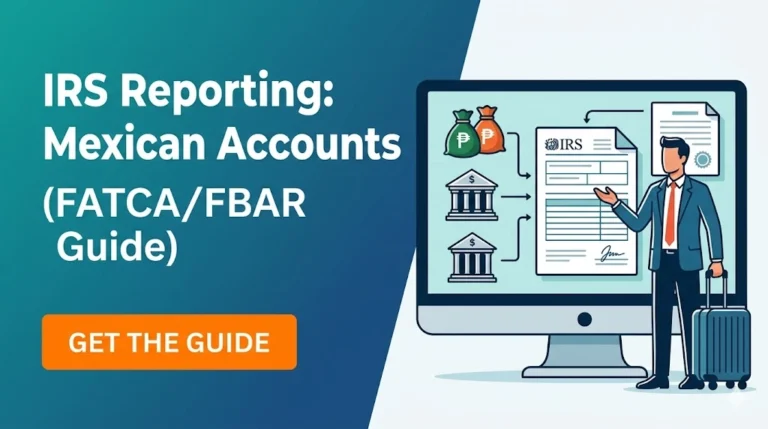
Beyond income taxes, American expats have significant reporting obligations for their foreign financial accounts. These are often where new retirees get into trouble, simply because they aren't aware of them. The two main culprits are the Report of Foreign Bank and Financial Accounts (FBAR) and the Foreign Account Tax Compliance Act (FATCA).
The FBAR requires you to report any financial interest in, or signature authority over, foreign financial accounts if the aggregate value of all those accounts exceeds $10,000 at any point during the calendar year. This isn't about paying tax on the money in those accounts, but simply reporting their existence to the Financial Crimes Enforcement Network (FinCEN), a division of the US Treasury. This includes your Mexican bank accounts, investment accounts, and even certain foreign pension plans. The FATCA reporting requirements are similar but reported directly to the IRS, often on Form 8938, and have higher thresholds. For many individuals, if you meet the FBAR threshold, you'll likely meet the FATCA threshold too. The penalties for failing to file these reports can be staggering, reaching tens of thousands of dollars, even if no tax was actually owed. These aren’t just minor oversights; they’re serious compliance issues that the US government actively enforces. Many expats feel this is a huge invasion of privacy and a burdensome obligation, especially when they're simply trying to live their retirement in peace. However, understanding and fulfilling these reporting requirements is paramount for any American living abroad, and a good Taxes for Expats professional can guide you through it.
Mexican Tax Considerations for Retirees
Now that we’ve covered the persistent reach of the IRS, it’s time to talk about your adopted home. While Mexico is a welcoming country for retirees, it also has its own tax system, and once you become a tax resident here, you'll have obligations to the Servicio de Administración Tributaria (SAT), Mexico's tax authority.
Establishing Tax Residency in Mexico
This is where things can get a bit tricky and often confusing for new expats. Immigration residency (your Temporary or Permanent Resident Visa) is not the same as tax residency. You can be a legal resident of Mexico for immigration purposes but not yet a tax resident, and vice versa in some limited situations. Generally, Mexico considers you a tax resident if you establish your "center of vital interests" in the country. This typically means that:
- More than 50% of your total annual income originates from Mexico.
- Your primary home (or main abode) is located in Mexico.
For most American retirees moving to Mexico, establishing a home here and spending the majority of their time in the country will likely make them Mexican tax residents. This distinction is crucial because once you are deemed a tax resident, Mexico expects you to report your worldwide income to them, with some important caveats we'll discuss next. For a deeper dive into this, check out Immigration vs Tax Residency in Mexico: Understanding the Difference. Understanding these criteria is the first step in figuring out your tax responsibilities in Mexico.
Taxation of Foreign-Source Income in Mexico
Once you're a Mexican tax resident, the country generally asserts its right to tax your worldwide income. This sounds daunting, especially when coupled with US obligations, but again, international tax treaties and local laws provide relief. For American retirees, the most relevant aspect is usually the taxation of pensions and Social Security.
Under the US-Mexico Income Tax Treaty, Social Security benefits are typically taxable only by the United States. This means Mexico generally won't tax your US Social Security payments, which is a significant relief. Private pensions, however, can be a different story. The treaty often states that private pension income is taxable only in the country where the recipient resides – meaning Mexico would have the primary right to tax your private pension distributions if you are a Mexican tax resident.
Other foreign-sourced income, like interest, dividends, or capital gains from investments held outside of Mexico, may be subject to Mexican income tax. However, the Double Taxation Treaty allows for credits to avoid paying tax twice, similar to how the US treats foreign taxes. Navigating these rules for each type of income – Declaring Foreign Income in Mexico: Tax Rules for Expats is complex and requires careful calculation. An expert in Taxes for Expats can help you understand exactly which parts of your income are taxable in Mexico, which are exempt, and how to apply treaty benefits.
Understanding Mexico’s Tax System and the RFC
Engaging with the Mexican tax system involves understanding its key components, primarily the Registro Federal de Contribuyentes (RFC) and the SAT. Your RFC is essentially your taxpayer identification number in Mexico, similar to a Social Security Number or ITIN in the US, but specifically for tax purposes. You'll need an RFC for almost any significant financial transaction in Mexico, from opening a bank account to buying property or receiving payments.
Getting your RFC involves registering with the SAT, Mexico's tax administration service. This can be a bureaucratic process, requiring appointments and documentation, but it's a non-negotiable step for tax residents. The SAT portal, like most government websites, can be challenging to navigate, especially if your Spanish isn't fluent. Once you have your RFC, you'll use it for filing your annual income tax returns in Mexico, which typically occurs in April, similar to the US. While the general principle is "worldwide income" for residents, Mexico has its own deductions, exemptions, and progressive tax rates. For more detailed information on this, consider reading The RFC and SAT: Mexico's Tax System for Foreigners. This whole process underscores the need for clear guidance to ensure compliance and avoid headaches, and this is exactly the kind of assistance offered by specialized Taxes for Expats services.
| Income Type | US Taxable? (for US Citizen) | Mexico Taxable? (for Mex Tax Resident) | Treaty Implications |
|---|---|---|---|
| US Social Security | Yes | No | Taxable only by the US. |
| US Private Pension | Yes | Yes (often) | Taxable where recipient resides (Mexico), with US credit. |
| US 401(k)/IRA (Distributions) | Yes | Yes (often) | Taxable where recipient resides (Mexico), with US credit. |
| US Investment Income (Dividends/Interest) | Yes | Yes (often) | Treaty may specify taxing rights, typically with credits. |
| US Rental Income | Yes | Yes | Taxable in both, credit for tax paid in country of source. |
Disclaimer: This table is a simplified overview and not exhaustive. Specific situations and treaty interpretations can vary. Always consult a professional.
Managing Your Finances Across Borders
Once you've wrapped your head around the tax implications, the next practical challenge is simply managing your money. How do you get your income from the US to Mexico, keep track of it, and ensure you're getting the most bang for your buck amidst fluctuating exchange rates?
Banking in Mexico: Local Accounts and Transfers
Establishing a local bank account in Mexico is almost a necessity for long-term residents. While some expats try to rely solely on US bank accounts and international credit cards, you'll quickly find that many local services, utility payments, and even some landlords prefer or require a Mexican bank account. Opening one can feel like a bureaucratic hurdle race, requiring your passport, residency card, proof of address (utility bill in your name!), and your RFC once you have it. You’ll want to research which Mexican banks are most expat-friendly, often those with international branches or English-speaking staff.
Once you have a local account, the process of transferring money from your US accounts becomes routine. Many expats use wire transfers directly from their US bank, while others opt for third-party money transfer services like Wise (formerly TransferWise) or Remitly, which can sometimes offer more favorable exchange rates and lower fees. Having a local account simplifies bill paying significantly. You can set up direct debits for utilities, pay for local services, and avoid carrying large amounts of cash. For detailed steps on getting set up, see How to Open a Bank Account in Mexico: Requirements and Tips and Transferring Money Internationally: Best Ways to Send Money to/from Mexico.
Currency Exchange and Volatility
Living in Mexico means your primary expenses will be in Mexican Pesos (MXN), while a significant portion of your retirement income might be in US Dollars (USD). This exposes you to currency exchange rate fluctuations, which can have a noticeable impact on your monthly budget. A strong peso means your dollars buy less, while a weaker peso stretches your dollars further. This constant dance of the exchange rate is something you’ll quickly become familiar with, and sometimes, it can be a source of stress.
Developing a strategy to manage currency risk is smart. Some expats choose to transfer a larger sum when the exchange rate is favorable, holding pesos in their Mexican account for a few months' expenses. Others make smaller, more frequent transfers, hoping to average out the fluctuations over time. Avoiding exchanging money at airports or small casas de cambio (exchange houses) is generally a good rule of thumb, as they often offer less competitive rates. Instead, use your bank or reputable money transfer services. Keep an eye on the market, but don't obsess over daily changes; long-term trends are usually more important. For more tips on this, check out Currency Exchange in Mexico: Getting the Best Rates on Pesos.
Budgeting for Retirement Life in Mexico
Budgeting is always important, but when you're converting currencies and navigating different cost structures, it becomes absolutely essential. Mexico generally offers a lower cost of living than the US, which is a major draw for retirees, but costs can vary wildly depending on where you choose to live. A quiet Pueblo Mágico will have vastly different expenses than a bustling expat hub in a major city or a popular beach resort town.
Start by tracking your expenses diligently for the first few months. You'll notice different spending patterns for groceries, transportation, utilities, and entertainment. Factor in irregular costs like visa renewals, unexpected travel, or healthcare emergencies. Remember that while doctor visits and many medications might be cheaper, comprehensive health insurance is still a must. Your budget should also account for the cost of maintaining your US and Mexican tax compliance – including fees for a specialized Taxes for Expats service. Having a clear picture of your income and outflow will help you sleep better at night and enjoy your retirement without financial stress. For a comprehensive overview of expenses, take a look at our Cost of Living in Mexico: 2026 Comprehensive Guide.
Strategic Planning for a Financially Sound Retirement
Retiring to Mexico is a big life step, and while the day-to-day can be amazing, truly securing your future requires foresight and strategic planning. This isn't just about paying bills, but about building a robust financial framework that stands the test of time and cross-border complexities.
The Importance of Professional Guidance
I’ve seen it time and time again: expats trying to navigate the intricate world of international taxes and financial planning based on advice from online forums or well-meaning but unqualified friends. While the expat community is fantastic for support and local tips, financial and tax advice should always come from certified professionals. The rules are too complex, too nuanced, and change too frequently for anecdotal guidance to be reliable.
Working with a professional specializing in Taxes for Expats is not an expense; it's an investment. They can help you:
- Optimize your US tax filings, ensuring you claim all applicable exclusions and credits.
- Understand your Mexican tax obligations and help you file accurately.
- Structure your asset transfers and income withdrawals in the most tax-efficient way.
- Ensure compliance with FBAR, FATCA, and other reporting requirements.
- Provide clarity on the Double Taxation Treaty.
Don't wait until you receive a scary letter from the IRS or SAT. Seek out a qualified cross-border accountant or financial advisor early in your planning process. This proactive step can save you countless hours of stress and potentially large sums of money in penalties or overpaid taxes. An article like Do You Need an Accountant? Navigating Tax Filing as an Expat in Mexico can help you understand this further.
Estate Planning and Wills in Mexico
This is a topic many people prefer to avoid, but it’s critical when you live internationally. You’ve accumulated assets over a lifetime, and you want them to go to your loved ones as intended, not get caught in a bureaucratic nightmare. Having a will in your home country is a good start, but it's often not enough when you own property or have significant assets in Mexico.
I cannot stress this enough: you likely need two wills – one in your home country and one in Mexico. Your Mexican will (or at least a clause in your home country will that specifically addresses Mexican assets and jurisdiction) should cover any property you own in Mexico, bank accounts, and other local assets. This prevents your loved ones from having to navigate the Mexican legal system without clear directives, which can be expensive, time-consuming, and emotionally draining. Mexican inheritance law can differ from what you’re used to, and having a local will ensures your wishes are respected under Mexican jurisdiction. Consult with a qualified attorney in Mexico who specializes in expat estate planning. This peace of mind is invaluable. For further reading, check out Do You Need a Mexican Will? Estate Planning for Expats.
Healthcare Costs and Insurance Planning
While not strictly a tax issue, healthcare is inextricably linked to your financial planning as a retiree in Mexico. Healthcare in Mexico can be significantly more affordable than in the US, but it’s rarely "free." You’ll need a plan for medical expenses, whether that's through public options like IMSS (if you qualify), private Mexican health insurance, or international health insurance.
These costs need to be robustly factored into your annual budget. Don't fall into the trap of thinking you can pay entirely out-of-pocket for everything, especially if a serious illness or accident occurs. While individual doctor visits might be cheap, hospital stays, surgeries, and long-term care can still be substantial. A good health insurance policy is your safety net. Understanding the different options and choosing the right coverage for your age, health status, and budget is vital for your financial security and overall peace of mind. Our Healthcare in Mexico: Complete Guide for Expats (Public vs Private) can provide a deeper dive into this.
Common Challenges and Pitfalls to Avoid
Even with the best planning, life in Mexico as an expat can present unexpected challenges. Being aware of these common pitfalls can help you navigate them more smoothly and minimize stress.
Underestimating Bureaucracy and Timelines
Ah, bureaucracy in Mexico! It's a rite of passage for every expat, and it often feels like a test of patience. Things simply move at a different pace here. Whether it's renewing your residency visa, applying for your RFC, opening a bank account, or even setting up utilities, expect processes to take longer than you anticipate. Documents might need to be translated and apostilled, appointments can be scarce, and you might find yourself needing a "copy of the copy of the copy."
The biggest mistake is usually underestimating these timelines. Don't leave vital administrative tasks until the last minute. Start your visa renewal process well in advance, gather all necessary documents with plenty of lead time, and always make multiple copies of everything. A calm demeanor, a good dose of patience, and a willingness to follow the process (even if it seems convoluted) will serve you well. Embrace the concept of mañana for administrative tasks, but be on time for your actual appointments.
Overlooking Residency vs. Tax Residency Differences
As discussed earlier, this is a major point of confusion for many new arrivals. You might have your Temporary Resident Visa and feel completely settled, but that doesn't automatically mean you're a Mexican tax resident, or that you've fulfilled all your tax obligations. Conversely, you could spend enough time and have enough income sourced here to be considered a tax resident by Mexico before your immigration status is fully solidified.
Getting this distinction wrong can lead to significant problems, including incorrect tax filings in either country, penalties, or even an audit. The criteria for each are distinct and governed by different laws and government agencies (INM for immigration, SAT for taxes). It's crucial to understand both sets of rules and ensure you are compliant with both. This is precisely why professionals who specialize in Taxes for Expats are so critical – they can help clarify your status in both jurisdictions and guide you to ensure compliance with both sets of regulations. Remember, a comprehensive approach considers both your physical presence and your financial footprint.
Not Seeking Expert Advice Early On
This ties back to the importance of professional guidance, but it's worth reiterating as a pitfall to avoid. Many expats try to "figure it out" themselves in the first year or two, believing they can piece together the information from various online sources. While expat forums and blogs (like this one!) offer fantastic general information and peer support, they are no substitute for personalized, professional advice regarding your specific financial situation.
Tax laws, immigration regulations, and banking requirements are constantly evolving. What was true for your friend who moved here five years ago might not be accurate for you today. Trying to save a few dollars on professional fees can lead to much larger expenses down the road in penalties, missed opportunities for tax savings, or legal complications. Engage with experts – cross-border tax specialists, immigration lawyers, and financial advisors – as early as possible in your retirement planning process. They can help you proactively structure your finances, understand your obligations, and avoid common mistakes before they become costly problems. It’s an investment in your peace of mind and the long-term financial health of your retirement in Mexico.
Retiring to Mexico as an American can indeed be the dream you’ve envisioned, filled with rich culture, warm weather, and a fulfilling lifestyle. However, it's a dream best realized with meticulous planning and a clear understanding of the financial and tax landscape. From navigating your Social Security and pension distributions to ensuring compliance with both US and Mexican tax laws, there's a lot to consider. The key takeaway is this: you don't have to navigate these complex waters alone. Leveraging professional expertise, especially for Taxes for Expats, is the smartest investment you can make in your new life abroad. With the right support, you can ensure your retirement funds are managed effectively, your tax obligations are met, and you can truly relax and enjoy everything Mexico has to offer.
Disclaimer
This article is for general informational purposes only and does not constitute professional advice. Laws, prices and regulations vary by location and change over time. Consult a qualified professional for guidance on your specific situation.