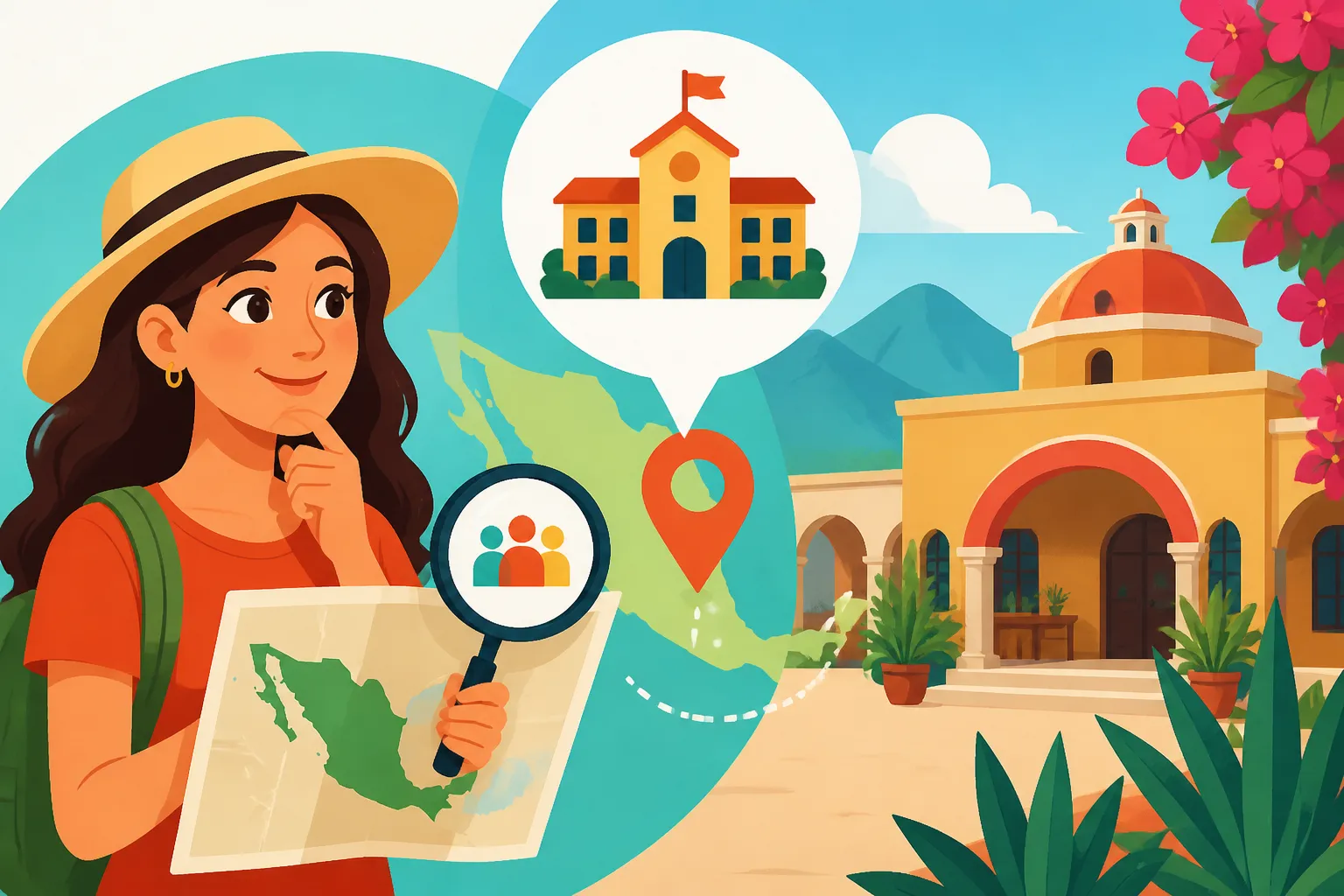
How to Find Spanish Immersion Schools in Mexico
Let’s be real, stepping off the plane in Mexico and realizing your high school Spanish isn't quite cutting it can be a real moment of panic, right? You want to connect with the incredible culture, haggle a bit at the market, or simply order your tacos without resorting to frantic pointing, but the words just aren't there. It’s frustrating, bewildering, and honestly, a bit isolating at times. But don't despair! Immersion is truly the fastest, most rewarding way to break through that language barrier, and Mexico is absolutely brimming with fantastic schools designed to get you speaking like a local.
Disclosure: This post may contain affiliate links. We may earn a commission at no extra cost to you if you make a purchase through these links. Read full disclosure.
Why Learn Spanish in Mexico? More Than Just the Language
Learning Spanish in Mexico isn't just about memorizing verb conjugations; it's about unlocking a whole new world. You’re not just learning a language; you’re living it. Every interaction, every street sign, every conversation becomes a lesson, pushing you further and deeper into the local rhythm. It’s an unparalleled opportunity to truly integrate, understand, and appreciate the nuances of your new home.
Deepening Your Expat Experience
When you move to a new country like Mexico, there’s an initial honeymoon phase, but soon enough, the administrative hurdles and cultural differences start to surface. Many expats find themselves relying heavily on English-speaking communities, which is fine, but it can unintentionally keep you on the fringes of genuine Mexican life. Learning the language fundamentally changes that. You’ll be able to forge deeper friendships with locals, understand the humor, and participate more meaningfully in community events. Imagine being able to chat effortlessly with your neighbors, understand the local news, or even delve into complex topics with new Mexican friends. It truly enriches your entire expat journey. Beyond the personal connections, being able to communicate confidently dramatically reduces daily stress and builds a sense of belonging that’s hard to achieve otherwise.
Practical Benefits for Daily Life
Beyond the profound cultural connections, the practical benefits of learning Spanish are immense. Navigating official processes, like setting up utilities in Mexico: CFE, water, and gas, becomes far less daunting when you can articulate your needs. A simple trip to the pharmacy or a doctor's appointment becomes a breeze, rather than a tense guessing game. You'll understand the prices at the market better, perhaps even haggle a bit (though that comes with practice and cultural nuance!), and generally feel more competent and in control of your daily life. It opens up job opportunities if you're looking to work in Mexico, and even for retirees, it makes everything from hiring domestic help in Mexico to dealing with bank tellers smoother. Plus, there’s a massive sense of accomplishment that comes with each new word you learn and each successful conversation you have.
Navigating the Options: Types of Immersion Schools
Mexico offers a wonderfully diverse landscape of Spanish immersion programs, catering to every learning style, schedule, and budget. From bustling university campuses in major cities to intimate, family-run schools in charming colonial towns, there’s truly something for everyone. It’s not a one-size-fits-all situation, so understanding the different structures can help you pinpoint the best fit for your personal journey.
Intensive Group Classes
This is often the most popular option for expats and tourists alike, and for good reason. Intensive group classes typically involve several hours of instruction each weekday, focusing on grammar, vocabulary, conversation, and cultural topics. The "intensive" part usually means 4-5 hours a day, often with a break. You’ll be placed with students of similar proficiency levels, which is great for building confidence and practicing with peers.
Many schools, especially in popular expat destinations like San Miguel de Allende, Oaxaca, or Guanajuato, offer these programs. They foster a dynamic learning environment where you're constantly engaged. The benefit here is the structured curriculum, consistent practice, and the opportunity to meet other learners from around the world. These programs often include cultural activities like cooking classes, dance lessons, or guided tours, which enhance the overall immersion experience. Be prepared for a fast pace, though; it’s called intensive for a reason! However, the progress you can make in just a few weeks or months is truly remarkable, especially if you’re committed to practicing outside of class.
Private Tutoring and Personalized Learning
If group settings aren't your jam, or if you have very specific learning goals, private tutoring might be your perfect match. With a private tutor, you get one-on-one attention, and the curriculum can be entirely tailored to your needs. Maybe you need to focus on business Spanish, or perhaps you're struggling with a particular grammatical concept. A private tutor can address these directly, working at your pace and focusing on your individual weaknesses and strengths.
Many immersion schools offer private lessons as an alternative or supplement to group classes. Beyond traditional schools, platforms like iTalki allow you to connect with native Spanish speakers for one-on-one lessons online, offering flexibility and convenience. This can be a fantastic way to supplement your in-person immersion or even to get started before you arrive in Mexico. The cost can sometimes be higher per hour than group classes, but the efficiency of personalized instruction can make it incredibly cost-effective in the long run. Plus, the comfort of a private setting can be a huge boon for those who feel shy speaking in front of a group.
University Programs vs. Independent Schools
When considering where to learn Spanish in Mexico, you'll encounter both university-affiliated programs and a plethora of independent language schools. Both have their merits, but they cater to slightly different needs and expectations.
University programs, often found at institutions like the National Autonomous University of Mexico (UNAM) in Mexico City or the University of Guadalajara, tend to offer a more academic approach. These programs often carry university credits, making them ideal for students looking to transfer credits or for those who prefer a more structured, research-oriented learning environment. They usually have set start dates, longer terms, and may require more formal application processes. The facilities are typically robust, and you might have access to university libraries, sports facilities, and a diverse student body. If you're looking into studying in Mexico: Guide for International Students, these programs might be a natural fit.
Independent schools, on the other hand, are often more flexible, with rolling start dates, smaller class sizes, and a stronger emphasis on conversational skills and practical application. Many of these schools are built specifically for foreign learners and have extensive experience in teaching Spanish to non-native speakers. They tend to offer more cultural activities and homestay options, making the immersion experience even deeper. While some independent schools are accredited by local or international bodies, it's always worth checking their credentials, as quality can vary. The best ones, however, provide an incredibly supportive and effective learning environment, often with a more personal touch than larger university institutions.
Choosing the Right School: What to Look For
So, you’ve decided to take the plunge. Now comes the exciting, yet sometimes overwhelming, part: picking the right school. With so many options, how do you even begin? It’s more than just finding the cheapest price; it’s about finding a place that aligns with your learning style, personal interests, and overall expat goals.
Location, Location, Location
The city or town you choose for your immersion program will profoundly impact your experience. Do you thrive in a bustling metropolis like Mexico City, where you have endless cultural activities, museums, and an energetic pace? Or do you prefer the slower, more traditional charm of a colonial city like Oaxaca, known for its rich indigenous culture and culinary scene? Perhaps a smaller, expat-friendly town like San Miguel de Allende or Ajijic near Lake Chapala is more your speed, offering a supportive community and perhaps a slightly gentler introduction to Mexican life.
Consider what you want your daily life to look like outside of class. Do you want easy access to public transportation, or are you hoping to walk everywhere? What kind of climate do you prefer? Researching the best places to live in Mexico for expats can give you a good idea of what each region offers. Some cities are renowned specifically for their language schools due to their large expat populations or strong cultural offerings. Your chosen location will dictate everything from your weekend excursions to the local dialect and pace of life, so choose wisely!
Class Size and Teaching Methodology
These two factors are crucial to effective language acquisition. Small class sizes are almost always preferable, as they allow for more individual attention from the teacher and more opportunities for you to speak and participate. A class with 4-8 students is often ideal, allowing for dynamic group interaction without anyone getting lost in the shuffle. If a school boasts large classes, you might want to consider how much speaking practice you'll actually get.
Teaching methodologies vary widely. Some schools might be very grammar-focused, emphasizing drills and exercises. Others might lean heavily into a communicative approach, prioritizing conversation and real-life scenarios from day one. There are also schools that incorporate cultural lessons, art, or even cooking into their daily curriculum. Before committing, ask about their approach. Do they use textbooks? Do they encourage an "all Spanish all the time" policy, even for beginners? Do they incorporate cultural activities into the curriculum, like tours to local markets or historical sites? A methodology that resonates with your learning style will make the experience far more enjoyable and effective.
Accreditation and Teacher Qualifications
While Mexico’s language school industry is largely unregulated compared to some countries, seeking out schools with certain accreditations can provide an extra layer of confidence in their quality. Look for affiliations with recognized language organizations or universities, or check reviews from past students. While an official accreditation isn't always a deal-breaker, especially for smaller, highly reputable schools, it can indicate a commitment to certain standards.
Equally important are the qualifications of the teachers themselves. Are they native Spanish speakers? Do they have degrees in teaching Spanish as a foreign language (ELE) or linguistics? Do they have experience teaching expats? Schools that invest in their teachers' professional development often provide a higher quality of instruction. Don't be shy to ask about teacher credentials; any good school will be proud to share this information. Experienced teachers who understand the common challenges faced by English speakers learning Spanish can make a world of difference in your progress.
Homestay and Cultural Activities
True immersion goes beyond the classroom, and a homestay is perhaps the most effective way to live the language 24/7. Many schools offer the option to live with a local Mexican family, which provides invaluable daily practice and a deeper insight into Mexican culture and family life. You'll eat traditional meals, engage in daily conversations, and experience authentic hospitality. This is often where your most significant breakthroughs in conversational Spanish happen, as you're constantly pushed to use what you've learned in practical, real-world situations.
Beyond homestays, look for schools that offer a robust schedule of cultural activities. These could include cooking classes, dance lessons (salsa, cumbia, folkloric), museum visits, lectures on Mexican history or current events, movie nights, or excursions to nearby attractions. These activities are not just fun; they're integral to the immersion experience. They give you context for the language, introduce you to new vocabulary, and provide natural opportunities to practice your Spanish in relaxed, engaging settings. This blend of structured learning and authentic cultural engagement is what makes immersion in Mexico so uniquely effective.
Beyond the Classroom: Maximizing Your Immersion Experience
Signing up for classes is a fantastic first step, but the real magic of immersion happens when you actively seek out opportunities to use Spanish in your daily life. It’s about creating a personal ecosystem where Spanish isn't just a subject you study, but the very air you breathe. This intentional effort will catapult your learning far beyond what classroom hours alone can achieve.
Practicing Outside of Class
Your classroom is your foundation, but the streets of Mexico are your real laboratory. Push yourself to use Spanish constantly. Order your coffee in Spanish, chat with the cashier at the grocery store, ask for directions, and strike up conversations with vendors at the local market. Don’t worry about making mistakes; every error is a learning opportunity, and most Mexicans are incredibly patient and appreciative of your effort.
Join local expat groups or community events where you can practice without pressure. Look for language exchange meetups (intercambios) where you can trade English for Spanish practice. Many cities have clubs or classes focused on hobbies like yoga, art, or cooking, which are great ways to meet locals and practice Spanish in a natural, low-stress environment. Even listening to Mexican radio, watching local TV shows, or trying to read a local newspaper can significantly boost your comprehension and vocabulary. Consider finding a language partner through platforms like iTalki for supplemental conversational practice, especially if you want to solidify what you've learned in class or practice specific scenarios. Remember, consistency is key; even short bursts of practice throughout the day add up quickly.
Dealing with Language Learning Frustrations
Let's be honest: learning a new language, especially through immersion, can be incredibly frustrating at times. There will be days when you feel like you’re not making any progress, when you can’t understand a word, or when you feel silly making basic mistakes. Believe me, we've all been there! The "intermediate plateau" is a real phenomenon where your initial rapid progress slows down, and it can be disheartening.
The most important thing is to be kind to yourself. Acknowledge the frustration, but don't let it derail you. Take a break, listen to some music, or simply remind yourself how far you've come. Set small, achievable goals, and celebrate every victory, no matter how small. Focus on communication over perfection. Most people just want to understand you, not grade your grammar. Remember that consistency and patience are your best friends. Connect with other expats learning Spanish; commiserating and sharing tips can be incredibly validating. Recognize that this is a marathon, not a sprint, and every day is an opportunity for growth.
Integrating Language Learning with Daily Life
For true immersion, Spanish needs to become a natural part of your everyday existence, not just a study subject. Change your phone's language setting to Spanish, label objects around your house with their Spanish names, and try to think in Spanish as you go about your day. When you’re cooking, mentally narrate the steps in Spanish. When you're running errands, try to identify the words for everything you see.
Actively seek out opportunities to engage in Spanish-speaking environments. Instead of watching Netflix in English, try watching with Spanish subtitles, or even dubbing. Read children's books or simple articles in Spanish. If you manage your finances in Mexico, try to use the Spanish versions of banking apps or websites. Even when it comes to long-term planning, understanding Mexican documents and processes in Spanish can be beneficial, especially when considering things like how to get an RFC in Mexico for work or managing your financial affairs, where services like Taxes for Expats might be invaluable for English-speaking guidance, but understanding the local context is still key. The more you incorporate Spanish into every facet of your routine, the less it feels like "studying" and the more it becomes simply "living." This seamless integration is where the real breakthroughs happen, transforming your Spanish from a foreign language into a natural extension of yourself.
Comparing Spanish Immersion Program Types
To help you visualize your options, here's a quick comparison of the main types of Spanish immersion programs you'll find in Mexico. Each has its own strengths and ideal learner profile.
| Program Type | Ideal For | Class Size | Focus Areas | Flexibility & Pace | Average Cost (per week) |
|---|---|---|---|---|---|
| Intensive Group | Social learners, structured progress | Small-Med | Grammar, Conversation, Vocabulary, Culture | Moderate | $150 – $350 USD |
| Private Tutoring | Specific goals, shy learners, busy schedules | 1-on-1 | Personalized, Weakness/Strength tailored, Business | High | $20 – $40 USD (per hour) |
| University Program | Academic credit, long-term study, campus life | Med-Large | Academic Spanish, Literature, History, Culture | Low (fixed terms) | $200 – $600 USD |
| Cultural Immersion | Holistic experience, hands-on learning | Small | Practical Conversation, Local Customs, Crafts | Moderate | $250 – $450 USD |
Note: Costs are approximate and can vary significantly based on location, school reputation, duration, and whether a homestay is included.
Disclaimer
This article is for general informational purposes only and does not constitute professional advice. Laws, prices and regulations vary by location and change over time. Consult a qualified professional for guidance on your specific situation.