How Long Does It Take to Become Fluent in Spanish for Work or Study?
You are standing in a crowded office in Polanco or sitting in a lecture hall at UNAM, and the rapid-fire Spanish is washing over you like a tidal wave. I remember my first month in Mexico City, nodding like a bobblehead while a landlord explained my lease, only to realize later I’d agreed to things I didn't understand. This guide breaks down the realistic timelines, cultural nuances, and specific study strategies you need to transition from "survival Spanish" to the professional or academic fluency required to truly thrive in Mexico.
Disclosure: This post may contain affiliate links. We may earn a commission at no extra cost to you if you make a purchase through these links. Read full disclosure.
Understanding the Fluency Spectrum for Expats in Mexico
Fluency is a slippery term, especially in a country as linguistically rich as Mexico. For most expats, the goal isn't just to order a coffee; it’s to navigate a high-stakes environment where nuance matters. If you are looking into How to Find a Job in Mexico as a Foreigner: Job Sites and Networking Tips, you will quickly realize that "conversational" Spanish on a resume often falls short when you are asked to lead a team or present a project. In Mexico, professional fluency involves not just grammar, but an understanding of the polite, indirect communication style that defines the local culture.
In a professional setting, you need to reach at least a B2 level on the Common European Framework of Reference for Languages (CEFR). At this level, you can understand the main ideas of complex text and interact with a degree of fluency that makes regular interaction with native speakers quite possible without strain for either party. However, if your goal is Studying in Mexico: Guide for International Students (Universities and Programs), the bar is often higher. Most Mexican universities require a C1 level for postgraduate studies, meaning you can express ideas fluently and spontaneously without much obvious searching for expressions.
The "plateau" is a real phenomenon I encountered around the six-month mark. You can survive daily life, but you can’t yet express your personality or professional expertise. To break through this, many turn to structured digital tools. For example, using SpanishPod101 can help bridge the gap between classroom Spanish and the actual spoken language used in Mexican offices. It focuses on the rhythm and common phrases that textbooks often miss, which is crucial when you're trying to decode the fast-paced "chilango" accent of the capital.
The Realistic Timeline From Zero to Professional Proficiency
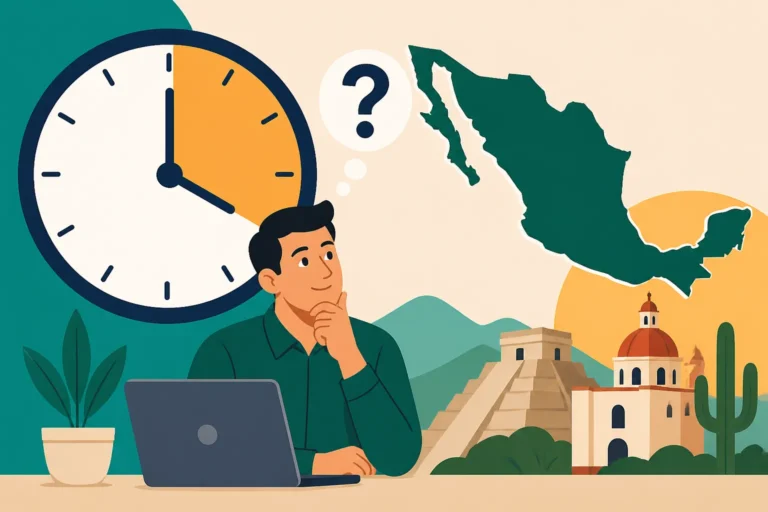
How long it takes depends heavily on your starting point and the intensity of your study. The U.S. Foreign Service Institute (FSI) classifies Spanish as a "Category I" language, meaning it is one of the easiest for English speakers to learn. They estimate it takes about 600 to 750 class hours to reach professional working proficiency. In a Mexican context, if you are studying 20 hours a week in one of the many Spanish Language Schools: Best Immersion Programs for Expats, you could theoretically reach a solid intermediate level in about six to eight months.
However, "classroom hours" and "real-world hours" are different beasts. If you are Living in Mexico with Limited Spanish: Survival Tips for Language Barriers, you are technically learning every time you go to the market or talk to a neighbor. But academic or professional fluency requires a specific vocabulary. For a student, this means learning how to write essays and debate in a seminar. For a worker, it means mastering Mexican Work Culture: Business Etiquette and Workplace Norms. If you are starting from scratch, expect a minimum of one year of dedicated, intensive study to feel truly comfortable in a boardroom or a university classroom.
Below is a breakdown of estimated timelines based on study intensity:
| Proficiency Level | Intensity | Estimated Time (Months) | Primary Focus |
|---|---|---|---|
| Basic (A1/A2) | 5 hours/week | 4 – 6 Months | Basic needs, greetings, shopping |
| Intermediate (B1) | 10 hours/week | 8 – 12 Months | Daily interactions, basic work emails |
| Professional (B2) | 20+ hours/week | 6 – 9 Months | Leading meetings, complex reports |
| Academic (C1) | Full Immersion | 12 – 18 Months | University lectures, technical writing |
Navigating Academic and Professional Language Hurdles
If you are pursuing University Admissions in Mexico: How International Students Can Apply, you must account for the "Technical Spanish" hurdle. Every field has its own jargon. A medical student in Guadalajara needs very different vocabulary than a tech entrepreneur in Monterrey. Many brilliant expats fail to integrate because they assumed their general fluency would carry them through. It doesn’t. You need to supplement your learning with field-specific materials early on.
For those in the corporate world, the challenge is often the "softness" of Mexican Spanish. In many English-speaking cultures, we are taught to be direct. In Mexico, directness can be perceived as rudeness. Learning how to use the "subjunctive mood" is essential for professional fluency because it allows you to frame requests politely and handle hypothetical scenarios. This is where a resource like SpanishPod101 is invaluable; it offers specific lessons on business etiquette and the subtle linguistic cues that tell you whether a "yes" actually means "yes" or just "I heard you."
Furthermore, you must consider the regional variations. The Spanish you hear in the Yucatán is distinct from the Spanish in Chihuahua. If you are wondering Do You Need to Speak Spanish to Study at a Mexican University?, the answer is almost always a resounding yes, but the type of Spanish matters. Professors expect a formal "Usted" culture, while your classmates will immediately start using 10 Mexican Spanish Slang Words Expats Should Know the moment you walk out of the lecture hall. Balancing these two registers is the hallmark of true fluency.
Strategies to Fast-Track Your Fluency in Mexico
To reach fluency for work or study, you must move beyond passive learning. One of the most effective methods I used was "shadowing." This involves listening to a native speaker—whether on a podcast like SpanishPod101 or a local news broadcast—and repeating exactly what they say, a split second after they say it. This trains your mouth muscles and helps you adopt the natural intonation of Mexican Spanish, which is often more melodic than the Spanish spoken in Spain.
Another critical strategy is the "Exchange" or intercambio. Find a local professional or student who wants to improve their English and spend half your time speaking only Spanish. This is particularly helpful if you are trying to understand Do You Need to Speak Spanish to Work in Mexico? Language Requirements by Industry, as you can practice industry-specific conversations in a low-pressure environment. Don't just talk about the weather; bring a draft of a report or a practice presentation and ask for feedback on your phrasing.
Finally, do not underestimate the power of consistent, daily habits. I found that spending 15 minutes every morning with SpanishPod101 kept my brain in "Spanish mode" before I even left the house. This consistency is what prevents the "Monday morning lag" where your brain feels like it has forgotten everything over the weekend. Combine this with reading local newspapers like El Universal or Reforma to stay updated on the vocabulary of current events, which will inevitably come up in office small talk or university debates.
Overcoming the Psychological Barriers to Fluency
Perhaps the biggest hurdle isn't the grammar—it’s the fear of looking foolish. In a professional or academic setting, the stakes feel high. You don't want to make a mistake in front of your boss or a professor. However, the Mexican culture is generally very encouraging toward those trying to learn the language. They appreciate the effort, and making a mistake is often a great way to build rapport.
I remember once using the wrong verb in a meeting and accidentally saying I was "pregnant" instead of "embarrassed" (the classic embarazada vs. avergonzada mistake). The laughter that followed did more to break the ice than any perfect presentation could have. Embrace the errors. The faster you make them, the faster you will learn. Using tools like SpanishPod101 can give you the confidence to try out new phrases in a safe environment before you deploy them in the real world.
The journey to fluency in Mexico is not a sprint; it’s a marathon through a beautiful, sometimes confusing, but always rewarding landscape. Whether you are aiming for a degree or a corner office, the investment in the language is the single best way to ensure your success and happiness in this country. It transforms you from a perpetual outsider into a participant in the vibrant daily life of Mexico.
Disclaimer
This guide is intended for informational purposes only. Language learning timelines are highly subjective and depend on individual aptitude, prior experience, and the specific environment in which you are living and working. While we strive to provide the most accurate and up-to-date information for 2026, we recommend consulting with professional language instructors or academic advisors for personalized learning plans.