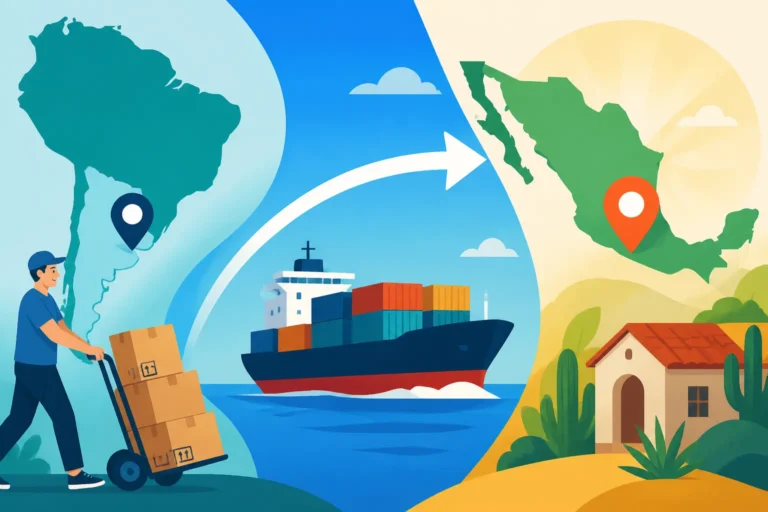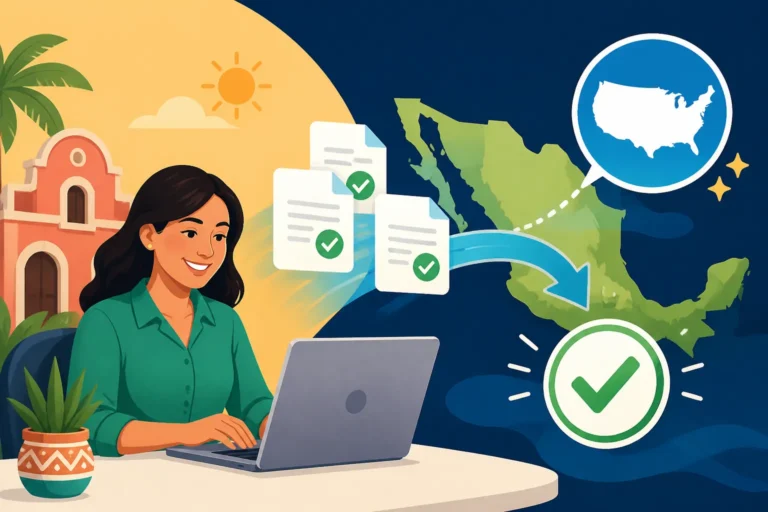
Border Residents in Tijuana and Juarez: Working North, Living South, Filing Both
If you're one of the many expats or long-term residents living the unique bi-national lifestyle in border cities like Tijuana or Ciudad Juarez – enjoying the vibrant culture and lower cost of living in Mexico while commuting across the border for work in the United States – you know it’s a balancing act. It’s an incredible way to live, truly getting the best of both worlds, but let’s be real: when tax season rolls around, the complexities of working north, living south, and filing in both countries can feel like navigating a bureaucratic labyrinth. This guide is here to untangle that knot, offering practical advice and a clear roadmap for handling your tax obligations on both sides of the border.
Disclosure: This post may contain affiliate links. We may earn a commission at no extra cost to you if you make a purchase through these links. Read full disclosure.
The Unique Cross-Border Lifestyle: Balancing Two Worlds
The decision to live in Mexico and work in the U.S. or Canada isn't just about geography; it's a lifestyle choice driven by a blend of economic factors, cultural preferences, and personal connections. For many, it's about stretching their income further, embracing a different pace of life, or simply staying connected to family and heritage while pursuing professional opportunities across the border.
The Appeal of Living South, Working North
Let’s talk about the allure. The cost of living in Mexican border cities like Tijuana or Ciudad Juarez is often significantly lower than in their U.S. counterparts, San Diego or El Paso. This isn't just a small difference; it can mean a drastically improved quality of life. Imagine getting more bang for your buck on rent, groceries, and dining out. A beautiful home that might be unaffordable just a few miles north becomes a comfortable reality south of the border. This economic advantage allows many to save more, invest more, or simply enjoy a richer daily experience.
Beyond the finances, there’s the undeniable charm of Mexican culture. The food, the music, the warmth of the people, the vibrant street life – these aren’t just amenities; they become integral parts of your daily existence. For those with family ties, it means being closer to relatives, sharing traditions, and fostering a deep sense of community that can be harder to find elsewhere. It’s about building a life that truly resonates with your values, even if it means a daily commute that crosses international lines. Cost of Living in Mexico: 2026 Comprehensive Guide dives deeper into these economic benefits.
Daily Realities and Challenges
Of course, this bi-national existence isn't without its hurdles. The daily commute across the border can be a test of patience, varying from a quick drive to hours spent in line, depending on the crossing and time of day. You learn quickly which lanes move fastest, which times to avoid, and the value of a SENTRI pass! Then there's the administrative dance: ensuring your vehicle is properly registered, managing dual phone plans, and always carrying the right identification for both countries.
Healthcare, banking, and even grocery shopping often require a cross-border strategy. Do you rely on Mexican healthcare, or do you keep your U.S. insurance? Where do you keep your bank accounts, and how do you transfer money efficiently? These are all questions that require careful planning. And while living in a border city often means encountering more English speakers, navigating daily life, especially official procedures, definitely benefits from a grasp of Spanish. The point is, this lifestyle is rewarding, but it demands a heightened level of organization and awareness, especially when it comes to official matters like your taxes.
Understanding the Dual Tax Landscape for Border Expats
One of the biggest areas where "organized and aware" really pays off is taxation. When you're earning income in one country and residing in another, you're squarely in the crosshairs of two different tax systems. Ignoring one or the other can lead to serious headaches, penalties, and even impact your residency status. This is precisely why specialized guidance on Taxes for Expats is so crucial. It’s not just about knowing the rules; it's about understanding how they interact.
Mexican Tax Residency and Obligations
If you're primarily living in Mexico, you're likely considered a tax resident here, even if you’re commuting for work. Mexico's tax system operates on a worldwide income principle for its residents. This means that, as a Mexican tax resident, you are generally expected to declare and pay taxes on all your income, regardless of where it was earned – yes, even that salary from your job across the border.
The primary tax for individuals in Mexico is the Income Tax (ISR – Impuesto Sobre la Renta). Your obligations would involve:
- RFC (Registro Federal de Contribuyentes): This is your Mexican tax ID number, essential for pretty much anything official, including opening a bank account, working legally, and, of course, filing taxes. If you’re a resident, getting an RFC is a fundamental step. How to Get an RFC in Mexico for Work explains this in detail.
- Filing Annual Declarations: As a Mexican tax resident earning foreign income, you'll need to file an annual tax return with the SAT (Servicio de Administración Tributaria), Mexico's tax authority. This declaration will include your income earned in the U.S. or Canada.
- Social Security (IMSS): While not directly income tax, if you're working for a Mexican company, you'd contribute to IMSS. If you're a freelancer or voluntarily enroll, this is another consideration for your finances.
It’s easy to think, "My income is earned outside Mexico, so it's not Mexico's business." But Mexico takes its tax residency seriously, and if your "center of vital interests" is in Mexico (e.g., your home, family, local financial ties), that income needs to be reported.
US Tax Obligations for Citizens and Green Card Holders
Now, for your U.S. obligations. If you are a U.S. citizen or a Green Card holder, the U.S. taxes your worldwide income, regardless of where you live or where you earn it. This is a unique aspect of the U.S. tax system that catches many expats off guard. So, even though you’re living in Mexico, that paycheck from your U.S. employer is absolutely still relevant to the IRS.
Your U.S. tax responsibilities would typically include:
- Filing an Annual Federal Tax Return (Form 1040): This is the standard return for individuals, where you'll report your income from all sources, including your U.S. employment.
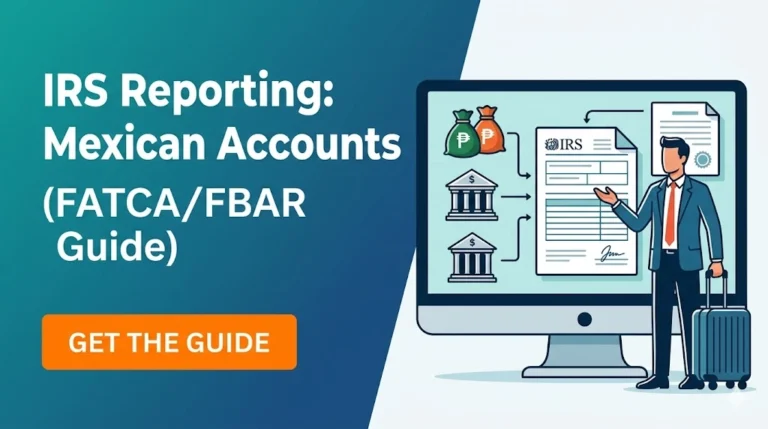
- FBAR (Foreign Bank Account Report): If you have financial accounts in Mexico with a combined balance exceeding $10,000 at any point in the year, you're required to report these to the Treasury Department via FinCEN Form 114. This is a crucial, often overlooked, obligation.
- FATCA (Foreign Account Tax Compliance Act): Certain foreign financial assets may also need to be reported to the IRS on Form 8938 if they meet specific thresholds.
- State Taxes: Don't forget state income taxes! Even if you live in Mexico, some states might still consider you a resident for tax purposes, depending on your ties to that state. This is highly state-specific and can add another layer of complexity.
Navigating these obligations without specialized knowledge in Taxes for Expats can feel like walking through a minefield. You need to know not just what to file, but how to report foreign income and assets correctly to avoid penalties. US Taxes for Americans Living in Mexico offers an in-depth look at these requirements.
Canadian Tax Obligations for Citizens and Permanent Residents
For Canadians living south of the border and working north, the situation shares some similarities with the U.S., but with its own nuances. Canada generally taxes its residents on their worldwide income. However, determining Canadian tax residency can be a bit more complex than simply citizenship. It often depends on significant residential ties to Canada, such as maintaining a home, spouse, or dependents there.
If you are deemed a Canadian tax resident while living in Mexico, your obligations would include:
- Filing an Annual Income Tax Return (T1): You would report your worldwide income to the Canada Revenue Agency (CRA), including any income earned in the U.S. or Mexico.
- Reporting Foreign Property: If you hold foreign property (which could include your Mexican home or bank accounts) exceeding a certain cost threshold, you might need to file Form T1135, Foreign Income Verification Statement.
The key here, as with the U.S., is determining your tax residency status in Canada. If you have severed all significant residential ties, you might be considered a non-resident for Canadian tax purposes, which would simplify your Canadian obligations significantly. However, this is a determination that requires careful consideration and often professional advice, especially when dealing with the intricacies of Taxes for Expats.
Navigating the Complexities: Double Taxation and Relief
The biggest fear for anyone dealing with two tax systems is paying taxes twice on the same income. Thankfully, there are mechanisms in place to prevent this, primarily through tax treaties and specific tax credits or exclusions. Understanding these is where expertise in Taxes for Expats becomes invaluable.
Foreign Tax Credit and Exclusion Mechanisms
For U.S. citizens and Green Card holders, the primary tools to avoid double taxation are the Foreign Earned Income Exclusion (FEIE) and the Foreign Tax Credit (FTC).
- Foreign Earned Income Exclusion (FEIE – Form 2555): This allows qualifying individuals to exclude a certain amount of their foreign earned income (salary, wages, professional fees) from U.S. taxation. To qualify, you generally need to meet either the Bona Fide Residence Test (living in a foreign country for an uninterrupted period that includes an entire tax year) or the Physical Presence Test (being present in a foreign country for at least 330 full days during any period of 12 consecutive months). This can significantly reduce your U.S. taxable income.
- Foreign Tax Credit (FTC – Form 1116): If you pay income taxes to a foreign country on income that is also subject to U.S. tax, you can often claim a credit for those foreign taxes paid. This credit directly offsets your U.S. tax liability, dollar for dollar. The FTC is particularly useful for income that doesn't qualify for the FEIE or for situations where your foreign taxes are higher than what you would owe in the U.S.
- Tax Treaties: Mexico and the United States have an income tax treaty in place designed to prevent double taxation. This treaty defines tax residency, outlines which country has the primary right to tax certain types of income, and provides mechanisms for relief. Understanding how this treaty applies to your specific situation is complex but crucial.
For Canadian citizens and permanent residents, similar mechanisms exist, often through the Foreign Tax Credit, where taxes paid to a foreign government can be credited against Canadian taxes owing on the same income. Canada also has tax treaties with many countries, including the U.S. and Mexico, which help resolve issues of double taxation and determine tax residency.
Mexican Tax Credits and Considerations
Mexico’s tax system also offers various deductions and credits that can reduce your overall tax burden. These can include medical expenses, school tuition, funeral expenses, and certain charitable donations. However, applying foreign tax credits against Mexican income tax on foreign-earned income can be more intricate.
While Mexico does tax worldwide income for its residents, the income tax treaty with the U.S. (and Canada) plays a critical role. For example, the treaty specifies how specific types of income (like employment income) are taxed and which country has primary taxing rights. In many cases, if income is primarily taxed in the country where it's earned (e.g., the U.S.), Mexico might offer a credit for taxes paid there, or certain income might be exempt from Mexican taxation, depending on the specifics and the treaty's application. This is where professional advice on Taxes for Expats becomes not just helpful, but truly essential, to ensure you're not overpaying or misreporting.
The Importance of a Coordinated Approach
The biggest takeaway here is that you cannot treat your Mexican tax filing and your U.S./Canadian tax filing as independent tasks. They are intrinsically linked, and decisions made in one country will absolutely impact your obligations in the other. A coordinated approach means:
- Understanding Your Residency Status in Both Countries: This is foundational. Are you a tax resident of both? One? How does each country define residency?
- Applying the Correct Relief Mechanisms: Knowing whether to use the FEIE, FTC, or rely on treaty provisions requires expertise.
- Timing and Reporting: Ensuring that information reported to the SAT aligns (where applicable) with what’s reported to the IRS or CRA, and meeting all deadlines for both entities.
Trying to piece this together on your own, especially with changing tax laws and evolving treaties, is incredibly daunting. This is why many cross-border residents wisely turn to professionals specializing in Taxes for Expats who understand both sides of the equation. How to Avoid Double Taxation Between the US and Mexico can further clarify these mechanisms.
Practical Steps for Filing Both Sides
Okay, so you understand the complexity. Now, what do you actually do? The practical steps involve meticulous record-keeping, understanding deadlines, and perhaps most importantly, knowing when to call in the cavalry – a qualified tax professional who deals with Taxes for Expats.
Gathering Your Documents
Before you even think about forms, you need your paperwork in order. This is non-negotiable for accurate and stress-free filing. Here’s a rundown of what you’ll typically need:
- Personal Identification: Passport, residency card (Temporary or Permanent), CURP, RFC for Mexico; Social Security Number or ITIN for the U.S.; SIN for Canada.
- Income Statements:
- U.S. W-2s or 1099s from your employer(s) across the border.
- Mexican facturas (electronic invoices) if you have any local income or significant expenses.
- Bank statements showing interest earned in either country.
- Any investment income statements (dividends, capital gains) from anywhere in the world.
- Pension or retirement income statements.
- Proof of Mexican Tax Payments: If you’ve made any estimated tax payments (pagos provisionales) to the SAT or had tax withheld from Mexican sources.
- Financial Account Information: Statements for all bank accounts, investment accounts, and other financial assets in both Mexico and your home country, especially if they exceed FBAR/FATCA reporting thresholds.
- Deductible Expenses: Records for any eligible deductions in either country, such as medical expenses, education costs, mortgage interest, or charitable contributions. Keep these organized and categorized.
- Travel Records: If relying on the Physical Presence Test for the FEIE, detailed travel records (entry and exit stamps, plane tickets, etc.) proving your days outside the U.S. are essential.
Think of it this way: the more organized you are with your documents, the smoother the process will be. A shoebox full of crumpled receipts just won’t cut it anymore.
Choosing the Right Professional Help
This is where the rubber meets the road. For most cross-border residents, especially those new to the game or with complex financial situations, trying to handle Taxes for Expats on their own is a recipe for disaster. You need a professional who understands both Mexican and U.S./Canadian tax law, and critically, how the tax treaties between these countries impact your specific scenario.
Look for a cross-border tax specialist or a firm that explicitly advertises expertise in international taxation for expats living in Mexico. Don't just go with any local contador (accountant) in Mexico or a generic CPA in the U.S. who doesn't specialize in international returns. Here’s why:
- Understanding Treaty Provisions: A specialist will know how to invoke the tax treaty to prevent double taxation effectively.
- Optimizing Exclusions and Credits: They can help you determine if you qualify for the FEIE, FTC, or other deductions and apply them correctly to minimize your overall tax burden.
- FBAR/FATCA Compliance: These are complex reporting requirements with hefty penalties for non-compliance. An expert ensures you meet all obligations.
- State Tax Nuances: If you have U.S. state tax obligations, a cross-border expert can advise on those as well.
- Language and Bureaucracy: They can help navigate the nuances of dealing with the SAT in Mexico and the IRS/CRA.
Ask potential professionals about their experience with clients who have similar situations to yours. Do they have clients who live in Tijuana and work in San Diego? Or Juarez and work in El Paso? Check their credentials and references. Investing in good professional advice for your Taxes for Expats is often far cheaper than the penalties you might incur from mistakes. Do You Need an Accountant? Navigating Tax Filing as an Expat in Mexico offers more advice on finding the right professional.
Ongoing Compliance and Planning
Tax season isn't a once-a-year event; it's an ongoing process for cross-border residents. Proactive planning throughout the year can save you significant stress and money down the line.
- Quarterly Reviews: Consider meeting with your tax professional quarterly, especially if your income or financial situation changes. This allows for adjustments to estimated tax payments in either country and helps prevent surprises.
- Stay Informed: Tax laws can change. Your professional should keep you informed of any updates that might affect your situation, but it's also good to keep a general eye on news from both the SAT and the IRS/CRA.
- Record Keeping: Continue to meticulously save all income statements, expense receipts, and financial records throughout the year. Cloud-based storage can be a lifesaver for easily accessible and organized documents.
- Consider Future Plans: Are you planning to retire soon? Change jobs? Move back to your home country? These life events have significant tax implications and should be discussed with your Taxes for Expats advisor well in advance. Planning your exit strategy from Mexico or your return to your home country includes important tax considerations. Moving Money Out of Mexico: How to Repatriate Funds from Property Sales can be particularly relevant for future planning.
By staying proactive and working with a knowledgeable professional, you can transform the daunting task of managing dual tax obligations into a manageable part of your unique and fulfilling cross-border life.
Key Tax Considerations for Border Residents
To sum up the core considerations for expats living in Mexico and working across the border, here’s a quick reference:
| Feature | Mexican Tax Considerations | U.S. Tax Considerations (for Citizens/Green Card Holders) | Canadian Tax Considerations (for Residents) |
|---|---|---|---|
| Tax Residency | Generally considered resident if center of vital interests is in Mexico. Taxed on worldwide income. | Always taxed on worldwide income, regardless of residence. | Generally considered resident if significant ties to Canada. Taxed on worldwide income. |
| Primary Tax ID | RFC (Registro Federal de Contribuyentes) | SSN (Social Security Number) / ITIN (Individual Taxpayer Identification Number) | SIN (Social Insurance Number) |
| Income Reporting | Declare all income (including foreign) to SAT annually. | File Form 1040 annually, reporting worldwide income to IRS. | File T1 annually, reporting worldwide income to CRA. |
| Double Taxation Relief | Tax treaty provisions, potential credits for foreign taxes paid. | Foreign Earned Income Exclusion (FEIE), Foreign Tax Credit (FTC). Tax Treaty. | Foreign Tax Credit for taxes paid to other countries. Tax Treaty. |
| Foreign Bank Accounts | No specific reporting to SAT (unless for tax audits). | FBAR (FinCEN Form 114) for >$10k combined. FATCA (Form 8938) for certain asset thresholds. | T1135 for foreign property (cost >$100k CAD). |
| Deadlines | April 30 (annual) | April 15 (extension available), June 15 for expats. | April 30 (personal), June 15 (self-employed). |
| Key Point | Mexico taxes residents on worldwide income. | U.S. taxes citizens/Green Card holders on worldwide income. | Canada taxes residents on worldwide income, residency definition is key. |
Navigating the tax systems of two different nations when you're a border resident can indeed feel like a full-time job in itself. The initial appeal of an improved quality of life and cultural immersion in Mexico, coupled with career opportunities north of the border, is powerful and completely understandable. However, the administrative burden, particularly concerning taxes, is a very real challenge that can quickly become overwhelming without the right guidance.
This isn't just about filling out a few extra forms; it's about strategically understanding residency definitions, leveraging tax treaties, and applying exclusions and credits correctly to ensure you comply with the law without inadvertently overpaying. The peace of mind that comes from knowing your financial house is in order on both sides of the border is priceless. That’s why so many turn to specialized Taxes for Expats professionals who live and breathe these unique cross-border scenarios. They can not only ensure you're compliant but also help optimize your financial situation, letting you truly enjoy the vibrant, bi-national life you've chosen.
Disclaimer
This article is for general informational purposes only and does not constitute professional advice. Laws, prices and regulations vary by location and change over time. Consult a qualified professional for guidance on your specific situation.