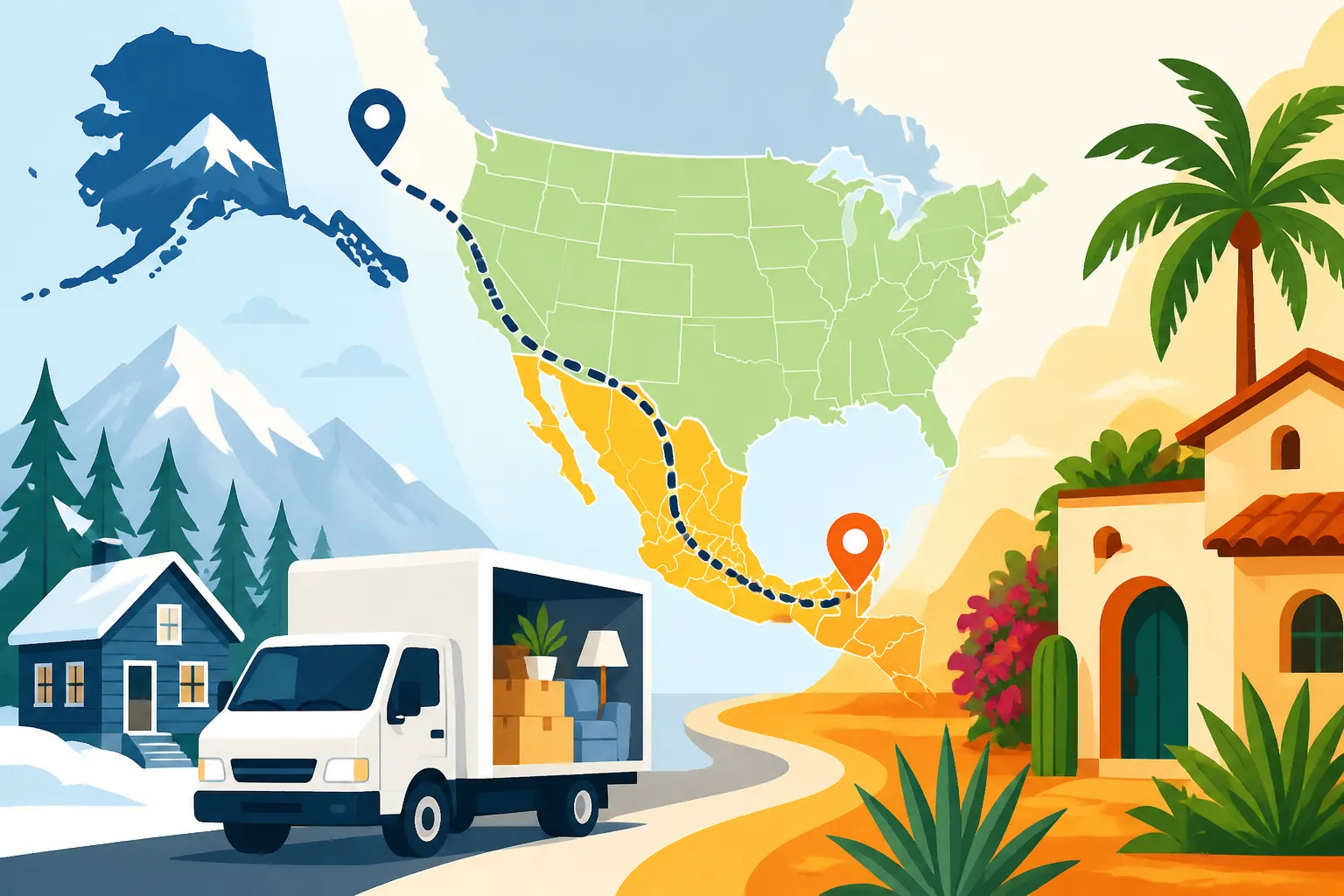
Moving to Mexico from Alaska and the Pacific Northwest: Route Realities
Oh, my goodness, moving to Mexico from a place like Alaska or the Pacific Northwest isn't just a move; it's an epic journey, a true saga of logistics, paperwork, and geographical shifts. Forget crossing a state line – you're contemplating an international odyssey across thousands of miles and at least two borders. This guide is here to walk you through the very real challenges and triumphs of such a massive undertaking, helping you chart a course to your new life in the sun with a little less stress.
Disclosure: This post may contain affiliate links. We may earn a commission at no extra cost to you if you make a purchase through these links. Read full disclosure.
The Mammoth Task: Why Moving from the Pacific Northwest and Alaska is Different
Let's be real, the idea of packing up your life in Anchorage, Seattle, or Portland and transplanting it to the warmth of Mexico can feel incredibly daunting. It's not just the distance; it's the sheer number of variables that come into play when you're moving internationally from a region so geographically distinct. This isn't your average cross-country move, and acknowledging that from the get-go is half the battle.
Geographical Hurdles: Distance, Borders, and Climate Shifts
The first thing that hits you when you look at a map is the sheer, unadulterated distance. From Alaska, you're looking at a multi-country expedition just to get to the contiguous U.S., then the long drive south. Even from the Pacific Northwest, you’re still traversing practically the entire length of the United States before you even glimpse the Mexican border. This means weeks of travel if you’re driving yourself, or careful planning for shipping logistics if you're not.
Then there are the borders. For those coming from Alaska, you'll likely be crossing into Canada and then back into the U.S., each with its own set of rules for people, vehicles, and possessions. Once you hit the U.S.-Mexico border, it’s a whole different ballgame. You’re not just changing states; you're changing countries with distinct customs, immigration laws, and cultural expectations. And let's not forget the climate! Trading the cool, wet, or icy conditions of the PNW or Alaska for Mexico's heat and humidity requires a thoughtful assessment of what belongings are practical to bring and what might simply warp, rust, or mold.
The Logistical Labyrinth: Customs and Regulations
Navigating customs and regulations across multiple international borders is where many expats hit their first real wall of frustration. Each country – Canada, the U.S., and Mexico – has specific requirements for importing household goods, pets, and vehicles. For instance, if you're driving your car into Mexico, you'll need a Temporary Import Permit (TIP) for Cars: What Residents Should Know, which is an entirely different beast from simply driving across state lines.
Mexican customs, in particular, can be notoriously opaque and subject to interpretation. You'll need meticulous documentation for everything you bring in, especially if you want to avoid paying hefty import duties. This often involves obtaining a Menaje de Casa (household goods permit) through a Mexican consulate before you even start your move. Without this crucial document, you could find yourself paying taxes on every item you own, which defeats the purpose of moving your established home. This is precisely why engaging an experienced international moving service becomes less of a luxury and more of a necessity for a move of this magnitude.
Planning Your Epic Journey: The Stages of a Long-Haul Move
A move this big isn't something you tackle on a whim. It requires meticulous planning, a strong dose of patience, and the right resources at your fingertips. Think of it as preparing for an expedition; every step needs to be thought through, from what you bring to how you get it there.
Initial Assessment and Downsizing: Less is More
When facing such a vast distance, the mantra "less is more" becomes your guiding light. Start by doing a brutal inventory of your belongings. Do you really need that snow shovel in Sayulita? Is your heavy winter wardrobe going to see much action in Oaxaca? Downsizing isn't just about saving money on shipping; it's about simplifying your life and adapting to a new environment. Sell, donate, or give away anything that doesn't serve a clear purpose in your new Mexican life. Many expats find that the cost of shipping bulky items, especially furniture, outweighs the cost of buying new, often handmade, pieces once they arrive.
Consider specialized services that can help you evaluate what to keep. Some moving companies offer virtual assessments to help you gauge the volume of your belongings and discuss what items might be problematic at customs. This initial purge is critical for streamlining the entire process and making subsequent steps, like getting quotes from movers, much more accurate.
Choosing Your Moving Method: Road Trip vs. Professional Movers
Now for the big decision: are you strapping everything onto a trailer and driving for days (or weeks!), or are you handing the reins over to the professionals? Each has its pros and cons, but for a journey of this scale, the choice often leans heavily towards professional help for most expats.
Driving Yourself:
- Pros: You maintain control over your belongings, potentially save money on shipping large volumes, and get a fantastic road trip experience across two or three countries.
- Cons: The wear and tear on your vehicle are significant, the drive is incredibly long and fatiguing, and you're personally responsible for all border paperwork, safety, and potential breakdowns. You'll also need to consider lodging, food, and fuel costs for the entire duration. This path is often only feasible for those with limited belongings and a robust vehicle, or those willing to sell much of what they own and buy new in Mexico.
Professional Movers:
- Pros: This is where a company like Sirelo shines. By using a platform like Sirelo, you can easily compare international moving quotes from vetted companies that specialize in cross-border moves to Mexico. They handle the packing, loading, transportation, and, most importantly, the complex customs documentation. This significantly reduces stress and ensures your belongings arrive safely and legally. They're equipped to manage the specific requirements for importing household goods to Mexico, including the intricacies of the
Menaje de Casa. - Cons: It's more expensive than a DIY move, and you're entrusting your precious possessions to others. However, the peace of mind that comes with their expertise, insurance, and door-to-door service often outweighs the cost for a move from the PNW or Alaska. This is particularly true if you have a full household or valuable items you don't want to risk transporting yourself.
For a move of this complexity, platforms like Sirelo truly become your hero, simplifying the arduous task of finding reliable international moving companies. They provide a streamlined way to get multiple quotes, compare services, and read reviews, ensuring you find a mover equipped to handle the unique challenges of your journey from the northern reaches of the continent.
Visa and Immigration Prerequisites: Don't Get Stuck at the Border
Before you even think about moving your entire life, you absolutely must sort out your legal right to live in Mexico. Trying to move household goods into Mexico on a tourist visa is a recipe for disaster. You need to have secured at least a Mexico Temporary Resident Visa: Comprehensive Guide for Expats (2026 Update) or ideally, Mexico Permanent Residency Explained: A Complete Guide (2026) well in advance.
This means applying at a Mexican consulate outside of Mexico, attending an interview, and getting the visa stamped in your passport. Once you enter Mexico with this visa, you then have to complete the Canje process at a local INM (National Institute of Migration) office to exchange your visa for a physical residency card. Without a valid residency card or the official paperwork showing your process is underway, you won't be able to utilize the Menaje de Casa to import your belongings duty-free, nor will you have the stability required for life in Mexico. Always consult the latest requirements on Navigating Mexico's Immigration System: Visas, INM Procedures, and Regulations.
Navigating the Terrains: Driving Down to Mexico
If you've decided to brave the roads yourself, prepare for an adventure. This isn't just a drive; it's a journey through vastly different landscapes and legal systems.
The Canada-US Border: What to Expect
For our Alaskan friends, the first hurdle is typically the Canada-U.S. border. This crossing is generally straightforward for citizens of both countries, but you'll still need your passports, vehicle registration, and proof of insurance. Be prepared for questions about your ultimate destination and what you're transporting. If you're carrying a lot of household goods in your vehicle, especially items like firearms, large amounts of cash, or certain foods, declare everything. Undisclosed items can lead to significant delays and complications. Make sure all your vehicle documents are in order and easily accessible.
Always check the latest travel advisories and border wait times before you set out.
The US-Mexico Border: A Different Ballgame
Crossing from the U.S. into Mexico is a significant step. This is where your preparedness truly pays off.
- Immigration: As an expat with a residency visa, you'll enter the country and declare your intent to process your residency card. Ensure you get your FMM (Forma Migratoria Múltiple) stamped correctly at the immigration office, even if you’re just driving through to your destination. This stamp is vital for proving your legal entry and initiating your residency process.
- Vehicle Import (TIP): If you're driving a foreign-plated vehicle that isn't being nationalized immediately, you must obtain a Temporary Import Permit (TIP) for Cars: What Residents Should Know. You can get this online in advance or at the border. You'll need your passport, residency card (or visa if not yet processed), vehicle title, and a credit card for the deposit. Without a TIP, your vehicle is considered illegally imported, leading to hefty fines and confiscation. Be patient; the process can take time.
- Customs: This is where your
Menaje de Casacomes in. If you're bringing a significant amount of household goods, you’ll present yourMenaje de Casaat the customs point. Even with one, you may still be subject to inspection. The key here is organization and honesty. Have all your packing lists and documents ready. If you don't have aMenaje de Casa, expect to pay duties on almost everything beyond personal effects.
The U.S.-Mexico border can feel chaotic, but remaining calm, respectful, and having all your documents in hand will make the experience smoother.
Route Planning and Safety: From I-5 to México
The route from the Pacific Northwest, especially down the I-5 corridor, is a well-traveled path. From Seattle or Portland, many people follow I-5 South, eventually connecting to I-10 East across the southern U.S. states to various border crossings in Arizona, New Mexico, or Texas. Each crossing has its own characteristics, so research your chosen port of entry.
When planning your drive, factor in safe overnight stops. Stick to major towns and well-reviewed hotels. In Mexico, prioritize driving during daylight hours. Toll roads (cuotas) are generally safer and better maintained than free roads (libres). Have Mexican car insurance before you cross the border – your U.S. or Canadian policy likely won't cover you in Mexico. Keep small bills for tolls and gas. Stay aware of your surroundings, and don't display valuables openly. Remember that the journey is part of the experience, but safety should always be your priority.
Professional Moving Services: The Easier Path for Expats
For many, the thought of managing the logistics of a multi-country drive with all their possessions is simply too much. This is where professional international movers become invaluable. They specialize in simplifying complex moves like yours, taking the heavy lifting (literally and figuratively) off your shoulders.
What to Look for in an International Mover
Choosing the right international moving company is paramount. You need a company with specific expertise in moves to Mexico. Here’s what to look for:
- Experience with Mexico: Do they have a proven track record of successfully navigating Mexican customs and delivering to various regions of the country? Ask for references.
- Customs Expertise: This is critical. They should be intimately familiar with the
Menaje de Casaprocess, vehicle import regulations, and any other specific Mexican customs requirements to ensure your goods clear without issue. - Door-to-Door Service: Look for companies that offer a full service, from packing at your home in the PNW/Alaska to unpacking in your new Mexican abode. This includes managing all transportation modes (truck, possibly sea freight) and border crossings.
- Comprehensive Insurance: Ensure they offer robust insurance options for your belongings during transit. Accidents happen, and you want to be covered.
- Communication: Clear, consistent communication is vital. You should feel informed at every stage of your move.
Platforms like Sirelo are fantastic for this, as they connect you with pre-vetted international movers, allowing you to easily compare their services, experience, and pricing. This ensures you're choosing a reputable company that understands the nuances of moving to Mexico.
Understanding Costs and Quotes
International moving isn't cheap, but it's an investment in peace of mind. Costs are influenced by several factors:
- Volume/Weight of Goods: The more stuff you have, the more expensive it will be.
- Distance: Obviously, moving from Alaska will be more expensive than from Seattle.
- Services Required: Full packing, crating, special handling for fragile items, storage, and unpacking all add to the cost.
- Customs Clearance Fees: These are standard and cover the mover's administrative work in dealing with customs.
- Insurance: This is usually an additional cost, but highly recommended.
When getting quotes, demand transparency. A reliable mover should provide a detailed, itemized quote with no hidden fees. Be wary of quotes that seem too good to be true, as they often come with unexpected charges later. This is another area where a platform like Sirelo shines, as it helps you gather and compare comprehensive quotes from multiple reputable companies, making the financial aspect much clearer.
| Service Item | Description | Typical Cost Factor |
|---|---|---|
| Volume of Goods | Cubic feet or weight of items to be moved | Primary Driver |
| Distance | Origin to destination (e.g., Seattle to San Miguel de Allende) | High |
| Packing Services | Professional packing of all items | Mid |
| Crating | Custom crates for fragile/valuable items | Mid |
| Disassembly/Assembly | Furniture disassembly and reassembly at destination | Low |
| Transportation Method | Road freight, sea freight, air freight (road+sea most common for household) | High |
| Customs Clearance | Fees for preparing and submitting documents at borders | Mid |
| Insurance | Coverage for loss or damage during transit | Mid |
| Storage | Temporary storage at origin or destination | Low (per month) |
| Delivery Access | Ease of access at both properties (stairs, narrow streets, rural location) | Low |
The Role of a Moving Platform like Sirelo
Seriously, using a service like Sirelo can be a game-changer for a move as complex as this one. Instead of spending hours scouring the internet for international movers, making countless phone calls, and trying to decipher disparate quotes, Sirelo does the heavy lifting for you. You input your moving details once – your origin in Alaska or the Pacific Northwest, your destination in Mexico, and the estimated volume of your belongings – and Sirelo takes it from there.
They connect you with multiple, pre-vetted international moving companies that specialize in routes to Mexico. This means you’re not just getting quotes; you’re getting offers from companies that understand the unique customs, logistics, and legalities involved in cross-border moves. You can then compare these offers side-by-side, read reviews from other expats, and make an informed decision with confidence. Sirelo simplifies what would otherwise be an incredibly stressful and time-consuming part of your move, proving to be an invaluable resource when moving your entire life across continents.
Settling In: Post-Move Logistics in Mexico
Once your belongings have arrived and you’ve landed on Mexican soil, the administrative tasks don't quite end. There's still plenty to do to ensure you're fully established and operating legally in your new home.
Importing Household Goods: The Menaje de Casa
Hopefully, you've obtained your Menaje de Casa certificate from a Mexican consulate back home. This document, literally translated as a "house inventory," allows you to import your used household goods into Mexico duty-free. It's a one-time use permit, so make sure your moving company has it and understands its importance. Without it, Mexican customs can legally charge you import duties on every item, as if you were importing brand new goods for sale.
Your moving company, especially if found through a platform like Sirelo, should guide you through the process of submitting the Menaje de Casa and coordinating with Mexican customs brokers. This is a critical step that often causes delays or unexpected costs for those who try to go it alone or choose an inexperienced mover. Make sure your inventory matches your Menaje de Casa precisely to avoid any issues. For a deep dive, check out Duty-Free Import of Household Goods: Using Menaje de Casa with Your Visa.
Vehicle Nationalization or Temporary Import Renewal
If you drove your vehicle down, you have a few options, depending on your residency status.
- Temporary Residents: If you hold a temporary residency visa, your foreign-plated car is typically only allowed in Mexico under the Temporary Import Permit (TIP) for Cars: What Residents Should Know. This TIP usually has the same validity as your residency visa (up to four years). You cannot legally nationalize your car while on a temporary resident visa, so you'll need to renew your TIP before it expires. Failing to do so can result in significant fines and forfeiture of your vehicle.
- Permanent Residents: If you have Mexican permanent residency, you generally have the option to nationalize your foreign-plated vehicle. This is a complex and often costly process involving customs, environmental inspections, and import duties. The rules can be intricate and change frequently, so consulting with a reputable customs broker specializing in vehicle nationalization is essential. Many expats choose to sell their foreign-plated vehicle and buy a Mexican-plated car, even as permanent residents, due to the complexity and expense of nationalization.
It’s crucial to understand the implications of each option and plan accordingly for your vehicle.
Connecting Utilities and Getting Established
Once you're in your new home, you'll need to set up the basics. This involves connecting to the local electricity grid (CFE), arranging for water, gas, and getting reliable internet service. Home Utilities in Mexico: Setting Up Electricity, Water, Gas, and Internet will be your bible here.
You'll also need to get your Mexican ID number, the CURP, which is essential for many administrative tasks, including getting utilities in your name. Learn more about How to Get a CURP as a Foreigner: The Mexican ID Number Explained. It's all part of the process of truly settling in, and while it might feel like more bureaucracy, each step brings you closer to your new expat life. Don't forget to review the Cost of Living in Mexico: 2026 Comprehensive Guide to help with budgeting for these new expenses.
Common Pitfalls and How to Avoid Them
Moving internationally is a minefield of potential issues, especially when coming from such a distant origin. Being aware of common stumbling blocks can save you a lot of grief, time, and money.
Underestimating Bureaucracy and Timelines
The biggest lesson any expat learns in Mexico is that things rarely happen quickly or exactly as planned. The administrative processes, whether for immigration, customs, or even setting up utilities, are often characterized by multiple steps, numerous documents, and fluctuating timelines. What might take a day in your home country could take weeks or months in Mexico.
How to Avoid: Start everything early. Seriously, assume every process will take twice as long as you expect. Have multiple copies of all important documents, both physical and digital. Maintain a "go bag" with essentials for temporary stays in case things don't line up perfectly. Cultivate patience; it’s not a virtue here, it’s a survival skill. Remember, you're on Mexican time now.
Language Barriers and Miscommunications
While many people in tourist areas or expat enclaves might speak English, the further you get into official processes or local interactions, the more critical basic Spanish becomes. Even small misunderstandings can lead to big problems when dealing with officials or contractors.
How to Avoid: Invest in learning some conversational Spanish before and during your move. Even knowing key phrases for directions, payments, and expressing needs can make a huge difference. If your Spanish isn't strong, consider hiring a reputable translator or seeking assistance from an immigration lawyer for Mexico. For crucial appointments, bring a Spanish-speaking friend or hire a professional to accompany you. Overcoming Language Barriers at the Doctor: Tips for Expats is an excellent resource for medical settings, but the same principles apply broadly.
Scams and Unreliable Services
Sadly, where there are foreigners new to a country, there are sometimes unscrupulous individuals or companies looking to take advantage. This can range from inflated prices for services to outright scams, particularly with moving companies or property rentals.
How to Avoid: Do your due diligence, always. This is where platforms like Sirelo prove invaluable; they pre-vet moving companies, offering you a layer of security you wouldn't get searching blindly online. For other services, ask for recommendations from established expat groups, verify credentials, and get everything in writing. If something feels too cheap or too easy, it probably is. Never hand over large sums of cash without a receipt or a formal contract. Be particularly cautious with rental agreements; consult Renting a Home in Mexico: Complete Expat Guide to Leases, Deposits, and More to understand the process and potential pitfalls.
Moving from the Pacific Northwest or Alaska to Mexico is an adventure of a lifetime, but it’s one that demands careful planning and an adaptable spirit. By understanding the unique challenges and leveraging reliable resources like Sirelo, you can transform this daunting task into a smooth transition to your new Mexican dream.
Disclaimer
The information provided in this guide is intended for general informational purposes only and does not constitute legal, financial, or immigration advice. While we strive to keep the information accurate and up-to-date, regulations in Mexico are subject to change without notice. Expats are strongly advised to consult with qualified legal, tax, and immigration professionals in Mexico for advice tailored to their specific situation. We are not responsible for any outcomes or consequences resulting from the use of this information.