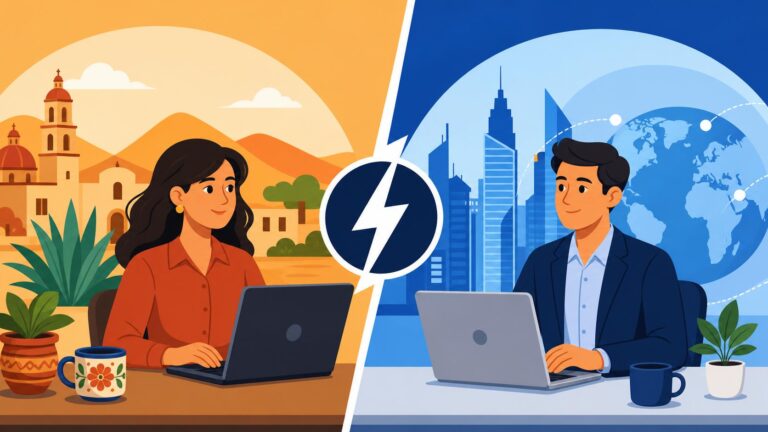
How to Get Paid From Abroad While Living in Mexico
One of the most persistent and often frustrating challenges for expats living in Mexico is figuring out how to reliably and affordably receive money from back home, whether it’s your pension, investment income, or your salary from a remote job. It can feel like you’re constantly battling exchange rates, hidden fees, and the ever-present question of how to stay compliant with Mexican tax laws. This guide aims to unravel the complexities of getting paid from abroad while living here, offering practical advice and solutions to make your financial life in Mexico a lot smoother.
Disclosure: This post may contain affiliate links. We may earn a commission at no extra cost to you if you make a purchase through these links. Read full disclosure.
Understanding the Core Challenge: The Reality of International Payments
Living in Mexico as an expat often means your income stream originates outside the country. While this offers incredible flexibility, it also introduces a unique set of financial hurdles that can quickly eat into your hard-earned money if you're not careful. It’s not just about getting the money; it’s about getting it efficiently, securely, and without losing a chunk to fees or unfavorable exchange rates.
Currency Exchange Headaches and Hidden Fees
Anyone who has tried to move money between countries knows the pain of currency exchange. You see one rate online, only to find a much less favorable one applied when your money actually transfers. This discrepancy can be a real budget killer. Banks, in particular, often offer less competitive exchange rates and layer on various processing fees, both on the sender's side and the receiver's side. Sometimes, these aren't explicit wire transfer fees but rather embedded in the exchange rate they offer, making it opaque how much you're truly losing.
For instance, imagine you're expecting a $2,000 USD payment. A slight difference of even a peso or two in the exchange rate can mean a significant loss over time. If the market rate is 17 MXN to 1 USD, but your bank only gives you 16.5 MXN, you've just lost 1,000 MXN (about $58 USD) on that single transaction. Multiply that by monthly payments, and you can see how quickly it adds up. These small percentages can silently erode your financial stability, making it crucial to be vigilant and informed about the options available. The goal is always to maximize the pesos you receive for your foreign currency.
The Mexican Banking System: An Expat's First Hurdle
Navigating the Mexican banking system itself can be a journey of patience and paperwork. When you first arrive, opening a bank account might seem like a daunting task, especially if your Spanish isn't fluent. Many expats initially rely on cash or their home country's debit/credit cards, which quickly become expensive due to ATM fees and foreign transaction charges. Eventually, having a local bank account is almost essential for daily life, from paying rent to utility bills and even receiving your international funds.
While Mexico has reputable banks like BBVA, Banorte, and Santander, their processes can differ significantly from what you might be used to. You'll need specific documents like your residency card (Residente Temporal or Residente Permanente), a CURP, and sometimes even a utility bill in your name. For a deeper dive into setting up your finances here, you might find our guide on How to Open a Bank Account in Mexico: Requirements and Tips incredibly helpful. Understanding the local system is the first step to confidently managing your money received from abroad.
Popular Methods for Receiving Payments from Abroad
Once you've got your local bank account sorted, or even if you haven't yet, there are several avenues to explore for getting your money from overseas into your hands in Mexico. Each method has its own set of pros and cons regarding speed, fees, and convenience.
Online Money Transfer Services: The Digital Lifeline
For many expats, online money transfer services have become the digital lifeline, offering a far more efficient and cost-effective alternative to traditional banks. Companies like Wise (formerly TransferWise), Remitly, and Xoom have revolutionized how quickly and cheaply money can move across borders. They often provide more competitive exchange rates with transparent fees, allowing you to see exactly how much you'll receive in pesos before you commit to a transfer.
These services typically work by allowing you to send money from your bank account in your home country (or directly from a debit/credit card) to your Mexican bank account. The process is usually initiated online or through a mobile app. For example, if you're working remotely and get paid in USD to a US bank account, you can easily log into Wise, initiate a transfer to your Mexican BBVA account, and see the exact amount in MXN you'll receive. The funds often arrive within a few hours or a couple of business days, depending on the service and the banks involved. This speed and transparency are a huge advantage, especially when you're dealing with monthly income and need reliable access to your funds. Exploring Transferring Money Internationally: Best Ways to Send Money to/from Mexico can give you even more insights into these services.
Direct Bank Transfers (SWIFT/Wire): The Traditional Route
Traditional direct bank transfers, also known as SWIFT or wire transfers, are still an option, especially for larger sums or when an employer or client prefers this method. This involves sending money directly from a bank in your home country to your bank account in Mexico using international banking networks. You'll typically need your Mexican bank's SWIFT code, your account number (CLABE), and the bank's full address.
While reliable, direct bank transfers tend to be slower and significantly more expensive than online services. Fees can range from $25 to $50 USD per transaction, and that's often just from the sending bank. Your Mexican bank might also levy a receiving fee, and the exchange rate used will almost certainly be less favorable than what you'd get through a dedicated transfer service. This method can also involve more paperwork and longer processing times, sometimes taking several business days or even over a week for the funds to clear. For smaller, regular payments, this method quickly becomes cost-prohibitive.
Using Platforms with Integrated Payment Systems
For freelancers, remote workers, or those providing services online, platforms with integrated payment systems can be incredibly convenient. Websites like PayPal, Payoneer, and even direct deposit options from services like Stripe for businesses can facilitate receiving payments from clients abroad.
PayPal, for instance, is widely used globally and many clients might prefer to pay you this way. You can receive funds into your PayPal account and then transfer them to your linked Mexican bank account. However, be aware that PayPal's exchange rates are notoriously poor, and they also charge fees for withdrawals to local banks, which can quickly erode your earnings. For language tutors using platforms like iTalki, they might offer direct deposits or other payment solutions that simplify the process, but always check their specific fee structures and exchange rates. Payoneer is often favored by freelancers and businesses for its ability to receive payments in different currencies (like USD) and then transfer them to a local bank. The key here is to carefully evaluate the fees and exchange rates associated with each platform before relying on it as your primary income channel.
Here's a quick comparison of popular payment methods:
| Method | Pros | Cons | Typical Speed | Best For |
|---|---|---|---|---|
| Online Money Transfer Services | Low fees, competitive exchange rates, transparent, user-friendly apps. | Limits on transaction size may apply, requires internet access. | Hours to 2 business days | Regular payments, medium-sized transfers. |
| Direct Bank Transfer (SWIFT) | Reliable for large sums, widely accepted by institutions. | High fees, poor exchange rates, slow processing, less transparent. | 3-7 business days | Large, infrequent transfers; institutional needs. |
| PayPal | Widely used, easy for clients, quick receipt. | Very poor exchange rates, withdrawal fees to local banks, higher overall cost. | Instant receipt, 1-3 days to bank | Small, irregular payments from clients. |
| Payoneer | Good for freelancers, multi-currency accounts, transparent fees. | Can have withdrawal fees, not as universally known by individuals. | Instant receipt, 1-3 days to bank | Freelance income, business payments. |
Navigating Taxes and Legalities in Mexico
This is where things can get a bit murky for many expats, and honestly, it's one of the most crucial aspects to understand when you're receiving income from abroad. Ignoring your tax obligations in Mexico can lead to serious headaches down the line. It's not enough to just get the money; you need to do it legally and compliantly.
Understanding Your Tax Obligations as a Resident
If you are living in Mexico for more than 183 days in a calendar year, you are generally considered a tax resident. This means Mexico expects you to pay taxes on your worldwide income, regardless of where it originates. Yes, even that remote salary paid into your US bank account, or your pension from Canada, is technically taxable in Mexico. This often comes as a surprise to many, who assume that if the money isn't earned in Mexico, it isn't taxed by Mexico. That's a common misconception that can get you into trouble.
The Mexican tax authority is called the Servicio de Administración Tributaria (SAT). You'll need to register with them and file annual tax declarations. The tax rates are progressive, similar to many other countries, meaning the more you earn, the higher percentage you pay. It's incredibly important to understand these nuances. We highly recommend consulting with a tax professional who specializes in expat taxation in Mexico. This is not something to DIY unless you are genuinely an expert in Mexican tax law. Services like Taxes for Expats can be invaluable here, helping you navigate the complexities of both Mexican and your home country's tax obligations, ensuring you avoid double taxation where treaties exist and stay compliant. Our guide on Income Tax Basics for Expats: Understanding Mexico’s Tax System provides a great starting point for this often-confusing topic.
The RFC: Your Key to Financial Legality
A crucial step in becoming financially compliant in Mexico is obtaining your Registro Federal de Contribuyentes, or RFC. This is Mexico's federal taxpayer registration number, essentially your tax ID. You'll need an RFC for almost any significant financial activity, including opening certain types of bank accounts, making large purchases, or legally working and invoicing clients. If you're receiving regular payments from abroad, especially if you're a freelancer or remote worker, having an RFC is non-negotiable for declaring that income.
Getting your RFC involves a visit to a SAT office, which can be an experience in itself – prepare for bureaucracy and potentially long waits! You'll need your passport, residency card, and sometimes a utility bill. The process can feel cumbersome, but it's a necessary step towards legitimate financial integration into Mexico. Without an RFC, you might face issues with your bank regarding large deposits, and you certainly won't be able to formally declare your income. To learn more about this essential identifier, check out Do You Need an RFC Number? Why a Tax ID Matters for Expats' Finances or How to Get an RFC in Mexico. It's a foundational piece of your financial puzzle here.
Practical Tips for Smooth International Transactions
Even with the right methods and an understanding of your tax obligations, there are always ways to optimize your international transactions and make your financial life in Mexico even smoother.
Setting Up Your Accounts for Success
The first step to seamless international payments is ensuring your Mexican bank account is properly set up and capable of receiving international transfers. When you open your account, make sure to get all the necessary details: your full account number (CLABE for interbank transfers within Mexico), the bank's SWIFT code, and the correct name on the account. Double-check these details with the sender to avoid any delays or returned funds.
Consider setting up online banking for your Mexican account. This will allow you to monitor incoming transfers, manage your funds, and pay bills conveniently from your computer or phone. Many Mexican banks have robust mobile apps, and while they might take some getting used to if your Spanish is limited, they are invaluable for financial management. If you struggle with the language, practicing with resources like iTalki can significantly boost your confidence in navigating these systems. Having your accounts linked between your home country and Mexico, perhaps through an online transfer service, creates a more streamlined flow for your funds.
Managing Exchange Rates Like a Pro
Exchange rates fluctuate constantly, and a little strategic timing can save you a lot of money. While you can't predict the future, you can keep an eye on the market rates. Services like XE.com or Google's currency converter can give you real-time interbank rates. Aim to transfer funds when the exchange rate is favorable to you. Some online transfer services even allow you to set rate alerts, notifying you when the exchange rate hits your desired threshold.
For larger sums, even a small improvement in the rate can mean hundreds of extra pesos. Avoid exchanging money at airports or hotels, as their rates are typically the worst. If you need cash, withdraw directly from an ATM in Mexico using a debit card with low or no foreign transaction fees, but be mindful of the ATM's own fees. For more detailed advice on getting the best value for your foreign currency, our guide on Currency Exchange in Mexico: Getting the Best Rates on Pesos offers excellent strategies.
Communication and Documentation is Key
Always maintain clear communication with whoever is sending you money. Confirm the exact amount, the method they are using, and the expected transfer date. This helps you track funds and quickly identify any issues. Keep meticulous records of all incoming payments, including dates, amounts, sender information, and the method used. This documentation will be invaluable when it comes to filing your taxes in Mexico.
If you are employed remotely, clarify with your employer whether they can cover any transfer fees or offer specific payment methods that are expat-friendly. For freelancers, ensure your contracts clearly state your preferred payment method and currency. Being proactive with communication and diligent with documentation will prevent many potential headaches and ensure a smooth financial experience while living your dream in Mexico.
Disclaimer
This article is for general informational purposes only and does not constitute professional advice. Laws, prices and regulations vary by location and change over time. Consult a qualified professional for guidance on your specific situation.