How to Open a Business Bank Account in Mexico
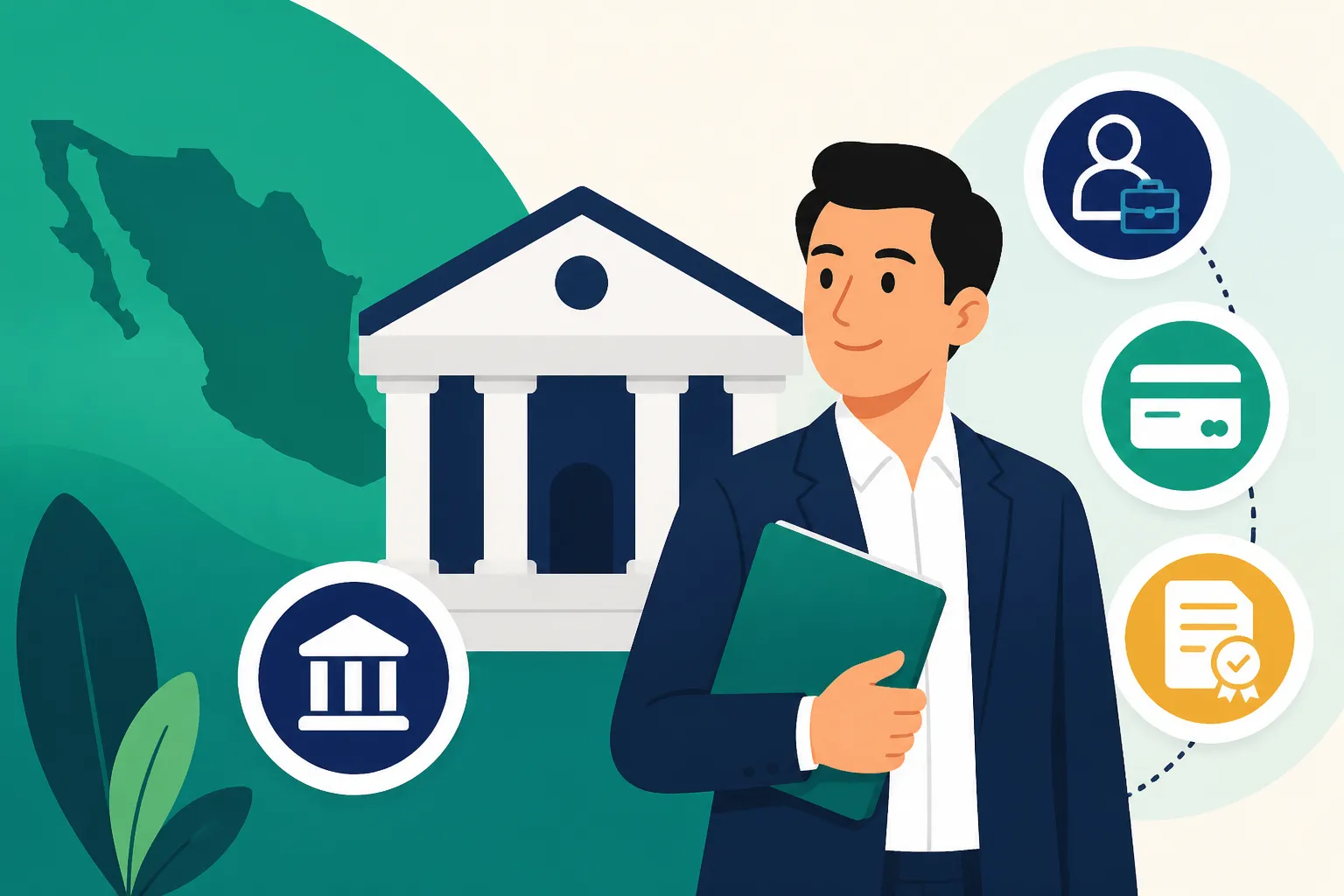
Navigating the world of business in a new country is exhilarating, but let's be honest, it often feels like trying to run a marathon blindfolded while reciting Shakespeare in a language you barely understand. One of the biggest hurdles for any expat entrepreneur in Mexico is figuring out how to set up a proper business bank account. It’s not just a nice-to-have; it's a fundamental step that, if mishandled, can create endless headaches down the line. This guide will walk you through the labyrinthine process, helping you understand the requirements, choose the right bank, and ultimately, open a business bank account in Mexico without pulling all your hair out.
Disclosure: This post may contain affiliate links. We may earn a commission at no extra cost to you if you make a purchase through these links. Read full disclosure.
Understanding the Landscape: Why a Mexican Business Bank Account is Essential
When you're starting a business, whether you're a freelancer with a Residente Temporal Lucrativa visa or running a full-fledged S.A. de C.V., the temptation might be to just use your personal account. I've seen it happen, and let me tell you, it's a recipe for disaster. Mexican authorities, particularly the Servicio de Administración Tributaria (SAT), expect a clear separation between personal and business finances. This isn't just about good accounting; it's a legal and practical necessity that will save you untold stress.
Beyond Personal Accounts: The Legal Imperative
Using a personal account for business transactions in Mexico is like trying to fit a square peg in a round hole – it just won't work, and you'll probably break something in the process. From a legal standpoint, your business entity, be it a sole proprietorship (Persona Física con Actividad Empresarial) or a corporation, is a separate entity from you as an individual. This distinction is crucial for tax purposes and liability. If you're a tax resident in Mexico, the SAT will be looking for clear financial records for your business operations. Mingling funds makes accurate tax reporting incredibly difficult, and believe me, you don't want to get on the wrong side of the SAT. They're thorough, and their systems are increasingly sophisticated. Ignoring this can lead to audits, fines, and even legal complications down the road. If you're serious about your venture here, a dedicated business account is non-negotiable. It proves your business is legitimate and operating within Mexican regulations.
Practical Benefits for Your Business Operations
Beyond the legalities, a Mexican business bank account offers immense practical advantages that streamline your operations and enhance your credibility. Imagine trying to pay local suppliers, receive payments from Mexican clients, or manage payroll for local employees using a foreign personal account, or even a local personal account that's not tied to your business RFC. It's clunky, unprofessional, and often incurs unnecessary fees.
Firstly, having a local business account simplifies transactions with Mexican clients and vendors. Most Mexican businesses operate with electronic transfers (SPEI), and having a local CLABE (the Mexican equivalent of an account and routing number) makes these transfers seamless and often free. You'll instantly gain trust and legitimacy in the eyes of your partners. Secondly, it drastically improves your record-keeping. All your business income and expenses are consolidated, making it far easier to track your finances, prepare for tax filings, and generally understand the health of your business. This is where services like Taxes for Expats become invaluable, as they can help you navigate the complexities of Mexican business taxes with clear, well-maintained financial records. Lastly, a professional business account is a foundational step if you ever plan to seek financing, apply for loans, or even expand your operations within Mexico. Banks will want to see a clear financial history of your business, separate from your personal spending habits. It's a statement that you're in it for the long haul.
The Gauntlet of Requirements: What You'll Need to Gather
Now for the fun part: bureaucracy! Opening a business bank account in Mexico isn't a quick pop-in-and-out affair. It requires meticulous preparation and patience. The specific documents can vary slightly depending on the bank and your business structure, but there's a core set of items you absolutely must have. Think of it as assembling your armor before a quest; you don't want to head into battle missing a crucial piece.
Essential Documents for Your Business
This is where your business entity truly takes shape on paper. The specific documents will depend heavily on whether you're a Persona Física con Actividad Empresarial (individual with business activity, akin to a sole proprietor or freelancer) or a Persona Moral (a legal entity like an S.A. de C.V. or S. de R.L. de C.V.).
- Company Registration Documents (Acta Constitutiva): If you've formed a legal entity (Persona Moral), you'll need the certified copy of your company's Articles of Incorporation (Acta Constitutiva) as issued by a Notario Público. This document details your company's name, purpose, shareholders, capital, and legal representatives. It's the birth certificate of your business.
- RFC (Registro Federal de Contribuyentes) for the Business: This is your company's tax identification number, issued by the SAT. You cannot operate legally or open a business bank account without it. Getting your RFC can be a process in itself, often requiring an appointment with the SAT, but it's an absolute must-do. This is fundamental for almost all financial transactions and tax reporting.
- Proof of Address for the Business (Comprobante de Domicilio): Just like you need proof of address for personal banking, your business needs one too. This can be a recent utility bill (electricity – CFE, water – SAPAL/agua, gas, or landline phone) in the name of the business or the legal representative, showing the business's registered address. Make sure it's no older than three months.
- Power of Attorney (Poder Notarial): If the person opening the account isn't one of the officially designated legal representatives in the Acta Constitutiva, they will need a Power of Attorney granted by a Notario Público, specifically authorizing them to open bank accounts and conduct financial operations on behalf of the company.
Personal Documents for Business Representatives
Even though it's a business account, the bank needs to know who the people behind the business are. The legal representative(s) of the business, as listed in the Acta Constitutiva, will need to provide their personal identification.
- Valid Identification: Your current passport is usually the go-to, but you'll also need your Mexican residency card (Residente Temporal or Residente Permanente). Banks are very strict about this – expired IDs are a definite no-go.
- Proof of Address for the Representative: A utility bill (CFE, Telmex, water, gas) in your name, no older than three months, showing your residential address in Mexico.
- RFC for the Representative: Yes, as an individual, you also need your own RFC. This is usually obtained when you get your residency or begin any income-generating activity in Mexico.
- CURP (Clave Única de Registro de Población): This is your unique personal identification number in Mexico, often linked to your residency status. You'll definitely need this.
It might seem like a mountain of paperwork, but having all these documents meticulously organized, with multiple copies (some banks require certified copies, which means going to a Notario Público), will significantly smooth the process.
The Elusive "Minimum Deposit" and Other Bank-Specific Demands
Beyond the standard documents, banks often have their own specific requirements, and this is where things can get a bit nebulous. One common demand is a minimum initial deposit. This amount can vary wildly from bank to bank and even between different account types within the same bank.
For instance, a major bank like BBVA Mexico might require a minimum deposit of anywhere from 1,000 MXN to 10,000 MXN, depending on the type of business account and the features it offers. Banorte and Santander could have similar ranges. It’s always best to call ahead or check their official websites (if you can navigate the Spanish!) to get the most up-to-date figures.
Some banks might also ask for additional information about your business, especially if it's a new entity. This could include:
- A brief business plan: Detailing your operations, target market, and projected income.
- Financial projections: Simple forecasts of your revenue and expenses.
- Source of funds: Especially if your initial deposit is substantial, they might ask about the origin of these funds for anti-money laundering purposes.
Be prepared for these questions. Having a clear understanding of your business and its financial needs will demonstrate professionalism and help the bank understand your profile.
Navigating the Process: Step-by-Step to Account Activation
Alright, you've gathered your documents, you're mentally prepared for a bit of a challenge, and now it's time to actually embark on the banking journey. This isn't usually an online application process for businesses; expect to do this in person.
Choosing the Right Bank for Your Business
Selecting the right bank is more than just picking the first one you see. You need to consider what truly matters for your business operations.
- Fees: Compare monthly maintenance fees, transaction fees, and ATM withdrawal limits and charges. Some banks offer packages that waive certain fees if you maintain a minimum balance.
- Online Banking & Mobile App: In today's world, robust online banking is crucial. Check if their platform is user-friendly, offers essential services like SPEI transfers, bill payments, and ideally, has an English interface option (though this is rare for Mexican banks, so consider using an app like iTalki to brush up on your financial Spanish!).
- Branch Network & ATM Access: If you deal with a lot of cash, a bank with numerous branches and ATMs close to your business or home is a huge plus.
- Customer Service & English Support: While not guaranteed, some branches in expat-heavy areas or major cities might have staff who speak some English. Don't count on it, but it's a bonus if you find it.
- Specific Business Services: Do they offer business credit cards, lines of credit, or other financial products that might be useful down the line?
Major players like BBVA Mexico, Banorte, and Santander are generally reliable and have extensive networks. HSBC also has a significant presence and may be a familiar name for many expats, often having slightly more international-oriented services. Each has its pros and cons, so it's worth doing a little legwork before committing.
The Application Journey: From Appointment to Account
Once you've chosen a bank, the real work begins.
- Schedule an Appointment: For a business account, walking in usually won't cut it. Call the branch you intend to visit and schedule an appointment with an executive (ejecutivo de cuenta). This is crucial, as they will dedicate time to your case. This is a good time to ask about any specific documents they require for your specific business type.
- The Interview Process: Be prepared for a formal interview, likely in Spanish. You'll discuss your business, its activities, your expected transaction volume, and why you need the account. This is where your preparedness with a simple business plan or clear answers about your operations will pay off. If your Spanish isn't up to par, consider bringing a trusted Mexican friend or a professional translator. Seriously, don't underestimate the language barrier here. This might be a good time to seriously consider those lessons on iTalki to build your confidence in financial Spanish.
- Submitting Documents: Hand over all your meticulously prepared documents. They will make copies, and some may require certified copies that you already have on hand. Be ready for them to scrutinize every detail. Any discrepancies or expired documents will send you back to square one. Patience, amigo, patience is key here.
- Waiting Period: Once documents are submitted, there's typically a waiting period for internal verification and approval. This can range from a few days to a couple of weeks. Don't expect instant gratification.
- Initial Deposit: Upon approval, you'll make your initial deposit to activate the account. This brings us back to those minimum deposit requirements we discussed.
Post-Activation: Making the Most of Your New Account
Congratulations! You've successfully opened your business bank account. But the journey doesn't end there.
- Set Up Online Banking: This is critical. Make sure you get all the login credentials, tokens, and instructions for their online platform. Test it out immediately.
- Understand Fees and Limits: Familiarize yourself with all the associated fees (monthly, per transaction, interbank transfers) and any daily or monthly transaction limits.
- Integrate with Accounting: This is where you connect your banking activity with your bookkeeping. If you're using accounting software, link it up. This will be invaluable for keeping your financial records tidy and for future tax filings. This is also where an expert like Taxes for Expats can really help. They understand the nuances of Mexican tax law and can ensure your business is compliant. They can guide you through the process of obtaining your RFC and understand the tax implications of your business income.
- Learn to Issue Facturas: For any business, issuing electronic invoices (facturas) is a cornerstone of operations in Mexico. Your bank account will be where those funds land, and the SAT will be expecting proper invoicing. Understanding this system is paramount. You can learn more about this in our guide on Facturas and Electronic Invoicing CFDI in Mexico.
Common Hurdles and How to Leap Them
No expat journey in Mexico is without its speed bumps, and opening a business bank account is definitely one of them. Forewarned is forearmed, so let's tackle some common frustrations head-on.
Language Barriers and Bureaucratic Maze
The biggest, most frustrating hurdle for many is the language barrier. While staff in major tourist hubs or expat enclaves might have some English, in most bank branches, especially for a complex process like opening a business account, you'll be expected to conduct the entire interaction in Spanish. This isn't a slight; it's simply the local language of business.
Tips for Leaping This Hurdle:
- Bring a Translator: If your Spanish isn't proficient, hiring a professional translator for your bank appointment is money well spent. They can ensure accurate communication and prevent costly misunderstandings.
- Practice Business Spanish: Even if you bring a translator, having some basic financial and business vocabulary will empower you. Seriously, investing in Spanish lessons through platforms like iTalki, focusing specifically on business and finance terms, will pay dividends not just at the bank, but in all your business dealings in Mexico.
- Patience, Patience, Patience: Things move at a different pace here. Be prepared for longer wait times, multiple visits, and processes that might seem inefficient by Western standards. Frustration is a natural reaction, but it won't speed things up. Take a deep breath, and remember you're building a life and business in a new culture.
Missing or Incorrect Documentation
Mexican bureaucracy has a penchant for exactitude. A missing signature, an expired document, or a utility bill that's a day too old can lead to immediate rejection. This isn't them trying to be difficult; it's just how the system works.
Tips for Leaping This Hurdle:
- Triple-Check Everything: Before your appointment, go through your document checklist three times. Ensure everything is current, legible, and exactly as requested.
- Certified Copies & Apostilles: For foreign-issued documents (like your passport, if you don't have a Mexican ID card as well), you might need an Apostille from your home country and a certified translation into Spanish by a perito traductor (official translator) in Mexico. Always clarify this with the bank beforehand.
- Be Prepared for the Unexpected: Sometimes, a bank official might ask for a document you weren't aware of. It happens. Don't panic. Calmly ask for clarification, and if possible, find out exactly where and how to obtain it. Remember that services like Taxes for Expats can often offer advice on required documentation relating to your legal and tax status.
Understanding Mexican Banking Culture
Banking in Mexico can feel quite different from what you might be used to back home. It's often less digital-first, more relationship-based, and relies heavily on physical documentation.
Tips for Leaping This Hurdle:
- Embrace the Personal Touch: While online banking is common, don't shy away from visiting your branch and building a relationship with your executive. This can be very helpful for resolving issues or getting advice.
- Expect Cash Operations: Despite growing digital payments, cash still plays a significant role in Mexico's economy. Be prepared for this, and understand how your bank handles large cash deposits or withdrawals for your business. You might want to explore our article on Cash Culture in Mexico When You Still Need Pesos for more insight.
- The Importance of Facturas: For any business transaction, especially B2B, the factura electrónica (electronic invoice, or CFDI) is paramount. All legitimate businesses issue them. Your bank account is the receptacle for these funds, and the SAT uses facturas to track income and expenses for tax purposes. Familiarize yourself with this system early on, perhaps even before you launch. This will be critical when it comes to Filing Taxes in Mexico as a Foreigner.
By understanding these common challenges and preparing for them, you can significantly reduce the stress of opening your business bank account in Mexico. It's a rite of passage for many expat entrepreneurs, and once you've successfully navigated it, you'll feel a huge sense of accomplishment and be much better positioned for your business's success.
Comparing Major Banks for Business Accounts in Mexico
To help you get started, here's a general overview of what you might expect from some of Mexico's largest banks when considering a business account. Keep in mind that specific offers, fees, and requirements can change, so always verify directly with the bank.
| Feature / Bank | BBVA México | Banorte | Santander | HSBC Mexico |
|---|---|---|---|---|
| Minimum Initial Deposit | Varies, generally 1,000 – 10,000 MXN | Varies, generally 1,000 – 5,000 MXN | Varies, generally 1,000 – 10,000 MXN | Varies, generally 1,000 – 5,000 MXN |
| Monthly Maintenance Fee | Common, often waived with minimum balance or activity | Common, often waived with minimum balance or activity | Common, often waived with minimum balance or activity | Common, often waived with minimum balance or activity |
| Online/Mobile Banking | Excellent, comprehensive features, user-friendly | Good, robust platform | Good, competitive features | Good, some international features |
| SPEI Transfers | Usually free for electronic transfers | Usually free for electronic transfers | Usually free for electronic transfers | Usually free for electronic transfers |
| Branch Network | Extensive, one of the largest in Mexico | Very extensive, strong national presence | Large, strong national presence | Good, especially in major cities |
| English Support | Limited but possible in some expat areas | Limited, generally Spanish-only | Limited, generally Spanish-only | Slightly more likely in tourist/business hubs |
| Business Loan Options | Yes, wide range available | Yes, wide range available | Yes, competitive options | Yes, competitive options |
| Pros | Widely recognized, strong digital tools, large ATM network. | Strong presence, good for national reach, diverse services. | Often competitive fees, good for small to medium businesses. | Familiar to many expats, some international support, potentially better for cross-border needs. |
| Cons | Bureaucratic processes can be slow. | Online platform can be less intuitive for some users. | Customer service can vary. | Might require more documentation for non-standard businesses. |
This table provides a snapshot, but it's crucial to visit the bank's website or, ideally, an actual branch to get the most accurate information tailored to your specific needs. Understanding your options here can truly make a difference in your day-to-day business efficiency and how you manage your finances in Mexico.
Disclaimer
Please remember that I am a lifestyle blogger and not a financial or legal expert. The information provided in this guide is for general informational purposes only and does not constitute financial, legal, or tax advice. Banking regulations, requirements, and fees in Mexico can change frequently. Always consult with a qualified Mexican financial advisor, tax professional, or immigration lawyer for advice tailored to your specific situation and before making any financial decisions. While I strive for accuracy, I cannot guarantee that all information is completely up-to-date or applicable to every individual circumstance.