Coverage in Rural Mexico: eSIM Networks in Chiapas, Oaxaca, and the Sierra
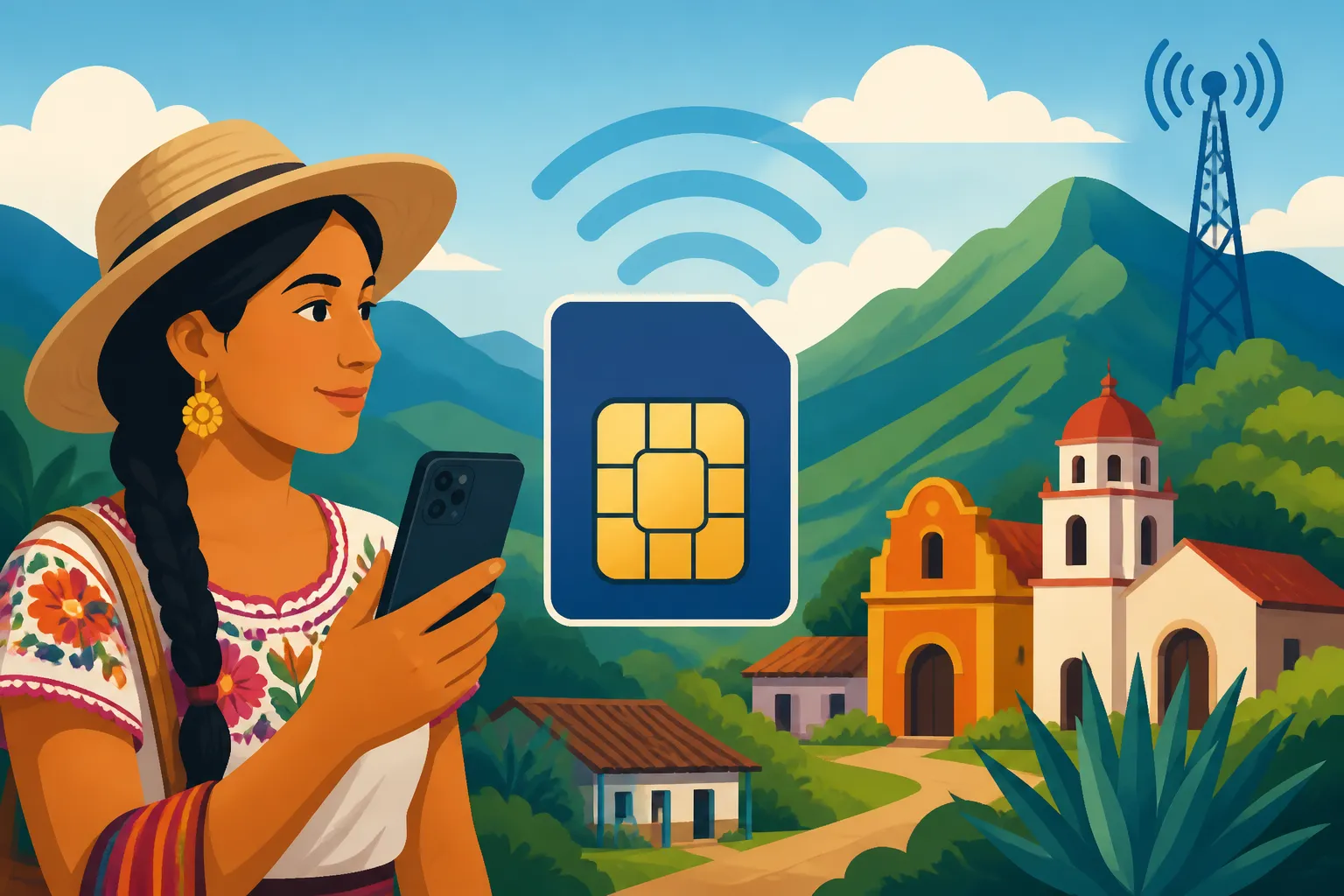
Oh, the sheer frustration of being in the breathtaking, remote beauty of rural Mexico, only to find your phone is just a fancy brick because there's absolutely no signal. You're trying to find that hidden waterfall in Chiapas, or confirm directions to a tiny mezcalería nestled in the Oaxacan Sierra, and bam – dead zone. It’s infuriating, isn't it? As expats who've spent years navigating Mexico's incredible but sometimes challenging infrastructure, we've all experienced this particular brand of tech-induced helplessness. This guide is all about cutting through that static, literally, by exploring how modern eSIM technology, particularly services like Airalo, can keep you connected even in the most off-grid corners of the country.
Disclosure: This post may contain affiliate links. We may earn a commission at no extra cost to you if you make a purchase through these links. Read full disclosure.
The Connectivity Conundrum in Rural Mexico
Let's be real, Mexico's beauty often lies in its wild, untamed, and sometimes disconnected landscapes. While the major cities and popular tourist hubs boast decent cell service, venture just a little bit out, and things get… spotty. For many of us who crave the authentic experiences that lie beyond the resorts and bustling city centers, staying connected becomes a real headache, or sometimes, a safety concern.
The Frustration of Dropped Signals and Dead Zones
Picture this: you're driving through a stunning mountain pass in the Sierra Norte of Oaxaca, the sun is setting, and you realize you might have taken a wrong turn. You pull out your phone, hoping to check Google Maps or call your Airbnb host, but all you see are those dreaded "No Service" bars. Or perhaps you're deep in the Lacandon Jungle, exploring ancient Mayan ruins near Palenque, trying to send a quick photo to family, and your messages just hang, undelivered. It’s not just an inconvenience; it can be genuinely stressful.
We’ve all been there, swearing under our breath at the seemingly random pockets of no signal. It's especially common in areas with challenging topography – dense jungles, high mountains, or remote coastal stretches. Places like the mountainous regions of Chiapas, known for their stunning natural beauty and indigenous communities, are notorious for their patchy service. The same goes for many smaller towns and pueblos throughout Oaxaca, where the infrastructure simply hasn't caught up. This lack of reliable connection can turn a minor misstep into a significant worry, especially if you're traveling solo or facing an unexpected emergency. When you're trying to enjoy the stunning landscapes, the last thing you want is to be worried about communication.
Why Traditional SIM Cards Fall Short Off-the-Beaten-Path
Now, you might already have a local Mexican SIM card from Telcel, Movistar, or AT&T. These are great in urban areas, and often in major towns. Telcel, especially, tends to have the most extensive coverage, but even they have their limits. The fundamental problem with a traditional physical SIM card is that it locks you into a single network provider.
What does this mean for you in rural Mexico? It means if your chosen provider – let's say Movistar – doesn't have a tower near that secluded beach you've discovered in Oaxaca's Pacific coast, you're out of luck. Your phone will dutifully search, but it won't find anything, because it's only looking for Movistar's signal. Even Telcel, with its widespread presence, will have dead zones. Imagine you're on a long-distance bus trip, perhaps from Tuxtla Gutiérrez to San Cristóbal de las Casas; you’ll likely experience stretches where the signal vanishes and reappears. While traveling within Mexico, particularly for long bus journeys, having robust internet access can make a huge difference, whether you're working remotely or just staying entertained. The truth is, relying on one carrier, no matter how big, is a gamble when you venture into the true wilderness of Mexico.
Enter the eSIM: A Game-Changer for Rural Travel
So, what's the solution to this frustrating dance with disappearing signals? For many expats and savvy travelers, the answer lies in eSIM technology. This isn't just a slight improvement; it's a fundamental shift in how we access mobile networks, offering a level of flexibility and reliability that traditional SIM cards simply can't match, especially when you're exploring beyond the well-trodden paths.
What Exactly is an eSIM and How Does it Work in Mexico?
Let’s demystify the eSIM. "eSIM" stands for "embedded SIM." Instead of a physical plastic card that you insert into your phone, an eSIM is a small, programmable chip built right into your device. Think of it like a digital SIM card. This means you don't have to swap out tiny cards when you travel or want to change carriers.
For Mexico, an eSIM works by allowing you to download a "profile" from a network provider directly to your phone. This profile contains all the necessary information to connect to their network. The beauty of it is that you can store multiple eSIM profiles on a single device, though only one can be active at a time for data. This is a crucial distinction from traditional SIMs, which are physical and singular. You can activate an eSIM plan for your Mexico trip before you even leave home, or once you've arrived and connected to Wi-Fi. It’s all done digitally through an app, like the incredibly user-friendly Airalo platform. This flexibility is a godsend for anyone moving to Mexico or simply exploring it, as it sidesteps the hassle of finding local SIM card vendors or dealing with registration processes in a foreign language.
The Unbeatable Advantage of Multiple Networks for Reliable Coverage
Here's where eSIMs truly shine, especially in challenging rural environments like the Chiapas highlands or the Mixteca region of Oaxaca. While a traditional SIM card ties you to one network (e.g., Telcel), many eSIM providers, particularly those designed for international travel like Airalo, don't just rely on a single local carrier. Instead, they often have agreements with multiple local network operators.
This means that your Airalo eSIM, for example, isn't just trying to connect to Telcel; it might also be able to access Movistar or AT&T México’s networks. If you're in a remote valley where Telcel’s signal is weak or non-existent, your eSIM can automatically switch to whichever partner network has the strongest signal in that specific location. It's like having three or four local SIM cards in your phone simultaneously, constantly scanning for the best available connection, without you having to do a thing. This dynamic capability drastically increases your chances of finding a signal, transforming those "dead zones" into merely "spotty zones" – a huge improvement when you're counting on connectivity. It’s this multi-network approach that makes eSIMs, and Airalo specifically, so invaluable for anyone seeking true peace of mind when venturing into Mexico’s less-connected regions. It's a key part of staying safe in Mexico, too, knowing you have a better chance of reaching help if needed.
Airalo: Your Connectivity Hero in Chiapas, Oaxaca, and the Sierra
When we talk about conquering the connectivity challenges of rural Mexico, one name consistently comes up: Airalo. This isn't just another tech gadget; it's a practical solution that has saved countless expat adventures from going completely dark. For anyone who has tried to rely on a single network in the depths of the Yucatán jungle or the isolated villages of the Sierra Gorda, the appeal of a robust eSIM solution becomes immediately clear.
Why Airalo Shines Brightest Where Others Fade
What makes Airalo stand out as the hero in Mexico's rural landscapes? It boils down to their ingenious approach to network access and user experience. Unlike getting a physical SIM card from, say, a Telcel or Movistar shop, which locks you into their network, Airalo operates through partnerships. This means that when you purchase a data package through Airalo for Mexico, it’s designed to leverage the infrastructure of multiple major local carriers where available.
Think about it: if you're deep in a canyon in the Sierra Madre Occidental, and Telcel has a tower but Movistar doesn't, your Airalo eSIM will connect to Telcel. If you then move to another area where AT&T México has surprisingly better coverage, Airalo can connect you there. This intelligent network switching is seamless and automatic, providing a far more resilient connection than any single-provider SIM card ever could. It’s about maximizing your chances of finding any signal, which is absolutely critical when you're navigating unpaved roads or exploring ancient ruins without a guide. The convenience of managing your data plans through the user-friendly Airalo app, recharging or switching plans with just a few taps, also removes a layer of administrative headache that often accompanies international travel. If you're pondering about travel insurance vs local insurance for expats, remember that having reliable communication like Airalo provides is equally important for your safety and peace of mind.
Real-World Scenarios: Keeping Connected in the Jungles of Chiapas and Mountains of Oaxaca
Let's get specific. You've packed your bags for an adventure to Chiapas. You're planning to hike through the lush, dense jungle surrounding the ancient city of Palenque, explore the vibrant indigenous markets of San Juan Chamula, and perhaps even trek to the stunning Cascada de Misol-Ha. These aren't exactly city centers, are they? With a traditional SIM, you might find yourself constantly checking your phone, hoping for a bar or two. With Airalo, your chances of getting a usable signal improve dramatically because it's not relying on just one specific tower. It's actively seeking the strongest connection from its partner networks.
Consider a trip to Oaxaca. You're exploring the pre-Hispanic ruins of Monte Albán perched high above the valley, then heading out to Hierve el Agua to marvel at the petrified waterfalls, and later diving into the artisanal mezcal route in the villages outside Oaxaca City. These are all incredible, but often sparsely connected, areas. When you're trying to find a specific artisan's workshop in Teotitlán del Valle or checking opening hours for a remote textile cooperative, an Airalo eSIM acts as your reliable bridge to the digital world. It truly offers a lifeline in places where local connectivity is hit-or-miss. It empowers you to enjoy these unique destinations fully, without the underlying anxiety of being completely cut off.
The sheer ease of activation and management also makes Airalo perfect for those moments when you're on the go. Imagine arriving in a small mountain town in the Sierra Norte, needing to quickly confirm your guesthouse reservation, and realizing there’s no Wi-Fi. Having an active Airalo plan means you can instantly get online, confirm details, and carry on with your adventure. This ability to instantly get online without hunting for a physical SIM card or relying on fickle Wi-Fi hotspots is what truly sets Airalo apart for exploring rural Mexico.
Setting Up Your Airalo eSIM for Your Mexican Adventure
Okay, you're convinced. An eSIM sounds like exactly what you need to navigate Mexico's rural beauty without losing your mind over lost signals. Now, how do you actually get this magical connectivity hero, Airalo, up and running on your device? It's surprisingly straightforward, even for those who might feel a little intimidated by new technology.
Step-by-Step Activation: Getting Your Airalo Plan Ready
The beauty of Airalo is its simplicity. You don't need to visit a store, fill out forms in Spanish, or even interact with a human (unless you want to!). Here’s a basic rundown of how to get connected:
- Check Device Compatibility: First things first, ensure your phone supports eSIM. Most newer smartphones (iPhone XR and later, Google Pixel 3 and later, many Samsung Galaxy S/Note series, etc.) are eSIM-compatible. You can usually find this information in your phone's settings or on the manufacturer's website.
- Download the Airalo App: Head to your phone's app store (iOS App Store or Google Play Store) and download the free Airalo app.
- Choose Your Destination and Plan: Open the app and search for "Mexico." You'll see various data packages available for different durations and data allowances. For exploring rural areas, I often recommend a slightly larger data plan or one with a longer validity, just in case you end up relying on it more than anticipated due to sparse Wi-Fi. Select the plan that best fits your travel needs. Remember that for extensive exploration in places like Chiapas: Jungle, Ruins, and Indigenous Culture, you'll want ample data.
- Purchase Your eSIM: Once you've selected a plan, proceed to purchase it within the app. Airalo accepts various payment methods, including credit cards and PayPal.
- Install Your eSIM: This is the critical part. Airalo offers two main ways to install:
- Direct Installation (Recommended for ease): The app guides you through clicking "Install eSIM," and your phone usually handles the rest, adding the new cellular plan. Make sure you have a stable internet connection (Wi-Fi is best) for this step.
- Manual Installation: If direct install fails or you prefer, Airalo provides QR codes and manual details (SM-DP+ Address, Activation Code) that you can enter into your phone's cellular settings. Follow the specific instructions provided in the Airalo app for your phone model.
- Activate Your eSIM: Once installed, go into your phone's cellular settings. You'll likely see your new Airalo eSIM listed. You’ll want to enable it for cellular data and set it as your primary data line when you want to use it. Crucially, Airalo plans typically activate only when they connect to a supported network in Mexico, so you don't lose days of validity if you set it up before you arrive. However, always double-check the specific activation policy for your chosen plan, as some might have an expiry from the date of purchase.
- Enable Data Roaming (for the eSIM): This sounds counter-intuitive, but for your Airalo eSIM to function by connecting to its partner networks, you often need to enable data roaming specifically for the eSIM line in your phone settings. Don't worry, with an eSIM, this doesn't incur the exorbitant roaming charges you might associate with your home provider.
And voilà! You're ready to explore. It usually takes just a few minutes from opening the Airalo app to being connected.
Tips for Maximizing Your Rural Mexico eSIM Experience
While Airalo makes connectivity much easier, a few savvy tips can further enhance your experience, especially in those truly remote areas where even the best networks might struggle:
- Keep Your Home SIM Active (but turn off data roaming for it!): You can keep your physical home SIM card in your phone. This is useful for receiving calls or texts from your home number (though make sure data roaming is turned off for this line to avoid surprise charges). You can then use your Airalo eSIM purely for data. This dual-SIM capability is a real blessing for expats who want to keep their home number while living in Mexico.
- Battery Life Management: Constantly searching for a signal can drain your phone battery faster. In areas of very weak signal, your phone will work harder to try and connect. Consider carrying a portable power bank, especially if you're planning long excursions into the Sierra or jungles of Oaxaca.
- Download Offline Maps: Even with an eSIM, there will always be some truly disconnected spots. Before you head out, download offline maps of your specific areas in Google Maps or a similar app. This ensures you can still navigate even if your Airalo signal dips out for a bit. This is a golden rule for all travel in Mexico, really.
- Manage Data Usage: While Airalo offers various data packages, you'll still want to be mindful of your usage. Streaming videos or large downloads can chew through data quickly. Save those activities for when you have a strong Wi-Fi connection. For quick checks or navigation, it’s perfect.
- Communicate Expectations: If you're traveling with others, or meeting local guides, let them know you're using an eSIM and that connectivity might still be intermittent in very remote spots. Set realistic expectations for communication.
- Monitor Signal Strength and Switch If Needed: While Airalo is smart about switching, sometimes a manual nudge helps. If you notice persistent poor signal, you can try momentarily toggling airplane mode on and off, or even switching your phone's network selection from "Automatic" to "Manual" in settings to see if it picks up a better Airalo partner network.
By following these steps and tips, you'll be well-equipped to experience the wonders of rural Mexico with a significantly reduced chance of being cut off from the world. This peace of mind is invaluable, allowing you to focus on the incredible cultural and natural experiences Mexico has to offer.
Traditional SIM vs. Airalo eSIM: A Rural Mexico Showdown
Let's lay it all out. When you're planning to delve into the heart of Mexico's less-traveled territories, the choice between a traditional physical SIM card and a digital eSIM like Airalo becomes a critical one. It's not just about convenience; it's about reliable access to communication when you need it most.
Here’s a comparison to help you weigh your options for coverage in rural Mexico:
| Feature | Traditional Physical SIM Card (e.g., Telcel, Movistar) | Airalo eSIM (for Mexico) |
|---|---|---|
| Physical Form | Requires a physical card insertion into your phone. | Digital profile, no physical card needed, embedded in your phone. |
| Network Access | Locked to a single network provider (e.g., only Telcel). | Accesses multiple partner networks (e.g., Telcel, Movistar, AT&T) dynamically. |
| Rural Coverage | Varies greatly; dependent solely on your chosen provider's infrastructure. Likely to have more dead zones if your provider isn't strong in that area. | Significantly enhanced due to the ability to switch to the strongest available partner network. Higher chance of finding a signal. |
| Ease of Acquisition | Must purchase in person at a store, often requiring ID and registration (sometimes in Spanish). | Purchase and activate digitally via an app from anywhere with internet. No physical shop visit needed. |
| Flexibility / Switching | To change networks, you need to buy and swap out a new physical SIM card. | Can store multiple eSIM profiles; switch data plans or purchase new ones easily within the app. |
| Travel Pre-planning | Cannot activate until you are physically in Mexico and visit a store. | Can purchase and install before you travel, activating upon arrival in Mexico. |
| Management | May require calling customer service, potentially with language barriers. | Managed entirely through the user-friendly Airalo app (often in English). |
| Pricing Model | Typically pay-as-you-go or monthly plans, might have complex foreign visitor rates. | Clear, upfront data packages for specific durations and amounts. Easy to monitor and top-up. |
| Safety in Emergencies | Limited by single network's reach; potentially less reliable in truly remote emergencies. | More reliable due to multi-network access, increasing chances of being able to call for help. This is critical for medical emergencies in Mexico. |
As you can see, for the specific challenge of obtaining reliable coverage in rural Mexico – be it the jungles of Chiapas, the mountains of Oaxaca, or other remote "sierras" – the Airalo eSIM offers a superior solution. Its ability to intelligently connect to multiple underlying networks acts like a digital safety net, giving you a much better chance of staying in touch with the world, navigating with maps, or simply sharing your incredible experiences in real-time. It’s truly a tool that enhances both convenience and safety for the intrepid expat or traveler in Mexico.
A Connected Journey Awaits
Navigating the vibrant, wild, and sometimes wonderfully challenging landscapes of rural Mexico is an experience like no other. From the misty highlands of Chiapas to the sun-baked valleys of Oaxaca, these regions offer a depth of cultural and natural beauty that truly defines the country. But as we've explored, this beauty often comes with the caveat of connectivity black holes, turning what should be moments of awe into moments of anxiety.
That's where the thoughtful integration of technology like eSIMs, and specifically the reliable service offered by Airalo, steps in. It's not about being glued to your phone; it's about having the freedom to explore with confidence. It’s about being able to pull up a map when you're lost on a winding mountain road, confirm a reservation in a remote village, or even call for help in an emergency without having to wonder if your phone will even bother to ring.
The multi-network capability of Airalo eSIMs fundamentally changes the game for rural travel in Mexico. It provides a more robust, flexible, and simply smarter way to stay connected, allowing you to maximize your chances of finding a signal even when traditional SIM cards from a single provider might leave you stranded. The ease of setup, transparent pricing, and seamless management through the Airalo app further enhance its appeal, removing much of the logistical headache associated with getting online abroad. So, whether you're a seasoned expat making your home in Mexico or a curious traveler venturing off the beaten path, consider making an Airalo eSIM an essential part of your packing list. It's more than just data; it's peace of mind in your pocket.
Disclaimer
Please note that while this guide provides comprehensive information, immigration rules, visa requirements, and local regulations in Mexico can change. Network coverage and service availability, especially in rural areas, can also be subject to local conditions, topography, and infrastructure developments. Always verify the latest information with official sources or trusted experts before making any decisions. This content is for informational purposes only and not intended as legal, financial, or medical advice.