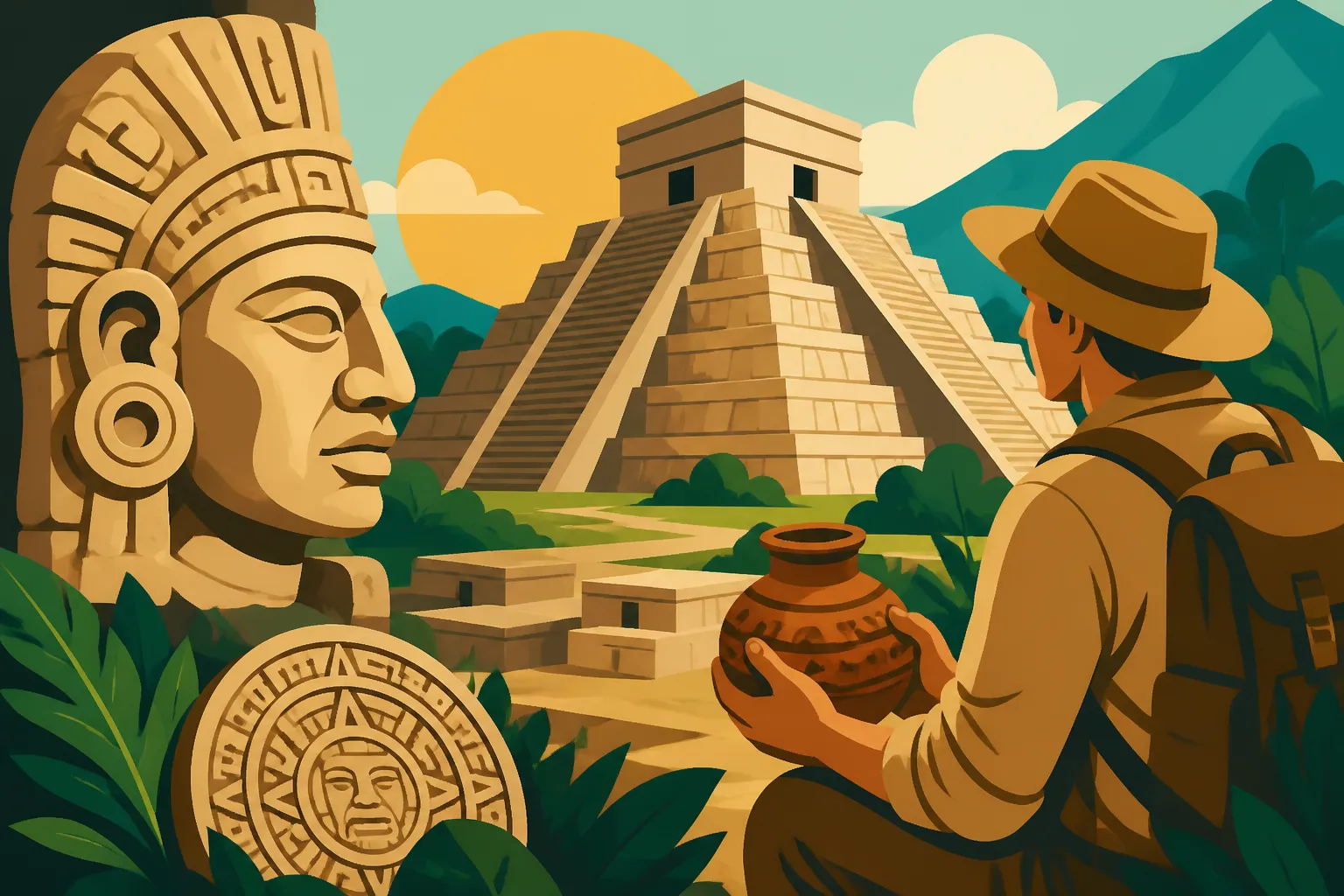
Ancient Ruins, History, and Archaeology in Mexico
Embarking on life in Mexico means opening a door to an incredible tapestry of history, a past so rich and profound it literally shaped entire continents. Yet, for many newcomers, the sheer scale of ancient ruins and archaeological sites can feel overwhelming—where do you even begin? This guide is your compass through the epochs, from the mysterious Olmecs to the mighty Aztecs, offering an expat's perspective on how to explore these awe-inspiring windows into Mexico's soul.
Disclosure: This post may contain affiliate links. We may earn a commission at no extra cost to you if you make a purchase through these links. Read full disclosure.
Mexico's Deep Roots: An Overview of Pre-Hispanic Civilizations
Before the arrival of Europeans, Mexico was a vibrant mosaic of advanced civilizations, each leaving an indelible mark on the landscape and culture. Understanding these "deep roots" helps you appreciate the layers of history beneath your feet, from the bustling streets of Mexico City to the tranquil jungles of Yucatán. It's not just about seeing old stones; it's about connecting with the spirit of the people who built them.
The Olmecs: Mother Culture of Mesoamerica
Often referred to as the "Mother Culture" of Mesoamerica, the Olmec civilization laid many of the foundational elements that later cultures, like the Maya and Aztecs, would adopt and refine. Flourishing primarily from around 1400 BCE to 400 BCE in the tropical lowlands of south-central Mexico, in what is now the states of Veracruz and Tabasco, the Olmecs were pioneers in their time. They developed complex societal structures, intricate artistic expressions, and perhaps even some of the earliest forms of writing and calendar systems in the region.
Their most iconic legacy is undoubtedly the colossal head sculptures, massive basalt carvings depicting distinct human faces, often wearing helmet-like headgear. These enormous heads, some weighing up to 40 tons, were carved from volcanic rock quarried in the Tuxtla Mountains, sometimes over 100 kilometers away, suggesting sophisticated engineering and organized labor. Sites like San Lorenzo Tenochtitlán and La Venta were major Olmec centers, revealing evidence of ceremonial pyramids, elaborate jade carvings, and rubber ball courts, a ritual game that held deep cultural significance across Mesoamerica. Visiting these regions today, particularly museums in cities like Villahermosa, offers a tangible link to this enigmatic and foundational civilization.
The Maya: Mystical Masters of the Jungle
The Maya civilization, with its intricate calendar, sophisticated writing system, and impressive architectural achievements, continues to capt captivate the imagination. Flourishing across southeastern Mexico (Yucatán, Campeche, Quintana Roo, Chiapas, and Tabasco), as well as parts of Guatemala, Belize, El Salvador, and Honduras, the Maya were not a single unified empire but a collection of independent city-states, each with its own rulers and traditions. Their classic period, from roughly 250 CE to 900 CE, saw the construction of monumental cities like Palenque, Tikal, and Copán, characterized by soaring pyramids, elaborate temples, and grand palaces adorned with intricate carvings and stucco work.
What truly sets the Maya apart is their profound intellectual contributions. They developed a highly advanced understanding of astronomy, charting planetary movements and predicting eclipses with remarkable accuracy, which informed their complex calendar systems, including the Long Count. Their hieroglyphic writing system, now largely deciphered, tells stories of dynastic lineages, wars, and religious ceremonies. For expats in Mexico, exploring the Maya ruins is an absolute rite of passage, offering a deep dive into a civilization that mastered mathematics, art, and the mysteries of the cosmos amidst the dense jungle. You'll find yourself wondering about their sudden decline in many areas, a mystery that still fuels archaeological debate and exploration to this day.
The Aztecs: Empire Builders of the Central Highlands
Fast forward several centuries, and we arrive at the era of the Aztecs, a dominant force in the Central Highlands of Mexico just prior to the Spanish Conquest. Emerging around the 14th century, the Mexica people (as they called themselves) established their magnificent capital, Tenochtitlán, on an island in Lake Texcoco – the very site of modern-day Mexico City. Through a formidable Triple Alliance with neighboring city-states Texcoco and Tlacopan, they forged an empire that, at its peak, controlled vast swathes of Mesoamerica, extracting tribute and spreading their cultural influence.
The Aztecs were masterful engineers, creating floating gardens (chinampas) to expand agricultural land and building impressive temples, causeways, and canals within their island city. Their religion was complex, with a pantheon of gods requiring elaborate rituals, including human sacrifice, which was a central element of their worldview and public ceremonies. Today, walking through the Zócalo in Mexico City, you are literally treading upon the ruins of Tenochtitlán. The Templo Mayor, uncovered just steps from the Metropolitan Cathedral, stands as a powerful testament to their civilization, offering a stark contrast between two colliding worlds. For anyone living in or visiting Mexico City, understanding the Aztec empire is crucial for grasping the historical layers of this incredible metropolis.
Iconic Archaeological Sites: Must-Visit Marvels
Mexico is home to literally thousands of archaeological sites, but a few stand out for their sheer scale, historical significance, and accessibility. These are the places that often draw visitors from around the globe, and for good reason – they represent the pinnacle of ancient Mesoamerican achievement.
Chichén Itzá and the Yucatán Peninsula
No discussion of Mexican ruins is complete without mentioning Chichén Itzá, arguably the most famous and recognizable archaeological site in the Yucatán Peninsula. This UNESCO World Heritage site, and one of the New Seven Wonders of the World, was a major pre-Columbian city built by the Maya civilization. Its most striking structure is El Castillo, also known as the Temple of Kukulcán, a massive step pyramid that showcases the Maya's astronomical prowess, especially during the spring and autumn equinoxes when the play of light and shadow creates the illusion of a serpent (Kukulcán) slithering down its steps.
Beyond El Castillo, Chichén Itzá offers a vast complex of wonders, including the Great Ball Court, the largest in Mesoamerica, where the ancient ritual ballgame was played, the Temple of the Warriors with its rows of carved pillars, and the sacred Cenote Sagrado, a natural sinkhole used for sacrifices. While it can get incredibly busy, especially during peak tourist season, its grandeur is undeniable. Many visitors opt to stay in nearby Valladolid or Mérida, or even take a day trip from Cancún or Playa del Carmen. For those planning a visit, consider booking an early morning tour through a service like Viator to beat the crowds and the midday heat, giving you a more peaceful experience. To delve deeper into the region's ancient history, consider exploring other incredible sites nearby such as Uxmal or Ek Balam. These tend to be less crowded and offer a different perspective on Maya architecture and urban planning.
Teotihuacán: City of the Gods
Just an hour's drive northeast of Mexico City lies Teotihuacán, a sprawling ancient metropolis often called the "City of the Gods." This site predates the Aztecs, and even they regarded it with reverence, believing it was the place where the gods created the universe. Flourishing between 100 BCE and 650 CE, Teotihuacán was once the largest city in the Americas, with an estimated population of over 100,000 people. Its monumental structures, especially the colossal Pyramid of the Sun and the Pyramid of the Moon, dominate the landscape.
Walking down the Calzada de los Muertos, or Avenue of the Dead, which connects these pyramids and leads to the Ciudadela and the Temple of Quetzalcoatl, you can truly grasp the scale and planned urbanism of this ancient city. The intricate carvings of feathered serpents and Tlaloc (the rain god) on the Temple of Quetzalcoatl are particularly striking. While climbing the Pyramid of the Sun is currently restricted for conservation reasons, the sheer presence of these structures is breathtaking. For expats in Mexico City, a visit to Teotihuacán is a must. You can take a public bus from the Terminal Central del Norte (often facilitated by Busbud for ticket purchases) or hire a private tour. Consider spending a full day here; many excellent local guides can bring the city's mysteries to life.
Palenque: Maya Jewel of Chiapas
Deep within the lush, misty jungles of Chiapas, you'll find Palenque, a Maya city that many consider one of the most elegant and architecturally refined sites in Mexico. Unlike the dry, flat landscapes of Yucatán, Palenque is nestled amidst rolling hills and dense foliage, adding to its mystique. It reached its peak during the Late Classic period (600-900 CE) and is renowned for its exquisite stucco sculptures and reliefs, which provide detailed accounts of its rulers and mythology.
The most famous structure here is the Temple of the Inscriptions, which houses the tomb of Pakal the Great, one of Palenque's most significant rulers. The intricate hieroglyphic texts found throughout the site have been invaluable in deciphering Maya history and belief systems. Other notable structures include the Palace, a complex of courtyards, galleries, and a distinctive four-story tower, and the Temples of the Cross, Foliated Cross, and Sun, which stand atop natural hills overlooking the site. While many of the structures remain hidden beneath the jungle canopy, the excavated areas are truly stunning. Getting to Palenque often involves a flight to Tuxtla Gutiérrez or Villahermosa, followed by a bus or shuttle. If you're looking for accommodation near the ruins, Booking.com offers several charming hotels and eco-lodges in the nearby town of Palenque, allowing you to wake up early and explore the site before the main crowds arrive. Don't forget to visit the excellent on-site museum, which houses many of the original artifacts and offers crucial context.
Beyond the Famous: Lesser-Known Gems and Regional Wonders
While Chichén Itzá, Teotihuacán, and Palenque often grab the headlines, Mexico's archaeological landscape is vast and diverse. Exploring some of the lesser-known sites can offer a more intimate and profound connection with ancient history, often with fewer crowds and unique regional characteristics.
Monte Albán: Zapotec Grandeur in Oaxaca
Perched atop a flattened mountain ridge overlooking the valley of Oaxaca, Monte Albán is a majestic archaeological site that was the pre-eminent Zapotec socio-political and economic center for nearly a thousand years. Established around 500 BCE, it served as the capital of the Zapotec empire until its eventual decline around 800 CE. The site is characterized by its Grand Plaza, a vast open space surrounded by pyramids, temples, and palaces, which were meticulously planned and constructed.
Among its most impressive features are the Danzantes, carved stone slabs depicting nude, contorted figures, believed to represent sacrificial victims or dancers. The ball court, an observatory, and several tombs, including the famous Tomb 7 where a rich offering of Mixtec gold jewelry was discovered, further highlight the site's importance. The views from Monte Albán are simply breathtaking, offering panoramic vistas of the surrounding valleys and mountains. For expats living in Oaxaca, or those visiting, Monte Albán is an easily accessible and deeply rewarding day trip. You can take a local bus or a shared taxi (colectivo) from Oaxaca city center. Ensure you wear comfortable shoes, as there's a fair bit of walking involved to fully appreciate the scale of this ancient city.
El Tajín: Totonac Rhythms of Veracruz
Venturing into the lush state of Veracruz, you'll discover El Tajín, a significant pre-Columbian city that was the capital of the Totonac empire and flourished between 600 and 1200 CE. This UNESCO World Heritage site is distinct for its unique architectural style, particularly the intricate decorative niches found on many of its structures. The most iconic building is the Pyramid of the Niches, a seven-story structure with 365 niches, each thought to represent a day of the year. This precision reflects the Totonac's advanced understanding of calendars and astronomy.
El Tajín is also famously associated with the ritual of the Voladores de Papantla (Flying Men of Papantla), a captivating ancient ceremony where men descend from a tall pole, suspended by ropes, to honor the sun and fertility. While the modern performance is often for tourists, its roots lie deeply in the spiritual practices of the Totonac people. The site also boasts numerous ball courts, more than almost any other Mesoamerican site, emphasizing the importance of the ballgame in Totonac culture. Visiting El Tajín offers a different flavor of ancient Mexico, immersed in the tropical climate of Veracruz, and is a fantastic addition to any deep dive into Mexico's past.
Calakmul: Deep Jungle Maya City
For the truly adventurous expat or traveler, Calakmul offers an unparalleled experience of a grand Maya city almost entirely swallowed by the jungle. Located deep within the Calakmul Biosphere Reserve in Campeche, close to the Guatemalan border, this UNESCO World Heritage site was one of the largest and most powerful Maya cities, rivalling even Tikal. Discovered relatively late, much of Calakmul remains covered, giving visitors a sense of being true explorers.
What sets Calakmul apart is its immense scale and unique location. You'll often spot howler monkeys, spider monkeys, and various bird species as you traverse the jungle paths between structures. The most impressive pyramids, known as Structure 2 and Structure 7, are colossal, and climbing them (where permitted) offers breathtaking panoramic views of the endless emerald canopy, dotted with the tops of other unexcavated ruins. The feeling of solitude and discovery here is profound, a stark contrast to the bustling crowds of Chichén Itzá. Reaching Calakmul requires dedication; it's a few hours drive from the nearest town, Xpujil, and requires a full day dedicated to the journey and exploration. Given its remote nature, it's advisable to arrange transport and possibly overnight stays in Xpujil via Booking.com, planning your journey carefully. This site is not just an archaeological wonder, but an immersive natural experience.
Planning Your Archaeological Adventure: Logistics and Tips
Exploring Mexico's ancient past is an incredibly rewarding experience, but it does require some thoughtful planning, especially when navigating unfamiliar terrain and systems. Here's what you need to know to make your trip smooth and enjoyable.
Getting There: Transport Options for Every Site
Mexico boasts a well-developed transportation network that can get you to most major archaeological sites, though the journey can vary greatly depending on the site's location. For widely popular destinations like Chichén Itzá or Teotihuacán, you have a plethora of options. From tourist hubs like Cancún or Mexico City, you can find organized tours that include transportation, a guide, and sometimes even lunch. Companies like Viator offer a wide range of these packaged tours, taking the guesswork out of logistics.
Alternatively, for independent travelers, Mexico's long-distance bus system, particularly ADO, is excellent. Busbud can help you search for and book tickets in advance, offering comfortable, reliable, and affordable travel to towns near major sites. For instance, you can take an ADO bus to Valladolid for Chichén Itzá, or to the Teotihuacán Pyramids from Mexico City's North Bus Terminal. For more remote sites like Calakmul, you might need to combine bus travel with local colectivos (shared taxis) or private transport arranged through your accommodation. Driving yourself is another option, but be prepared for toll roads (cuotas) and consider Do You Need Mexican Car Insurance to Drive in Mexico?. Always check the most current information regarding transportation routes and times, as they can occasionally change.
What to Bring and What to Expect at the Sites
Preparing adequately for your visit to an archaeological site can significantly enhance your experience. First and foremost, wear comfortable walking shoes; you'll be doing a lot of walking, often on uneven terrain, ancient plazas, or climbing steps. A wide-brimmed hat, sunglasses, and reef-safe sunscreen are essential, especially in the Yucatán and Chiapas, where the sun can be intense. Hydration is key, so carry a reusable water bottle or purchase bottled water at the entrance, as facilities inside can be limited. Many sites, particularly those in the jungle, can be humid, so lightweight, breathable clothing is advisable.
Expect varying levels of accessibility. While some sites have paved paths and ramps, many feature ancient, uneven stonework. At some locations, like Palenque, you might encounter vendors selling crafts and snacks; remember to haggle politely if you're interested. Entrance fees are standard, usually payable in Mexican pesos, and sometimes credit cards are accepted, but it’s always wise to carry cash. Most sites have restroom facilities and small gift shops, but don't count on elaborate restaurants. Finally, embrace the experience, but be mindful of the rules: do not touch the ruins, stick to designated paths, and respect the ancient history surrounding you.
Guided Tours vs. Self-Exploration
Deciding between a guided tour and self-exploration really depends on your travel style and how deeply you want to engage with the history. A good local guide can truly bring a site to life, weaving narratives, explaining architectural details, and sharing insights that you'd likely miss on your own. They can point out subtle carvings, explain the significance of certain alignments, and connect the dots between different structures, making the stones speak volumes. This is particularly valuable for complex sites like Teotihuacán or Palenque where the historical context is rich. You can often find reputable guides at the entrance of major sites, or book them in advance through tour operators on platforms like Viator.
On the other hand, self-exploration offers the freedom to wander at your own pace, linger in areas that capture your imagination, and simply soak in the atmosphere without feeling rushed. Many sites provide informative plaques in Spanish and English, and with a good guidebook or an audio tour, you can still gain significant historical context. For those who prefer a more contemplative experience, or have already done extensive research, self-exploration can be incredibly rewarding. Perhaps a hybrid approach works best: hire a guide for the first hour or two for an overview, then spend the rest of your time exploring independently. Remember, knowing some key Survival Spanish for Travelers in Mexico: Key Phrases can enhance either experience, allowing for richer interactions.
The Importance of Preservation and Responsible Tourism
As expats and visitors, we have a collective responsibility to help preserve these irreplaceable historical treasures. Responsible tourism isn't just about not littering; it's about understanding the delicate balance required to maintain these sites for future generations and supporting the communities that live around them.
Respecting the Sites: Etiquette and Rules
When you visit an archaeological site in Mexico, you're not just at a tourist attraction; you're stepping onto sacred ground, a place of profound historical and cultural significance. Respecting these sites is paramount. Always adhere to the posted rules and guidelines, which are primarily in place to protect the fragile ancient structures. This means staying on marked paths, refraining from touching or climbing on designated structures, and certainly not attempting to carve your name or take "souvenirs" from the ruins. Every loose stone or fragment you might be tempted to pick up is part of the site's history.
Photography is generally permitted for personal use, but drones often require special permits, and professional equipment might incur additional fees. Be mindful of others and avoid blocking pathways for extended periods. Loud music, shouting, or disruptive behavior detracts from the experience for everyone, including the ancestors whose legacy we are there to witness. Remember that these sites are managed by the Instituto Nacional de Antropología e Historia (INAH), Mexico’s national institute for anthropology and history, which works tirelessly with limited resources to protect and study them. Your respectful conduct directly contributes to their efforts.
Supporting Local Communities and Sustainable Tourism
Archaeological sites are often located near small towns or indigenous communities that rely on tourism for their livelihoods. Engaging with these communities in a positive way is a crucial aspect of responsible tourism. When you purchase crafts, food, or services from local vendors, you're directly supporting families and contributing to the local economy. Choose locally owned restaurants and accommodation where possible. Many guides at the sites are from the surrounding areas and possess invaluable generational knowledge about the history and folklore of the region.
Beyond direct purchases, consider how your travel choices impact the environment around the sites. Opt for eco-friendly transport, minimize waste, and respect local customs. If you're staying in a town near a major ruin, look for hotels or guesthouses that explicitly state their commitment to sustainable practices. Engaging in these practices helps ensure that the economic benefits of tourism are shared, and that the natural and cultural heritage surrounding these magnificent ruins is preserved for both locals and future visitors alike. This long-term approach to tourism is vital for the enduring legacy of Mexico's ancient wonders.
Practicalities for Expats and Long-Term Visitors
As an expat or long-term visitor in Mexico, you have the unique opportunity to go beyond a fleeting tourist visit and truly immerse yourself in the country's profound historical narrative. This offers avenues for deeper learning and integration that short-term visitors often miss.
Deeper Dives: Museums and Research Opportunities
Living in Mexico provides the luxury of time, allowing you to move beyond the major sites and explore the incredible museums that house countless artifacts from these ancient civilizations. The Museo Nacional de Antropología in Mexico City is unparalleled globally, offering an exhaustive and beautifully curated collection that spans all of Mesoamerican history. Spending several days there, perhaps even visiting multiple times, will enrich your understanding of every site you visit. Regional museums, like the Museo Regional de Yucatán in Mérida or the Museo de Sitio de Palenque, offer more localized insights and often display artifacts found directly at the nearby sites.
For those with a scholarly bent, Mexico is a hub for archaeological research. While direct participation in digs might be complex, attending lectures, workshops, or even university courses on Mesoamerican history can provide an academic perspective. Many Mexican universities have strong archaeology and anthropology departments, and even if your Spanish isn't perfect, there are often resources available in English. This allows you to engage with the ongoing discoveries and debates that keep Mexico's ancient history alive and relevant.
Integrating History into Your Mexican Life
Beyond dedicated visits and academic pursuits, integrating Mexico's ancient history into your daily life here is a fascinating journey. You'll begin to notice the pervasive influence of ancient cultures in modern Mexican society, from the indigenous languages still spoken to the culinary traditions that trace their roots back millennia. Many Mexican towns and cities have central plazas built over ancient ceremonial centers, and subtle hints of the past are everywhere if you know where to look.
Reading up on the specific history of the region you call home can deepen your appreciation for your surroundings. Perhaps your town has its own smaller, less-visited ruin, or a local museum dedicated to its pre-Hispanic past. Engaging with local festivals and traditions, some of which carry echoes of ancient rituals, also helps bridge the gap between the past and present. For instance, understanding the Maya calendar might give you a new perspective on local celebrations. This continuous learning, woven into the fabric of your expat life, makes living in Mexico an ongoing historical adventure. Don't forget to explore some of the Pueblos Mágicos: Mexico's Magic Towns Explained which often have their own unique historical narratives.
Comparative Overview of Major Archaeological Sites
To help you plan your explorations, here's a quick comparison of some of Mexico's most iconic archaeological sites:
| Site Name | Location | Primary Culture(s) | Key Features | Best For | Accessibility (from major cities) |
|---|---|---|---|---|---|
| Chichén Itzá | Yucatán | Maya (Toltec influence) | El Castillo, Great Ball Court, Temple of Warriors | Iconic views, detailed astronomy | Easy (day trip from Cancún/Mérida) |
| Teotihuacán | Mexico State | Teotihuacano | Pyramid of the Sun, Pyramid of the Moon, Avenue of the Dead | Grand scale, urban planning, spiritual atmosphere | Very Easy (day trip from Mexico City) |
| Palenque | Chiapas | Maya | Temple of the Inscriptions, The Palace, jungle setting | Elegant architecture, intricate art, jungle immersion | Moderate (flight + bus/shuttle) |
| Monte Albán | Oaxaca | Zapotec (Mixtec influence) | Grand Plaza, Danzantes, panoramic views | Sweeping vistas, distinct Zapotec art | Easy (day trip from Oaxaca City) |
| El Tajín | Veracruz | Totonac | Pyramid of the Niches, numerous ball courts, Voladores | Unique niche architecture, cultural rituals | Moderate (bus from Veracruz/Poza Rica) |
| Calakmul | Campeche | Maya | Colossal pyramids, deep jungle setting, wildlife | Adventure, solitude, unexcavated feel | Difficult (long drive from Xpujil) |
| Uxmal | Yucatán | Maya | Pyramid of the Magician, Governor's Palace, intricate facades | Puuc architectural style, less crowded | Easy (day trip from Mérida) |
| Templo Mayor | Mexico City | Aztec | Twin temples (Huitzilopochtli & Tlaloc), museum | Urban history, Aztec heart of Mexico City | Very Easy (walk from Zócalo) |
Disclaimer
The information provided in this guide is for general informational purposes only. While we strive to keep the content up-to-date and accurate, archaeological sites, entry fees, transport options, and regulations can change without prior notice. Always consult official sources, such as the Instituto Nacional de Antropología e Historia (INAH) website or local tourism boards, for the most current information before planning your visit. Travel safety and personal circumstances should always be considered when exploring new areas.