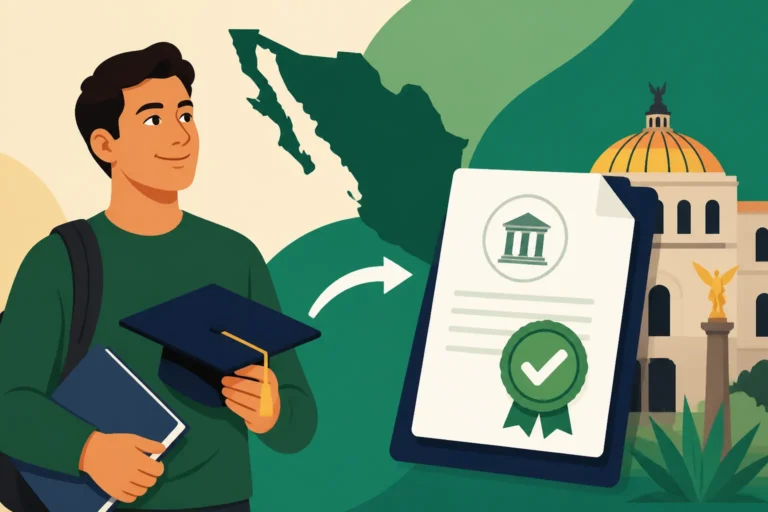
Working in Mexico: Job Market, Work Culture, and Opportunities for Foreigners
Staring at local job boards during my first month in Mexico, I felt completely overwhelmed by the complex visa requirements and unfamiliar corporate culture. Landing a local job as a foreigner feels daunting, but it is entirely possible. This comprehensive guide breaks down the Mexican job market, work visas, and workplace etiquette to solve your employment hurdles.
Disclosure: This post may contain affiliate links. We may earn a commission at no extra cost to you if you make a purchase through these links. Read full disclosure.
The Reality of the Mexican Job Market for Expats
Identifying High-Demand Sectors and Industries
The Mexican job market is vast and highly regionalized, meaning your employment prospects will shift dramatically depending on the specific city you choose to call home. For foreigners, the most lucrative and accessible roles are often found within specialized sectors that desperately need international expertise. Manufacturing, aerospace, and automotive industries have massive footprints in central and northern Mexico, particularly in states like Nuevo León, Querétaro, and Guanajuato. Multinational corporations frequently look for foreign engineers, supply chain managers, and quality assurance specialists to oversee cross-border operations and maintain global standards.
The technology industry is another massive draw for foreign talent. Mexico has heavily positioned itself as a major tech hub in Latin America, drawing venture capital and major software firms to set up regional headquarters. Software developers, data scientists, and IT project managers with international experience are highly valued. These companies often operate heavily in English and are usually more willing to navigate the bureaucratic hurdles of sponsoring a foreign worker’s visa.
On the opposite end of the spectrum, the tourism and hospitality sectors remain perpetual sources of employment for expats. Coastal resort towns from the Riviera Maya to Baja California rely heavily on bilingual foreigners to manage guest relations, run boutique hotels, direct international marketing campaigns, or manage scuba diving centers. While these jobs might not offer the same corporate salary structure as the tech or manufacturing sectors, they provide an unparalleled lifestyle that many expats actively seek when moving to the beach. Furthermore, international trade and logistics are booming due to the nearshoring trend, creating an unprecedented demand for bilingual project managers and international law consultants.
The Unavoidable Language Barrier
Your level of Spanish fluency will act as the single most significant filter for your job prospects in Mexico. It is a common misconception among newcomers that they can easily slide into a mid-level management role solely relying on their English skills. While English is highly prized and absolutely necessary for dealing with international clients, day-to-day operations, human resources issues, and team management are conducted almost exclusively in Spanish. Attempting to lead a local team without understanding the nuances of the language often leads to severe cultural friction and professional roadblocks.
If your Spanish is currently limited to basic greetings, you must be strategic about your job hunt. You will need to target companies where internal communications are primarily in English, which restricts your pool to multinational corporations, foreign-owned startups, or specific roles in the tourism sector. To understand exactly how language proficiency limits or expands your specific career field, review our breakdown in Do You Need to Speak Spanish to Work in Mexico? Language Requirements by Industry.
However, committing to learning the language opens up the entire national job market and dramatically increases your earning potential. Employers deeply value foreigners who respect the culture enough to learn the language. I highly recommend enrolling in structured language programs before you arrive. Using comprehensive resources like SpanishPod101 can rapidly accelerate your business Spanish, teaching you the specific corporate vocabulary that standard tourist phrasebooks completely ignore. Showing up to an interview with a solid grasp of business Spanish immediately sets you apart from the vast majority of foreign applicants. Dedicating an hour a day to SpanishPod101 during your commute before moving will pay massive dividends when you are finally sitting in a boardroom in Mexico City.
Realigning Salary Expectations and Purchasing Power
The most difficult adjustment for many expats transitioning to the Mexican workforce is realigning their salary expectations. If you are applying for a local contract with a Mexican company, you will be paid in Mexican Pesos, and the absolute numerical value of your salary will likely be significantly lower than what you would earn for the exact same role in the United States, Canada, or Western Europe.
It is crucial to look at your potential salary through the lens of purchasing power rather than direct currency conversion. Earning an average middle-class salary in a major US city might put you on a tight budget, but the peso equivalent in a mid-sized Mexican city can afford you a highly comfortable lifestyle, including a luxury apartment, domestic help, frequent dining out, and private healthcare. You have to evaluate the complete financial picture. We highly recommend doing a deep dive into Salary Expectations: Comparing Mexican Salaries to US/Canada to run realistic budget simulations based on actual local job offers. Furthermore, Mexican compensation packages are structured differently, often relying heavily on mandated benefits rather than just a high base salary. By law, employees are entitled to an annual Christmas bonus equivalent to at least 15 days of salary, profit-sharing, contributions to the public healthcare system, and a housing fund. Many corporate jobs also offer grocery vouchers as a tax-free perk that functions like a secondary income. Understanding these built-in benefits is essential when negotiating a job offer. A salary that looks low on paper might actually be quite robust once you factor in the additional stipends and the company-provided private medical insurance policy.

Navigating Mexican Office Culture and Etiquette
The Power of Palanca and Personal Relationships
In Mexican work culture, business is deeply personal. The concept of separating your professional life entirely from your private life is somewhat foreign here. Trust is the absolute foundation of all professional transactions, and trust is built through socialization, not just through impressive resumes or track records. If you are perceived as cold, overly transactional, or unwilling to engage in personal conversations, you will struggle to gain traction in a Mexican workplace.
This emphasis on relationships is heavily reflected in how hiring works. The concept of leverage or personal connections is incredibly strong. While large corporations do use standard human resources recruitment processes, many of the best jobs are never publicly posted; they are filled through word-of-mouth recommendations and personal referrals. Building a local network is not just an advantage; it is a necessity. Attending industry events, joining local chambers of commerce, and simply accepting invitations to coffee from local colleagues are critical career moves.
The famous Mexican business lunch is a prime example of this culture. These lunches can easily stretch for two to three hours and are rarely focused purely on business. The first hour is almost always dedicated to small talk, discussing family, current events, or sports. Rushing into contract details or project deadlines before establishing a comfortable personal rapport is considered highly rude. To master these crucial nuances of corporate socialization, review our guide on Mexican Work Culture: Business Etiquette and Workplace Norms.
Hierarchies, Indirect Communication, and Saving Face
Mexican corporate culture is traditionally very hierarchical and top-down. The boss commands a high degree of respect, and decision-making is rarely as egalitarian or consensus-driven as it is in some modern tech cultures in the US or Northern Europe. Subordinates are generally expected to execute directives without publicly questioning the leadership’s strategy. As a foreign manager coming into a Mexican company, you must understand that your local team may wait for explicit instructions rather than taking spontaneous initiative, out of respect for the hierarchy.
Communication styles in Mexico are notoriously indirect. Confrontation is actively avoided to maintain workplace harmony and save face. A direct and blunt refusal is rarely spoken. Instead, you will hear phrases suggesting that the team will look into it later or that things have become complicated.
For expats accustomed to straightforward feedback, this indirectness can be incredibly frustrating and easily misinterpreted as dishonesty or stalling. Learning to read between the lines is a survival skill in the Mexican office. Supplementing your language skills with cultural context through platforms like SpanishPod101 can help you decode the polite phrasing that masks actual workplace issues, allowing you to manage your team effectively without causing unintended offense.
Understanding the True Mexican Workweek
There is a persistent, outdated stereotype that Mexicans do not work hard. The reality is exactly the opposite: Mexicans work some of the longest hours in the world. The legal workweek under federal labor laws is 48 hours, typically spread over five and a half or six days. It is very common for office workers to be at their desks from 9:00 AM to 6:00 PM or 7:00 PM, Monday through Friday, and sometimes a half-day on Saturday.
However, the rhythm of the workday is different. Because of the long hours, the pace can sometimes feel less frenetic. The two-hour lunch break is sacred, and there is often a high tolerance for taking time out of the day to celebrate a colleague’s birthday or chat by the coffee machine. While you are expected to put in the hours and show dedication to the company, the relentless, minute-by-minute productivity tracking seen in some Western corporate environments is less common here.
Punctuality operates on a dual standard. For social events, arriving late is expected. However, for formal business meetings, strict punctuality is required. If you are navigating your first local job offer, it is vital to clarify the exact expectations regarding schedule and overtime, which we break down in Working Hours and Overtime: A Guide to Typical Work Schedules in Mexico.
Legal Requirements and Work Visas in Mexico
Employer Sponsorship and Corporate Certification
You cannot simply arrive in Mexico on a tourist visa, drop off resumes at local businesses, and start working the next day. The Mexican government strictly protects its domestic labor market, and employing a foreigner requires the local company to jump through significant bureaucratic hoops. Before a company can even offer you a legally binding contract, they must possess a special certification from the federal immigration institute.
This certification proves to the government that the company is legally constituted, pays its taxes, and is authorized to sponsor foreign talent. Many smaller businesses, local restaurants, or boutique hotels do not have this certification and are unwilling to spend the time and money to get it just to hire one expat. This immediately limits your job search to larger, more established companies that already possess their certification and are accustomed to the sponsorship process.
Once you find an employer willing to sponsor you, they must initiate the visa process on your behalf while you are outside of the country. For a step-by-step look at how this administrative burden falls on the employer, read our detailed breakdown in Work Permit Process: How Employer Sponsorship Works in Mexico.
Processing the Temporary Resident Visa with Work Permission
The most common legal route for expats taking a local job is the Temporary Resident Visa with Work Permission. The process begins with your employer’s application to the immigration authorities. Once the authorities approve the request, they will issue a unique processing code. You then take this code, along with your passport and the official job offer, to a Mexican consulate outside of Mexico to conduct a formal visa interview.
If the consulate approves the visa, they will place a specialized sticker in your passport. You then travel to Mexico, where you have exactly 30 days to visit your local immigration office to exchange that sticker for your actual plastic residency card. This in-country process is notorious for long lines, confusing paperwork requirements, and bureaucratic delays.
You cannot officially start working or be put on the Mexican payroll until this physical card is in your hand. It is also important to note that your work permission is tied specifically to the employer stated on your residency card. If you change jobs or get promoted to a different corporate entity within the same network, you must formally notify the immigration office.
The Crackdown on the Perpetual Tourist Route
In the past, many expats would arrive in Mexico as tourists, find a job under the table, and periodically do border runs to renew their tourist allowance. The Mexican government has heavily cracked down on this practice. Today, working on a tourist visa is strictly illegal, and businesses face massive fines for employing undocumented foreigners.
Furthermore, immigration officers at the airport are increasingly granting tourists only 10, 20, or 30 days of stay based on their return flights, making the permanent tourist lifestyle functionally impossible. If you are currently in Mexico as a tourist and you find a company willing to hire you, the standard procedure requires you to leave the country to attend the consulate interview once your corporate sponsorship is approved.
Attempting to bypass the system by working for cash puts you in a highly vulnerable position. You will have no labor rights, no access to public healthcare, and your employer can withhold your wages with zero legal repercussions. It is absolutely vital to ensure your employment is above board. We discuss the severe legal risks and the reality of the immigration crackdown in our article, Can I Work in Mexico on a Tourist Visa? The Legal Reality.
Top Career Paths and Specific Opportunities for Foreigners
Teaching English and Education Roles
Teaching English remains the quintessential entry-level job for expats moving to Mexico. The demand for native English speakers is insatiable, ranging from private tutoring for corporate executives to teaching elementary school children. To secure a legal, sponsored teaching job, you almost universally need a bachelor’s degree and an internationally recognized teaching certification.
The teaching market is split into several tiers. Language institutes hire frequently and are willing to sponsor visas, but the pay is generally quite low, and the hours are heavily split between early mornings and late evenings. University-level positions offer better stability and academic prestige but require master’s degrees and prior publishing experience.
The golden ticket in the education sector is landing a job at an elite international private school, typically located in affluent neighborhoods of Mexico City, Monterrey, or Guadalajara. These schools require state teaching licenses from your home country, but they pay salaries that rival Western standards. If you are considering this path, you must read our comprehensive breakdown in Teaching English in Mexico: Comprehensive Guide to Jobs and Qualifications.
The Thriving Tech and Startup Ecosystem
Mexico is experiencing a massive boom in the tech and startup sectors. With billions of dollars of foreign direct investment pouring in, companies are desperate for senior developers, user experience designers, agile project managers, and growth marketers. Cities like Guadalajara have cultivated massive tech ecosystems, hosting sprawling campuses for global giants alongside hundreds of agile local startups.
These corporate environments are generally the most comfortable for foreign professionals. They often adopt hybrid work models, utilize English as the primary language for documentation and global meetings, and offer highly competitive compensation packages that include private medical insurance and performance bonuses. You can explore this ecosystem thoroughly in Working in Guadalajara: Tech Scene and Opportunities for Foreigners.
Beyond pure tech, multinational corporations in finance, automotive, and fast-moving consumer goods actively recruit expats for regional leadership roles. Often, expats arrive on internal company transfers rather than being hired locally. These expat packages are highly lucrative, though they are becoming rarer as companies push to hire talent on localized contracts.
Opportunities in Tourism and Real Estate
The coastal regions of Mexico operate almost entirely on tourism and real estate. Expats in these areas frequently find work managing boutique hotels, running high-end culinary operations, organizing luxury weddings, or operating adventure tourism companies. These roles require a unique blend of extreme customer service skills, bilingualism, and the ability to manage local staff effectively.
Real estate is a particularly massive draw for entrepreneurial expats. With thousands of foreigners buying vacation homes in Mexico, local brokerages constantly seek foreign agents who can guide English-speaking buyers through the complex trust-based purchasing process.
Working in real estate or hospitality often means your base salary will be negligible, and your income will be entirely dependent on commissions or tips. This can be highly lucrative during the high season but terrifyingly sparse during the hurricane season. You must be prepared to aggressively manage your finances to survive the seasonal dips if you choose to build a career in the coastal tourism zones.
The Rise of Remote Work and Digital Nomadism
Securing Reliable Infrastructure and Coworking Spaces
The landscape of working in Mexico has been radically transformed by the explosion of remote work and digital nomadism. Thousands of foreigners now live in Mexico while maintaining employment with companies in the US, Canada, or Europe. To succeed as a remote worker in Mexico, your immediate priority is securing reliable infrastructure. Working from a beach hammock is a myth; the reality is that tropical humidity and poor coastal connections will destroy your productivity.
Most successful remote workers immediately seek out dedicated coworking spaces. Cities like Mexico City, Oaxaca, and Playa del Carmen are packed with world-class coworking facilities offering fiber-optic internet, soundproof phone booths, and ergonomic furniture. These spaces also serve as critical social hubs, allowing isolated remote workers to network with other expats and share local logistical advice.
When renting a long-term apartment, you must explicitly ask the landlord about the internet provider and request a speed test before signing the lease. National providers are standard, but service quality varies wildly from street to street. It is highly advisable to have a mobile hotspot as a backup for inevitable power outages or localized internet drops.
Managing Digital Security and Connectivity
Your livelihood as a digital nomad depends entirely on your connectivity and data security. Relying on public networks in Mexican cafes, airports, or short-term rentals to conduct sensitive corporate work is a massive security risk. Cybercrime and data interception on unsecured networks are genuine threats that can compromise your client accounts.
To mitigate this, you must build redundancy into your tech setup. Before you even land in Mexico, I strongly advise setting up an electronic SIM. Using Airalo ensures that the moment your plane touches down, you have instant access to high-speed mobile data to contact your host or jump on an emergency corporate call without hunting for a local kiosk.
Equally important is encrypting your daily internet traffic. You should never log into client portals without an active security barrier. Using a premium service like NordVPN masks your local connection, encrypts your data flow, and allows you to bypass geographic restrictions. Many corporate intranets will instantly block your access if they detect a Mexican connection; keeping NordVPN active seamlessly solves this issue while protecting your livelihood.
Taxation and Legal Grey Areas for Nomads
The legal and tax implications of living in Mexico while working for a foreign employer remain a highly confusing grey area for many expats. Historically, digital nomads entered Mexico as tourists and worked quietly from their laptops, paying no local taxes because their income was generated abroad.
However, as the remote work population has exploded, the Mexican government has modernized its approach. The primary legal route for long-term digital nomads is now the Temporary Resident Visa based on Economic Solvency. You prove to the consulate that you have a steady, high remote income, and they grant you a residency card. Crucially, this residency card does not give you the right to work for a Mexican company; it simply gives you the legal right to reside in Mexico while continuing your remote work.
Taxation is where it gets complicated. According to Mexican tax law, if you spend more than 183 days in a calendar year in Mexico, you technically become a Mexican tax resident and are theoretically obligated to declare your global income to the national tax authority. We break down the complex realities of double taxation and legal compliance in Do Expats Need to Pay Mexican Income Tax on Their Salary? and Digital Nomads in Mexico: Remote Work Guide for 2027.
Practical Steps for Landing Your Local Job
Adapting Your CV for Mexican HR Expectations
Applying for a job in Mexico requires a complete overhaul of your standard Western resume. In the US or Canada, strict anti-discrimination laws dictate that resumes must strip out personal identifiers. In Mexico, the exact opposite is true. Human resources departments expect a highly personalized document. A standard Mexican curriculum vitae includes a professional headshot at the top, your date of birth, your marital status, and sometimes even your full physical address. Mexican recruiters expect to see these personal details, and omitting them can make your application seem incomplete or overly secretive. Furthermore, your document should be tailored to emphasize any cross-cultural team management and international adaptability.
If you are applying for a bilingual role, it is standard practice to submit your application in both English and Spanish. Having your Spanish translation professionally proofread is non-negotiable; grammatical errors will disqualify you immediately. For an in-depth tutorial on formatting your documents for local corporate standards, see Adapting Your Resume and Interview Style for the Mexican Job Market.
Utilizing Local Job Boards and Recruitment Agencies
You will not find the best Mexican job opportunities exclusively on standard international job boards. You must dive into the local digital recruitment ecosystem. The absolute undisputed king of job boards in Mexico is OCCMundial. Every major corporation posts their vacancies on this platform. You must create a detailed profile, upload your customized files, and set up daily alerts.
LinkedIn is exceptionally powerful in Mexico, arguably more so than in many Western countries. Mexican professionals are highly active on the platform, and networking via direct messages is a completely normalized way to hunt for jobs. You should translate your professional headline into Spanish and actively message regional recruiters.
Because some of these local job boards geoblock users who are applying from outside of Latin America, utilizing a tool like NordVPN allows you to route your connection through a Mexican server. This ensures you can seamlessly browse local listings, create profiles on regional recruitment platforms, and research local company portals without being blocked or redirected before you even move to the country.
Acing the Culturally Nuanced Interview
The Mexican job interview is a delicate dance between showcasing hard corporate competence and demonstrating warm interpersonal skills. The interview will almost certainly begin with a significantly longer period of small talk than you are used to. You must engage enthusiastically in this dialogue; it is an active test of your cultural fit and likability.
Dress codes for interviews in Mexico remain highly conservative and formal. Even if you are applying at a modern tech startup where the developers wear casual clothes, you should wear a suit or conservative business attire to the interview. Overdressing is viewed as a sign of absolute respect for the institution.
Be prepared for highly direct questions about your long-term commitment to Mexico. Employers are notoriously wary of hiring expats who might get homesick and abandon the job after six months, leaving the company with the sunk costs of visa sponsorship. You must articulate a clear, convincing narrative about why you love Mexico and plan to stay long-term.
| Career Sector | Estimated Monthly Salary (MXN) | Estimated Monthly Salary (USD) | Primary Barrier to Entry |
| English Teacher (Private Institute) | $12,000 – $18,000 MXN | $650 – $1,000 USD | Low pay; highly split shifts. |
| Mid-Level Tech / Software Developer | $40,000 – $70,000 MXN | $2,200 – $3,800 USD | High competition; rigorous technical interviews. |
| Corporate Manager / Director | $80,000 – $150,000+ MXN | $4,400 – $8,300+ USD | Requires fluent Spanish and an extensive local network. |
| Resort Guest Relations / Concierge | $14,000 – $20,000 MXN | $775 – $1,100 USD | Highly reliant on tips and seasonal tourism flows. |
| Freelance / Remote Worker | Variable | Variable | Requires self-sponsored residency via economic solvency. |
References
Primary sources (official)
- Secretaría del Trabajo y Previsión Social (STPS) – Mexican Labor Rights and Regulations: https://www.gob.mx/stps
- Instituto Nacional de Migración (INM) – Official Immigration and Visa Procedures: https://www.gob.mx/inm
Other helpful sources
- OCCMundial – Mexico’s Primary National Job Board: https://www.occ.com.mx/
Disclaimer
The information provided in this article is for educational and informational purposes only and does not constitute legal, financial, or immigration advice. Mexican labor laws, visa sponsorship requirements, and tax regulations are subject to frequent changes by the government. Always consult with a certified Mexican immigration attorney and a registered accountant before signing employment contracts, applying for residency, or navigating the Mexican tax system. Ensure that any software, tools, or digital services meet your specific individual cybersecurity needs.